| 书名:夜莺与玫瑰 作者:(英)奥斯卡·王尔德,林徽因 等译 出版社:北京联合出版公司 出版时间:2013-4-1 ISBN:9787550213838 所属分类:图书 > 文学 > 文集 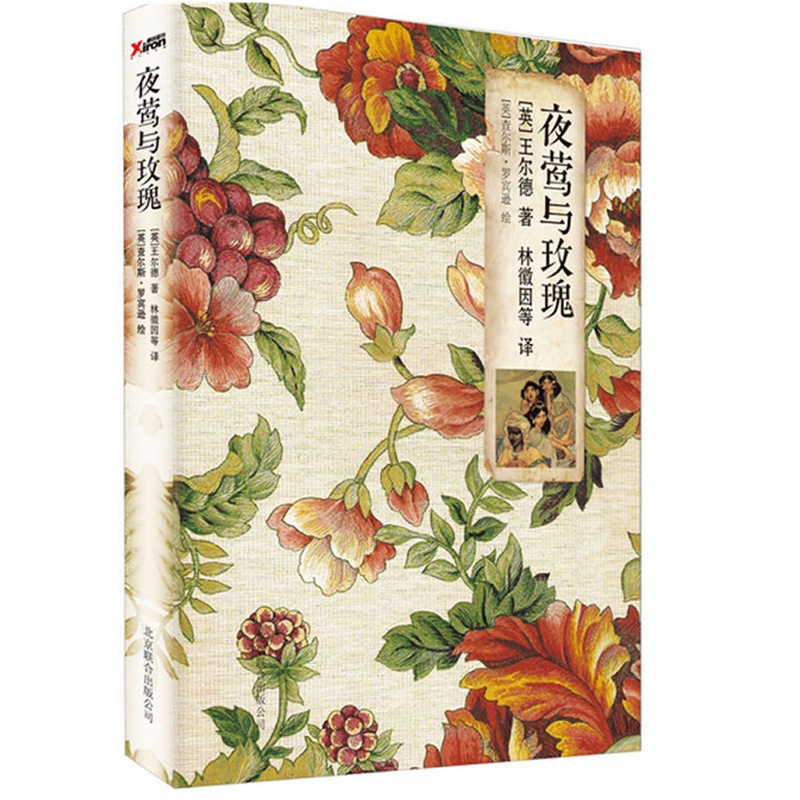 编辑推荐 民国第一才女林徽因唯一文学译作。 《夜莺与玫瑰》是在民国时期翻译而成的作品,语言典雅秀丽。 作为童话集,本书的读者不仅偏向于儿童,也适合成人读者。 内容推荐 《夜莺与玫瑰》是一部由19世纪著名的大童话作家王尔德所著的童话作品集。其共收录了他的《夜莺与玫瑰》《快乐王子》《自私的巨人》《忠实的朋友》等七部非常经典脍炙人口的作品。这些作品,由民国时期著名的大才女林徽因领衔翻译而成。林徽因的文字优美自然、富有灵气,充满了恬静的女性美,给这本童话带来了别具一格的柔美风采。 另外,《夜莺与玫瑰》还配有英国非常著名的插画家查尔斯·罗宾逊(CharlesRobinson)为王尔德童话作品专门绘制的精美彩色插图40多幅。这些插图精致活泼,意境深远,本身就具备了很高的艺术价值,与内容贴切相容,使得本书的阅读质感与收藏价值大大提升,成为一道独特的亮丽风景线。 作者简介 奥斯卡·王尔德(OscarWilde)(1854—1900),剧作家、诗人、散文家,19世纪与萧伯纳齐名的英国才子,被当今世人誉为最能与安徒生齐名的童话作家。著有《快乐王子》《夜莺与玫瑰》《自私的巨人》等多部脍炙人口的经典童话作品。 林徽因(1904-1955),民国时期著名作家、中国第一位女性建筑学家,曾被胡适誉为中国一代才女。其丈夫梁思成(梁启超之子)是中国近代非常著名的大建筑学家、中国研究院院士、清华大学教授。她一生涉及领域广泛,著作包括散文、诗歌、小说、剧本、译文和书信等,其中代表作有《你是人间的四月天》,小说《九十九度中》,译作《夜莺与玫瑰》等。 |
-
- 正序阅读 只看楼主
-
-
-
-
-
★、The Young King
It was the night before the day fixed for his coronation, and the young King was sitting alone in his beautiful chamber. His courtiers had all taken their leave of him, bowing their heads to the ground, according to the ceremonious usage of the day, and had retired to the Great Hall of the Palace, to receive a few last lessons from the Professor of Etiquette; there being some of them who had still quite natural manners, which in a courtier is, I need hardly say, a very grave offence.
The lad—for he was only a lad, being but sixteen years of age—was not sorry at their departure, and had flung himself back with a deep sigh of relief on the soft cushions of his embroidered couch, lying there, wild-eyed and open-mouthed, like a brown woodland Faun, or some young animal of the forest newly snared by the hunters.
And, indeed, it was the hunters who had found him, coming upon him almost by chance as, bare-limbed and pipe in hand, he was following the flock of the poor goatherd who had brought him up, and whose son he had always fancied himself to be. The child of the old King’s only daughter by a secret marriage with one much beneath her in station—a stranger, some said, who, by the wonderful magic of his lute-playing, had made the young Princess love him; while others spoke of an artist from Rimini, to whom the Princess had shown much, perhaps too much honour, and who had suddenly disappeared from the city, leaving his work in the Cathedral unfinished—he had been, when but a week old, stolen away from his mother’s side, as she slept, and given into the charge of a common peasant and his wife, who were without children of their own, and lived in a remote part of the forest, more than a day’s ride from the town. Grief, or the plague, as the court physician stated, or, as some suggested, a swift Italian poison administered in a cup of spiced wine, slew, within an hour of her wakening, the white girl who had given him birth, and as the trusty messenger who bare the child across his saddle-bow stooped from his weary horse and knocked at the rude door of the goatherd‘s hut, the body of the Princess was being lowered into an open grave that had been dug in a deserted churchyard, beyond the city gates, a grave where it was said that another body was also lying, that of a young man of marvellous and foreign beauty, whose hands were tied behind him with a knotted cord, and whose breast was stabbed with many red wounds.
Such, at least, was the story that men whispered to each other. Certain it was that the old King, when on his deathbed, whether moved by remorse for his great sin, or merely desiring that the kingdom should not pass away from his line, had had the lad sent for, and, in the presence of the Council, had acknowledged him as his heir.
And it seems that from the very first moment of his recognition he had shown signs of that strange passion for beauty that was destined to have so great an influence over his life. Those who accompanied him to the suite of rooms set apart for his service, often spoke of the cry of pleasure that broke from his lips when he saw the delicate raiment and rich jewels that had been prepared for him, and of the almost fierce joy with which he flung aside his rough leathern tunic and coarse sheepskin cloak. He missed, indeed, at times the fine freedom of his forest life, and was always apt to chafe at the tedious Court ceremonies that occupied so much of each day, but the wonderful palace—Joyeuse, as they called it—of which he now found himself lord, seemed to him to be a new world fresh-fashioned for his delight; and as soon as he could escape from the council-board or audience-chamber, he would run down the great staircase, with its lions of gilt bronze and its steps of bright porphyry, and wander from room to room, and from corridor to corridor, like one who was seeking to find in beauty an anodyne from pain, a sort of restoration from sickness.
Upon these journeys of discovery, as he would call them—and, indeed, they were to him real voyages through a marvellous land, he would sometimes be accompanied by the slim, fair-haired Court pages, with their floating mantles, and gay fluttering ribands; but more often he would be alone, feeling through a certain quick instinct, which was almost a divination, that the secrets of art are best learned in secret, and that Beauty, like Wisdom, loves the lonely worshipper.
Many curious stories were related about him at this period. It was said that a stout Burgo-master, who had come to deliver a florid oratorical address on behalf of the citizens of the town, had caught sight of him kneeling in real adoration before a great picture that had just been brought from Venice, and that seemed to herald the worship of some new gods. On another occasion he had been missed for several hours, and after a lengthened search had been discovered in a little chamber in one of the northern turrets of the palace gazing, as one in a trance, at a Greek gem carved with the figure of Adonis. He had been seen, so the tale ran, pressing his warm lips to the marble brow of an antique statue that had been discovered in the bed of the river on the occasion of the building of the stone bridge, and was inscribed with the name of the Bithynian slave of Hadrian. He had passed a whole night in noting the effect of the moonlight on a silver image of Endymion.
All rare and costly materials had certainly a great fascination for him, and in his eagerness to procure them he had sent away many merchants, some to traffic for amber with the rough fisher-folk of the north seas, some to Egypt to look for that curious green turquoise which is found only in the tombs of kings, and is said to possess magical properties, some to Persia for silken carpets and painted pottery, and others to India to buy gauze and stained ivory, moonstones and bracelets of jade, sandal-wood and blue enamel and shawls of fine wool.
But what had occupied him most was the robe he was to wear at his coronation, the robe of tissued gold, and the ruby-studded crown, and the sceptre with its rows and rings of pearls. Indeed, it was of this that he was thinking tonight, as he lay back on his luxurious couch, watching the great pinewood log that was burning itself out on the open hearth. The designs, which were from the hands of the most famous artists of the time, had been submitted to him many months before, and he had given orders that the artificers were to toil night and day to carry them out, and that the whole world was to be searched for jewels that would be worthy of their work. He saw himself in fancy standing at the high altar of the cathedral in the fair raiment of a King, and a smile played and lingered about his boyish lips, and lit up with a bright lustre his dark woodland eyes.
After some time he rose from his seat, and leaning against the carved penthouse of the chimney, looked round at the dimly-lit room. The walls were hung with rich tapestries representing the Triumph of Beauty. A large press, inlaid with agate and lapis-lazuli, filled one corner, and facing the window stood a curiously wrought cabinet with lacquer panels of powdered and mosaiced gold, on which were placed some delicate goblets of Venetian glass, and a cup of dark-veined onyx. Pale poppies were broidered on the silk coverlet of the bed, as though they had fallen from the tired hands of sleep, and tall reeds of fluted ivory bare up the velvet canopy, from which great tufts of ostrich plumes sprang, like white foam, to the pallid silver of the fretted ceiling. A laughing Narcissus in green bronze held a polished mirror above its head. On the table stood a flat bowl of amethyst.
Outside he could see the huge dome of the cathedral, looming like a bubble over the shadowy houses, and the weary sentinels pacing up and down on the misty terrace by the river. Far away, in an orchard, a nightingale was singing. A faint perfume of jasmine came through the open window. He brushed his brown curls back from his forehead, and taking up a lute, let his fingers stray across the cords. His heavy eyelids drooped, and a strange languor came over him. Never before had he felt so keenly, or with such exquisite joy, the magic and the mystery of beautiful things.
When midnight sounded from the clock-tower he touched a bell, and his pages entered and disrobed him with much ceremony, pouring rose-water over his hands, and strewing flowers on his pillow. A few moments after that they had left the room, he fell asleep.
And as he slept he dreamed a dream, and this was his dream.
He thought that he was standing in a long, low attic, amidst the whir and clatter of many looms. The meagre daylight peered in through the grated windows, and showed him the gaunt figures of the weavers bending over their cases. Pale, sickly-looking children were crouched on the huge crossbeams. As the shuttles dashed through the warp they lifted up the heavy battens, and when the shuttles stopped they let the battens fall and pressed the threads together. Their faces were pinched with famine, and their thin hands shook and trembled. Some haggard women were seated at a table sewing. A horrible odour filled the place. The air was foul and heavy, and the walls dripped and streamed with damp.
The young King went over to one of the weavers, and stood by him and watched him.
And the weaver looked at him angrily, and said, “Why art thou watching me? Art thou a spy set on us by our master?”
“ Who is thy master?” asked the young King.
“Our master!”cried the weaver, bitterly. “ He is a man like myself. Indeed, there is but this difference between us—that he wears fine clothes while I go in rags, and that while I am weak from hunger he suffers not a little from overfeeding. ”
“ The land is free,” said the young King, “ and thou art no man’s slave. ”
“In war,”answered the weaver, “the strong make slaves of the weak, and in peace the rich make slaves of the poor. We must work to live, and they give us such mean wages that we die. We toil for them all day long, and they heap up gold in their coffers, and our children fade away before their time, and the faces of those we love become hard and evil. We tread out the grapes, and another drinks the wine. We sow the corn, and our own board is empty. We have chains, though no eye beholds them;and are slaves, though men call us free.”
“Is it so with all?” he asked.
“It is so with all,” answered the weaver, “with the young as well as with the old, with the women as well as with the men, with the little children as well as with those who are stricken in years. The merchants grind us down, and we must needs do their bidding. The priest rides by and tells his beads, and no man has care of us. Through our sunless lanes creeps Poverty with her hungry eyes, and Sin with his sodden face follows close behind her. Misery wakes us in the morning, and Shame sits with us at night. But what are these things to thee? Thou art not one of us. Thy face is too happy.” And he turned away scowling, and threw the shuttle across the loom, and the young King saw that it was threaded with a thread of gold.
And a great terror seized upon him, and he said to the weaver, “What robe is this that thou art weaving?”
“ It is the robe for the coronation of the young King,” he answered; “what is that to thee?”
And the young King gave a loud cry and woke, and lo! he was in his own chamber, and through the window he saw the great honey-coloured moon hanging in the dusky air.
And he fell asleep again and dreamed, and this was his dream.
He thought that he was lying on the deck of a huge galley that was being rowed by a hundred slaves. On a carpet by his side the master of the galley was seated. He was black as ebony, and his turban was of crimson silk. Great earrings of silver dragged down the thick lobes of his ears, and in his hands he had a pair of ivory scales.
The slaves were naked, but for a ragged loin-cloth, and each man was chained to his neighbour. The hot sun beat brightly upon them, and the negroes ran up and down the gangway and lashed them with whips of hide. They stretched out their lean arms and pulled the heavy oars through the water. The salt spray flew from the blades.
At last they reached a little bay, and began to take soundings. A light wind blew from the shore, and covered the deck and the great lateen sail with a fine red dust. Three Arabs mounted on wild asses rode out and threw spears at them. The master of the galley took a painted bow in his hand and shot one of them in the throat. He fell heavily into the surf, and his companions galloped away. A woman wrapped in a yellow veil followed slowly on a camel, looking back now and then at the dead body.
As soon as they had cast anchor and hauled down the sail, the negroes went into the hold and brought up a long rope-ladder, heavily weighted with lead. The master of the galley threw it over the side, making the ends fast to two iron stanchions. Then the negroes seized the youngest of the slaves and knocked his gyves off, and filled his nostrils and his ears with wax, and tied a big stone round his waist. He crept wearily down the ladder, and disappeared into the sea. A few bubbles rose where he sank. Some of the other slaves peered curiously over the side. At the prow of the galley sat a shark-charmer, beating monotonously upon a drum.
After some time the diver rose up out of the water, and clung panting to the ladder with a pearl in his right hand. The negroes seized it from him, and thrust him back. The slaves fell asleep over their oars.
Again and again he came up, and each time that he did so he brought with him a beautiful pearl. The master of the galley weighed them, and put them into a little bag of green leather.
The young King tried to speak, but his tongue seemed to cleave to the roof of his mouth, and his lips refused to move. The negroes chattered to each other, and began to quarrel over a string of bright beads. Two cranes flew round and round the vessel.
Then the diver came up for the last time, and the pearl that he brought with him was fairer than all the pearls of Ormuz, for it was shaped like the full moon, and whiter than the morning star. But his face was strangely pale, and as he fell upon the deck the blood gushed from his ears and nostrils. He quivered for a little, and then he was still. The negroes shrugged their shoulders, and threw the body overboard.
And the master of the galley laughed, and, reaching out, he took the pearl, and when he saw it he pressed it to his forehead and bowed. “It shall be,”he said, “for the sceptre of the young King,” and he made a sign to the negroes to draw up the anchor.
And when the young King heard this he gave a great cry, and woke, and through the window he saw the long grey fingers of the dawn clutching at the fading stars.
And he fell asleep again, and dreamed, and this was his dream.
He thought that he was wandering through a dim wood, hung with strange fruits and with beautiful poisonous flowers. The adders hissed at him as he went by, and the bright parrots flew screaming from branch to branch. Huge tortoises lay asleep upon the hot mud. The trees were full of apes and peacocks.
On and on he went, till he reached the outskirts of the wood, and there he saw an immense multitude of men toiling in the bed of a dried-up river. They swarmed up the crag like ants. They dug deep pits in the ground and went down into them. Some of them cleft the rocks with great axes;others grabbled in the sand.
They tore up the cactus by its roots, and trampled on the scarlet blossoms. They hurried about, calling to each other, and no man was idle.
From the darkness of a cavern Death and Avarice watched them, and Death said, “I am weary;give me a third of them and let me go.”But Avarice shook her head.“They are my servants, ” she answered.
And Death said to her, “What hast thou in thy hand?”
“I have three grains of corn,” she answered;“ what is that to thee?”
“Give me one of them,”cried Death, “to plant in my garden;only one of them, and I will go away.”
“ I will not give thee anything,”said Avarice, and she hid her hand in the fold of her raiment.
And Death laughed, and took a cup, and dipped it into a pool of water, and out of the cup rose Ague. She passed through the great multitude, and a third of them lay dead. A cold mist followed her, and the water-snakes ran by her side.
And when Avarice saw that a third of the multitude was dead she beat her breast and wept. She beat her barren bosom, and cried aloud. “Thou hast slain a third of my servants,”she cried, “get thee gone. There is war in the mountains of Tartary, and the kings of each side are calling to thee. The Afghans have slain the black ox, and are marching to battle. They have beaten upon their shields with their spears, and have put on their helmets of iron. What is my valley to thee, that thou shouldst tarry in it?Get thee gone, and come here no more.”
“Nay,”answered Death, “ but till thou hast given me a grain of corn I will not go.”
But Avarice shut her hand, and clenched her teeth. “I will not give thee anything,” she muttered.
And Death laughed, and took up a black stone, and threw it into the forest, and out of a thicket of wild hemlock came Fever in a robe of flame. She passed through the multitude, and touched them, and each man that she touched died. The grass withered beneath her feet as she walked.
And Avarice shuddered, and put ashes on her head. “Thou art cruel,”she cried; “thou art cruel. There is famine in the walled cities of India, and the cisterns of Samarcand have run dry. There is famine in the walled cities of Egypt, and the locusts have come up from the desert. The Nile has not overflowed its banks, and the priests have cursed Isis and Osiris. Get thee gone to those who need thee, and leave me my servants.”
“Nay,” answered Death, “but till thou hast given me a grain of corn I will not go.”
“I will not give thee anything,”said Avarice.
And Death laughed again, and he whistled through his fingers, and a woman came flying through the air. Plague was written upon her forehead, and a crowd of lean vultures wheeled round her. She covered the valley with her wings, and no man was left alive.
And Avarice fled shrieking through the forest, and Death leaped upon his red horse and galloped away, and his galloping was faster than the wind.
And out of the slime at the bottom of the valley crept dragons and horrible things with scales, and the jackals came trotting along the sand, sniffing up the air with their nostrils.
And the young King wept, and said: “Who were these men, and for what were they seeking?”
“For rubies for a king’s crown,” answered one who stood behind him.
And the young King started, and, turning round, he saw a man habited as a pilgrim and holding in his hand a mirror of silver.
And he grew pale, and said: “For what king?”
And the pilgrim answered: “Look in this mirror, and thou shalt see him. ”
And he looked in the mirror, and, seeing his own face, he gave a great cry and woke, and the bright sunlight was streaming into the room, and from the trees of the garden and pleasaunce the birds were singing.
And the Chamberlain and the high officers of State came in and made obeisance to him, and the pages brought him the robe of tissued gold, and set the crown and the sceptre before him.
And the young King looked at them, and they were beautiful. More beautiful were they than aught that he had ever seen. But he remembered his dreams, and he said to his lords: “Take these things away, for I will not wear them.”
And the courtiers were amazed, and some of them laughed, for they thought that he was jesting.
But he spake sternly to them again, and said: “Take these things away, and hide them from me. Though it be the day of my coronation, I will not wear them. For on the loom of Sorrow, and by the white hands of Pain, has this my robe been woven. There is Blood in the heart of the ruby, and Death in the heart of the pearl.”And he told them his three dreams.
And when the courtiers heard them they looked at each other and whispered, saying: “Surely he is mad; for what is a dream but a dream, and a vision but a vision? They are not real things that one should heed them. And what have we to do with the lives of those who toil for us? Shall a man not eat bread till he has seen the sower, nor drink wine till he has talked with the vinedresser?”
And the Chamberlain spake to the young King, and said, “My lord, I pray thee set aside these black thoughts of thine, and put on this fair robe, and set this crown upon thy head. For how shall the people know that thou art a king, if thou hast not a king’s raiment?”
And the young King looked at him. “Is it so, indeed?”he questioned. “Will they not know me for a king if I have not a king’s raiment?”
“They will not know thee, my lord, ” cried the Chamber-lain.
“I had thought that there had been men who were kinglike,” he answered, “but it may be as thou sayest. And yet I will not wear this robe, nor will I be crowned with this crown, but even as I came to the palace so will I go forth from it.”
And he bade them all leave him, save one page whom he kept as his companion, a lad a year younger than himself. Him he kept for his service, and when he had bathed himself in clear water, he opened a great painted chest, and from it he took the leathern tunic and rough sheepskin cloak that he had worn when he had watched on the hillside the shaggy goats of the goatherd. These he put on, and in his hand he took his rude shepherd’s staff.
And the little page opened his big blue eyes in wonder, and said smiling to him, “My lord, I see thy robe and thy sceptre, but where is thy crown?”
And the young King plucked a spray of wild briar that was climbing over the balcony, and bent it, and made a circlet of it, and set it on his own head.
“This shall he my crown,” he answered.
And thus attired he passed out of his chamber into the Great Hall, where the nobles were waiting for him.
And the nobles made merry, and some of them cried out to him, “My lord, the people wait for their king, and thou showest them a beggar,” and others were wroth and said, “He brings shame upon our state, and is unworthy to be our master.”But he answered them not a word, but passed on, and went down the bright porphyry staircase, and out through the gates of bronze, and mounted upon his horse, and rode towards the cathedral, the little page running beside him.
And the people laughed and said, “It is the King’s fool who is riding by,” and they mocked him.
And he drew rein and said,“Nay, but I am the King.” And he told them his three dreams.
And a man came out of the crowd and spake bitterly to him, and said,“Sir, knowest thou not that out of the luxury of the rich cometh the life of the poor? By your pomp we are nurtured, and your vices give us bread. To toil for a hard master is bitter, but to have no master to toil for is more bitter still. Thinkest thou that the ravens will feed us?And what cure hast thou for these things? Wilt thou say to the buyer, ‘Thou shalt buy for so much,’ and to the seller, ‘Thou shalt sell at this price?’ I trow not. Therefore go back to thy Palace and put on thy purple and fine linen. What hast thou to do with us, and what we suffer?”
“Are not the rich and the poor brothers?”asked the young King.
“Ay, ” answered the man, “and the name of the rich brother is Cain.”
And the young King’s eyes filled with tears, and he rode on through the murmurs of the people, and the little page grew afraid and left him.
And when he reached the great portal of the cathedral, the soldiers thrust their halberts out and said, “What dost thou seek here?None enters by this door but the King.”
And his face flushed with anger, and he said to them, “I am the King,” and waved their halberts aside and passed in.
And when the old Bishop saw him coming in his goatherd’s dress, he rose up in wonder from his throne, and went to meet him, and said to him, “My son, is this a king’s apparel? And with what crown shall I crown thee, and what sceptre shall I place in thy hand? Surely this should be to thee a day of joy, and not a day of abasement.”
“Shall Joy wear what Grief has fashioned?” said the young King. And he told him his three dreams.
And when the Bishop had heard them he knit his brows, and said, “My son, I am an old man, and in the winter of my days, and I know that many evil things are done in the wide world. The fierce robbers come down from the mountains, and carry off the little children, and sell them to the Moors. The lions lie in wait for the caravans, and leap upon the camels. The wild boar roots up the corn in the valley, and the foxes gnaw the vines upon the hill. The pirates lay waste the sea-coast and burn the ships of the fishermen, and take their nets from them. In the salt-marshes live the lepers;they have houses of wattled reeds, and none may come nigh them. The beggars wander through the cities, and eat their food with the dogs. Canst thou make these things not to be? Wilt thou take the leper for thy bedfellow, and set the beggar at thy board? Shall the lion do thy bidding, and the wild boar obey thee? Is not He who made misery wiser than thou art? Wherefore I praise thee not for this that thou hast done, but I bid thee ride back to the Palace and make thy face glad, and put on the raiment that beseemeth a king, and with the crown of gold I will crown thee, and the sceptre of pearl will I place in thy hand. And as for thy dreams, think no more of them. The burden of this world is too great for one man to bear, and the world’s sorrow too heavy for one heart to suffer. ”
“Sayest thou that in this house?”said the young King, and he strode past the Bishop, and climbed up the steps of the altar, and stood before the image of Christ.
He stood before the image of Christ, and on his right hand and on his left were the marvellous vessels of gold, the chalice with the yellow wine, and the vial with the holy oil. He knelt before the image of Christ, and the great candles burned brightly by the jewelled shrine, and the smoke of the incense curled in thin blue wreaths through the dome. He bowed his head in prayer, and the priests in their stiff copes crept away from the altar.
And suddenly a wild tumult came from the street outside, and in entered the nobles with drawn swords and nodding plumes, and shields of polished steel. “Where is this dreamer of dreams?” they cried. “Where is this King who is apparelled like a beggar—this boy who brings shame upon our state? Surely we will slay him, for he is unworthy to rule over us. ”
And the young King bowed his head again, and prayed, and when he had finished his prayer he rose up, and turning round he looked at them sadly.
And lo! through the painted windows came the sunlight streaming upon him, and the sun-beams wove round him a tissued robe that was fairer than the robe that had been fashioned for his pleasure. The dead staff blossomed, and bare lilies that were whiter than pearls. The dry thorn blossomed, and bare roses that were redder than rubies. Whiter than fine pearls were the lilies, and their stems were of bright silver. Redder than male rubies were the roses, and their leaves were of beaten gold.
He stood there in the raiment of a king, and the gates of the jewelled shrine flew open, and from the crystal of the many-rayed monstrance shone a marvellous and mystical light. He stood there in a king’s raiment, and the Glory of God filled the place, and the saints in their carven niches seemed to move. In the fair raiment of a king he stood before them, and the organ pealed out its music, and the trumpeters blew upon their trumpets, and the singing boys sang.
And the people fell upon their knees in awe, and the nobles sheathed their swords and did homage, and the Bishop’s face grew pale, and his hands trembled. “A greater than I hath crowned thee,” he cried, and he knelt before him.
And the young King came down from the high altar, and passed home through the midst of the people. But no man dared look upon his face, for it was like the face of an angel.
★、少年王
我们的道路上没有太阳,“贫穷”睁着一双饥饿的眼睛爬进我们的家门,“罪恶”便紧随在它的身后。早晨惊醒我们的是“苦难”,夜里陪伴我们的是“羞辱”,但这些于你有什么关系呢?少年王从梦中惊醒……
在行加冕礼的前一天晚上,少年王独自坐在华丽的卧室里。朝臣都向他低身鞠躬后退了出去,按照历来行加冕礼的惯例,一齐到王宫大厅听礼仪教授演讲。他们中有许多还不是很懂宫廷礼仪,作为朝臣而不懂礼仪,这自然是不可理喻的事。
那孩子(他的确是个孩子,目前才十六岁)看见他们走开,也并不觉得难过,只是长叹一声,把身子往后一靠,倒在一张绣花大椅上。他躺在那儿,眼睛张着,嘴唇微启,活像一位棕树林里半羊半人形的牧神,又像一只才被猎人捉住的森林小野兽。
老国王独生女的儿子,是同一个出身卑贱的人偷养的——有人说,是个异乡人,靠魔法的笛音,使公主爱上了他;又有人说,是个里米尼的艺术家,公主待他十分殷勤,或许是太殷勤了,突然在城里失踪,连礼拜堂的壁画都没有完成。
他生下来才满七天,就在母亲睡着的时候被人偷偷抱走,送给了一位牧羊人的妻子。那户人家没有孩子,住在很偏远的森林里。至于公主,在生下他之后就死了。据王宫里的医生说,有可能是气急而亡,又据别人猜测,有可能是用一种掺在香酒里的意大利毒药,在醒来的一小时内毒死的。一个忠仆把婴儿载在鞍轿上,当他从倦马上下来,弯腰去敲那户牧羊人家门的时候,公主的尸身已埋葬在荒地掘好的坟地里。那坟在城外,据说里面还葬着一个人,是个极漂亮的青年,双手被反捆在背后,胸部还有许多伤痕。
至少,以上所述的是许多人常常谈论着的话。那老国王在临死的时候,或许是良心发现,觉得过去实在罪大恶极,或是为了皇室永传一家,就把那孩子找回来,在朝廷上公布他为自己的继承人。
孩子被找回宫里后,立刻就表现出爱美的热情来,这种热情注定要影响他的一生。据那些陪伴他进宫的人说,当他刚看见那些为他预备的衣服珠宝,就欢喜得叫起来,似乎已经忘乎所以,立刻就把穿在身上的皮袄、皮褂脱了下来。不过有时他的确也想念从前那种悠然自在的山林生活,繁重的宫廷礼节经常占据他很多的时间,这常常使他感到厌烦。但这座富丽堂皇的宫殿(人们称它做“欢乐宫”,他现在是它的主人了),似乎对于他来说又是一个新世界,只要他能从会议厅或朝驾殿里逃出来,就会立刻跑下那两边立着铜狮的云母大石梯,从一间屋子走到另一间屋子,从一条走廊走到另一条走廊,好像要从里面寻找一副止痛药,或者一种治病的仙方似的。
他把这称之为一种探险——的确,这对于他来说是异地的旅行,陪伴他的是一些瘦小的美发宫仆,穿着飘动的外衣,系着漂亮的缎带,但多数时间是他一个人。他以一种直觉或者先知预卜般的能力,觉得艺术最好秘密地去追求。美犹如智慧一样,喜欢那些孤独的崇拜者。
这个时期流传着很多关于他古怪的故事。
据说有位邑长代表人民来演讲,昧着良心说了一番歌功颂德的话,他很虔敬地跪在一幅由威尼斯买来的画面前,神情犹如朝拜天神。又一次,他失踪好几个钟头,经过长久搜寻,才发现他在宫内北方小塔的屋子里,犹如丢了魂似的,呆看着一尊由希腊宝石镶成的爱多尼斯雕像。据传闻,当时他把嘴唇紧压在这尊雕像的眉毛上。这尊雕像是在河边修桥的时候发现的,上面还刻着海德利安俾斯尼亚的奴隶的名字。他还花了整夜的工夫,去观察月光照在恩地眠银像上的奇异景象。
各种稀有值钱的东西对他都有很大的吸引力,为取得这些东西,他派出不少商人四处搜寻。有的到北海边,同渔夫做琥珀交易;有的到埃及去找青宝石,这种宝石只有皇墓中才有,价值连城;有的到波斯去买丝织地毯以及花陶器;有的到印度去买薄纱、红象牙、透明石、玉珠、檀香木、蓝珐琅和上等羊毛围巾。
但最让他劳心的要算加冕那天穿的袍子,金丝织成的袍子,红宝石镶成的王冠,珍珠串联而成的王节。的确,今晚靠在华丽的躺椅上,双眼望着火炉中渐渐燃烧成灰烬的松木柴,想的便是这些。衣服的图样是由最著名的艺术家绘制的,几个月前已经呈给他看过。他当时就下令叫工人日夜加点赶工,还指派专员到全世界找寻配得上它的珠宝。他在幻想中,见自己穿着华丽的王服,站在礼拜堂的高祭坛前,孩子气的嘴角边流露出微笑,深黑的眼睛里,闪动着尊贵的光辉。
隔了一会儿,他站起身来,靠在火炉的雕花护栏上,看着四面光线阴暗的屋子。壁上挂着华丽的帷帐,代表美之胜利。一个角落里,放着一架镶着玛瑙和蓝宝石的印字机。对窗口的地方,有一个箱子,装着金粉涂的镜板,上面放着一些维尼丁琉璃以及黑纹碧玉制成的杯子。床毯上绣着罂粟花,好像随手抛在上边似的。丝绒华盖上镶着象牙雕成的芦苇草,上面插着一把驼鸟羽毛,一直触到平整的银天花板。一个青铜的笑菩萨头上,顶着一面光滑的镜子,桌上放着一只紫水晶的碗。
窗外,他可以看见教堂那高高的楼顶耸立在阴暗的天空里,像虚幻水泡似的一层层堆积着。疲乏的哨兵,在夜雾笼罩的河边来回踱着散乱的步子。远处的花园里,有夜莺的叫声,一阵阵茉莉花香从窗口吹进来。他把棕色的卷发梳在头后,顺手拿起一支笛子,手指便在笛孔上面起伏着。接着他沉重的眼皮垂下来了,浑身开始疲倦。在以前,他从来没有这样亲切或这样愉快地感觉到,美的东西的魔力与神秘。
钟楼敲响午夜钟的时候,他的宫仆进来,很有礼貌地为他脱去外衣,洒些玫瑰香水在他手心,枕边也为他放了一些花儿。几分钟后,他们离开房间,他就睡着了。
睡着后他做了一个梦:
他觉得自己站在一间矮小的房子里,房子里有许多织布机呼噜呼噜地响着,暗淡的日光从铁窗口射进来,几个弯着腰做事的织工面色清瘦。神色苍白、病态毕现的孩子们弯着腰坐在机车前,当梭子穿过丝线,他们便把沉重的压板拉起来,当梭子停下来,又把压板放下去,将丝编织在一起。这些人脸上都露出饥饿的神情,手也战栗无力,还有许多憔悴的妇人坐在桌边缝衣裳。屋里有一种怪气味,空气混浊,墙上满是污秽潮湿的斑痕。
少年王走到一个织工面前,站在他身边看她。
织工怒目地瞪了他一眼,说:“你看着我干吗?你又是主人派来监视我们的密探吧?”
少年王问:“你们的主人是谁?”
“我们的主人?”织工很悲伤地说,“他也是同我们一样的人,不过,也有不一样的地方——他穿着华丽的衣裳,我们穿着破烂的碎布;我们饿得快要死了,他家里却酒肉太多,正嫌臭着呢!”
少年王说:“这地方是自由的,你们又不是别人的奴隶,为什么还要待在这里?”
织工答道:“战争时,强者就要弱者做奴隶。和平时代,有钱人就要穷人做奴隶。我们非做工不可,因为我们要生活下去。但他们只给那点儿可怜的工资,我们只有死路一条。我们成天为他们辛苦地工作,金子却都堆在他们的柜子里。我们的孩子,不到成年就夭折了。我们所爱的人的面容,也都变得憔悴不堪。我们用双手辛勤地榨出葡萄汁,可最后喝酒的却是别人。我们汗流浃背地播种稻谷,而家里一粒米都没有。我们实在戴着枷锁,虽然肉眼看不见。我们都是奴隶,不管别人说我们有着怎样的自由。”
少年王问:“个个都如此吗?”
织工答道:“个个都是如此,无论年轻的还是年老的,女的还是男的,未成年的孩子或是饱受生活打击的成人,都是如此。商人压榨我们,我们不得不听从他们的指挥。牧师只会数着念珠面无表情地从我们身边经过,从来不曾理过我们。我们的道路上没有太阳,‘贫穷’睁着一双饥饿的眼睛爬进我们的家门,‘罪恶’就紧随在它的身后。早晨惊醒我们的是‘苦难’,夜里陪伴我们的是‘羞辱’,但这些于你有什么关系呢?你跟我们不是一个世界的人,从你的脸色就能看出,你生活得非常优越。”他怒冲冲地把脸转过去,又在机器上抛着梭子,少年王这才看见上面全绕着金线。
他惊恐极了,连忙对织工说:“你们织的这件衣服是给谁的?”
织工答道:“是少年王加冕时穿的,于你有什么关系呢?”
就在这时,少年王大叫一声醒来。啊!他仍在卧室里,窗外蜜色的月亮正挂在迷雾般的夜空中。
他立刻又睡着了,另一个场景进入他的梦乡:他觉得自己坐在一艘大木船的甲板上,由数百个奴隶摇桨行驶。船主坐在他身边的一张地毯上,全身漆黑犹如乌木,头布是鲜红色的丝巾,大银耳环挂在耳垂上,手里拿着一杆象牙秤。
奴隶们全裸着身体,只围着一块腰布,全部一对对地被锁链套住。他们不顾风吹日晒,在梯口奔忙着,一些黑人在过道上跑来跑去,皮鞭不时地落在他们身上。他们伸出枯瘦的双手,在水中划着重大的桨,水花从桨上溅起来。
后来,他们到了一个港湾,开始测量水深。岸上吹来一阵微风,船上面便铺满一层厚厚的红土灰。三个骑着野鹿的阿拉伯人用长枪投来,船主拿出一支花箭,射中一个的咽喉,他落在浪里,其余的便逃走了。一个戴着黄面纱的妇人,骑在骆驼背上慢慢走过去,不时回过头来看那具尸体。
他们抛了锚,停了船,马上就进入船舱,拿出一架绳梯来,绳梯下面挂着极重的铅锤。船主把绳梯放下,系在两根铁柱上面,黑奴们就把最年轻的一个奴隶抓住,解开锁链,用蜡油封住耳鼻,更在他的腰部系一块大石头。他慢慢爬下绳梯,就沉到海底去了。沉下去的水面,浮上几个气泡,奴隶中间有几个很稀奇地瞧着。船头上,又有一个赶鲨鱼的人,在很单调地打着鼓。
隔了一会儿,下水的人上来了,他紧紧攀住绳梯,右手拿着一颗珍珠。黑奴们一把将珍珠抢了过来,又把他推下水去,然后就靠在桨上打起瞌睡来。
他又上来好几次,每次上来,必定拿着一颗极好的珍珠,船主把它们一一称过之后,才放进一个绿皮小袋里。
少年王想说话,但舌头紧贴住上颚,嘴唇怎么动也动不了。黑奴们叽里咕噜地闹着,为一颗珠子争吵起来,两只鹭莺绕着船飞来飞去。
下水的人再一次上来了,这回拿上来的珍珠比奥马兹的一切珠子都珍贵,形似满月,比晨星还要光亮,但他的脸苍白极了。上来之后便立刻倒在甲板上,五官流出鲜血,战栗了一阵,便再也不动了。黑奴们只是耸了耸肩头,便把尸身抛下海去。
船主放声大笑着走过来,才看见那颗珍珠,便拿起来放在额上,鞠了一躬,说:“这颗珠子可用在少年王的王节上。”说完就吩咐黑奴们起锚。
少年王听见这句话,大叫一声,便醒了过来,窗外已是晨光熹微,星光逐渐暗淡了。
但他立刻又睡着了,做梦了:
他似乎在一片昏暗的森林里漫游,森林里到处都生长着奇怪的果子和美丽的毒花。他从蝮蛇身边经过,蝮蛇嘶嘶地叫着。树枝间,鹦鹉一边飞一边嘶鸣,一只巨大的乌龟在炎热的泥水中沉睡,树上尽是猴子和孔雀。
他在森林里穿梭,最终走出森林,看见一群人在干涸的河床上劳作。那些人好像蚂蚁一般地拥上峻岩,他们在地上挖出一个很大的深坑,便爬进去,然后有的用巨斧劈石,有的在泥沙中摸索。他们连根拔起仙人掌,在红花上践踏,忙做一团,推推攘攘,没有一个偷懒的人。
“死”和“贪”在一个暗洞中看着他们,“死”说:“我厌倦了,把他们的三分之一交给我,让我走吧!”
但是“贪”却摇摇头,回答道:“他们都是我的仆役呢!”
“死”又对她说:“你手里拿着什么?”
“贪”说:“我有三粒谷子,于你有什么关系呢?”
“死”叫了起来:“给我一粒,我拿去种在我的园子里,只要一粒,我就立刻走。”
“贪”说:“我什么也不会给你。”便把手藏在衣襟下。
“死”笑了起来,拿出一只杯子放进池水里,然后便把“疟疾”取出来。只见“疟疾”在人群中穿梭,三分之一的人就死掉了。她的身后涌出一阵冷雾,无数的水蛇在她身边围绕。
“贪”见又死了这么多人,便捶着胸膛哭泣起来,她敲着贫瘠的胸膛大叫:“你又杀死我这么多人,你回去吧!鞑靼的山里正有战事,双方的国王都请你快去。阿富汗人把黑牛杀了,也在出兵开战,他们用矛头刺盾牌,身上穿着铁甲。我这山谷不过是个小地方,你不应该在这儿活动,去吧,以后别再来了!”
“死”答说:“可以,只要你给我一粒谷子,我就立刻走。”
但“贪”把手更捏紧了一些,咬牙切齿喃喃地说:“我绝不会给你谷子的。”
“死”又笑了起来,拿出杯子,然后捡一块石头抛到森林里,于是“寒热”便成为火焰,从一丛毒草那儿出来了。她行经群众之间,碰着一个便死一个,所过的草地立刻枯黄。
“贪”战栗起来,拿些灰抹在自己头上,叫着:“你真残酷,你真残酷啊!印度许多城市在闹饥荒,撒马利亚的井大多都干枯了,埃及也有许多城市闹饥荒,蝗虫铺天盖地从荒地中飞来,尼罗河也溃决了,教士诅咒着生殖神和判官。你到那里去,把我的仆役留下给我吧!”
“死”答道:“可以,只要你给我一粒谷子,我就立刻走。”
“贪”摇头说:“我绝不会给你谷子的。”
“死”又笑起来,她用手吹起哨子,只见一个女人就从空中飞来。这女人前额写着“瘟疫”二字,有一群瘦鹰围在她四周。她用翅膀罩住整个山谷,那儿的人瞬间死得一个也不剩了。
“贪”一路叫着,往森林中逃去,“死”便跨上红马,也飞驰而走,急驰得比风还快。
山下的泥泞中爬出一些生着爪牙的龙与一些可怕的怪物,徘徊在沙地上,高翘着鼻孔在空中吸气。
少年王哭了:“这是些什么人?他们在这儿找什么?”
一个人来到他身后说:“找王冠上的玉。”
少年王转过身子,看见一个穿着预言家衣服的人,手里还拿着一副银色眼镜。
他脸色发白,问:“为哪一个国王呀?”
预言家答道:“在这面镜子里,你自己去看他吧!”
少年王望着镜子,看到的是自己的脸,他惊得大叫一声醒了,只见阳光已经洒满屋子,鸟儿已经在花园的树枝上开始唱歌。
这时,御前侍臣和朝中大官都进来参拜他,宫仆把金丝朝服取来,王冠和王节也放在他面前。
少年王注视着这些东西。的确,它们都非常漂亮,他从来没有见过如此美丽的东西,但是他想起了他的梦,便对臣仆说:“把这些东西拿开吧,我不穿了!”
臣仆都很惊讶,有的觉得他在开玩笑,竟然大笑起来。
但他说话的态度很严肃:“把这些东西拿去藏起来,别给我看见,虽然今天是我的加冕日,但我仍然不要穿它,因为这件衣服是在‘悲愁’的机械上,由‘痛苦’的手织出来的。这玉中有‘鲜血’,珍珠里有‘死亡’。”说完他就把三个梦讲给他们听。
臣仆听了他的三个梦以后,相视低语,都说:“他一定傻了,梦终究是梦,幻想也终究是幻想,绝非人应该去关心的事,那些为我们劳苦的人的命运,与我们有何关系?一个人,没见过耕种,就不能吃饭吗?一个人,没见过酿酒,就不能喝酒吗?”
御前侍臣对少年王说:“陛下,请你抛开这些恶念,穿上这件王袍,戴上这顶王冠吧!否则你不穿戴国王的衣帽,人们怎知道你是国王呢?”
“真的吗?”少年王看看他,问道,“不穿国王的衣服,他们就不知道我是国王吗?”
御前侍臣叫道:“是呀,如果您不穿王袍,他们是永远不会知道您是国王的!”
少年王说:“我以为有人生来就是长着国王的样子,你说的或许不错,但我还是不要穿这件王袍,戴这顶王冠,我进宫的时候是怎样打扮,现在我就怎样打扮着出宫去。”
他吩咐他们全部退出,只留下一个仆人陪着他。这仆人比他小一岁,留在身边伺候自己。在清水中沐浴后,他打开一个花橱,把在山上放羊时穿的皮袄、皮褂取了出来。穿好之后,又把赶羊的棍子拿在手中。
小仆人睁大一双蓝眼睛,很惊异地微笑着对他说:“陛下,我看见您的王袍和王节,但是您的王冠呢?”
少年王就随手折下一枝露台上的野荆棘,弯成一个圆圈,戴在自己头上。
他说:“这就是我的王冠。”
少年王穿着这身衣服从卧室出来,走到大殿上,那儿早有许多贵族等候在此。
贵族们见他这身打扮,立刻讥笑起来,有的竟向他叫道:“陛下,百姓等着他们的国王,你却要他们去见一个乞丐吗?”许多人也恼怒了,说:“他简直是在羞辱我们国家,实在愧为我主。”但他什么也不回答,只往前去,走下云斑石梯,穿过紫铜门,然后就骑上马,向教堂驰去,小仆人在他身后跟着跑。
路边的百姓都笑了,并说:“骑马去的一定是国王的弄臣。”
少年王勒住马,便说:“不,我就是国王呢!”他又把三个梦讲给他们听。
这时人群中走出一个人,很愁苦地对他说:“陛下,您不知道穷人的生活是从富人的奢华中来的吗?我们就是靠您的施舍来活命的啊!固然替暴主效劳是很不幸的事情,但若没有暴主可依,我们就完全没有了生活来源,其苦更甚。您觉得乌鸦会养活我们吗?对此您有什么解救的办法没有?您会对买东西的人说‘你得出这么多钱买下’,又对卖东西的人说‘你得照这样价钱卖出’吗?请速返王宫,衣紫服而来,您根本不能解决我们的痛苦!”
少年王说:“富人与穷人不是兄弟吗?”
那人答道:“是的,那个富人兄弟的名字叫恶魔!”
少年王满眼含着泪,在人群的嘶嚷中急驰而过,那小仆人竟害怕得逃了。他来到教堂大门,士兵便把斧戟伸出来挡住他的去路,喝道:“你是做什么的?除国王外,任何人不许进来。”
少年王露出怒容,对他们说:“我就是国王!”他推开斧戟,大步走了进去。
教主见他穿着牧羊人的衣服,很惊异地从宝座上站起来,来到他面前,说:“孩子,这是国王的衣服吗?我用什么王冠给你戴,用什么王节给你握呢?当然,今天是你应该高兴的一天,但也不是胡闹的一天。”
少年王说道:“‘快乐’能穿‘忧愁’穿过的衣服吗?”又对他讲了那三个梦。
主教听了,立刻皱起眉头,对他说:“孩子,我是个老人,在这暮年时期,我知道世间发生着很多恶劣的事情。凶恶的盗匪把小孩子抢去卖给摩尔人;狮子躺在草丛中捕食过路客,猎杀骆驼吃;野熊把山间的稻谷一起连根拔了;狐狸偷吃农田的果树;盗贼横行在海上,焚烧渔船,掠夺渔网;盐地里的麻风病人,住在破茅草屋里,谁也不敢靠近他们;乞丐在城里徘徊,和狗一起抢吃东西。你能使这些事情没有吗?你能和麻风病人同床、和乞丐共坐吗?狮子能听你的命令吗?野熊能服从你吗?难道那位创造悲苦的‘他’不比你聪明?我并不赞成你做这种事,所以你赶紧回宫去,展开笑颜,穿上国王应该穿的衣服,然后我就替你加冕金的王冠,赐你珍珠镶的王节。至于你的梦,别再想了,这世界的重负,一个人是担当不了的,这世界的烦恼,一个人是承受不了的。”
“你在教堂里说这种话吗?”少年王怒道。他从教主身边走过,爬上祭坛的阶梯,来到了基督像前。
他伫立在基督像前,耶稣的双手里放满了精致的金质器皿以及圣杯。珠宝装饰的神坛上,蜡烛十分明亮,一缕青烟,直升上圆圆的屋顶。他开始叩头祈祷,那些穿着华服的教士走下祭坛,让开了。
突然街上传来一阵喧哗,许多贵族,头上插着羽毛,拖着刺刀,有的更拿着钢制的盾牌,一齐走了进来。他们叫着:“做梦的家伙在哪儿?穿得像乞丐的国王在哪儿?羞辱我们国家的人在哪儿?我们要杀了他,他没有资格统治我们。”
少年王又叩头祷告,祷告完毕,才站起身来,很忧愁地看着他们。
看啦,就在这时,一缕阳光从贴满彩色花边的窗口射进来照在他身上,犹如穿上了一件金丝王袍,比订制的那件还要尊贵得多。水仙的枯木枝也开满了鲜花,朵朵比珍珠还洁白。玫瑰干枯的荆棘也开了花,朵朵比红玉还艳红。比珍珠还白的是那些水仙花朵,花梗犹如光亮的银子;比红玉还红的是那些玫瑰,花叶犹如金叶片片。
他穿着王袍站在那儿,神坛的门打开了,供台上的水晶,突然射来一束神秘的亮光。他穿着王袍站在那儿,上帝的荣光照满各处,圣像在雕刻的壁龛里蠕动。他穿着王袍站在他们面前,风琴传出了音乐,号手吹起号来,歌手也唱歌了。
人民全部敬畏地跪下,贵族连忙插好刺刀,行了臣服之礼。主教的脸也苍白了,手也战栗着。“一个比我更伟大的人已经给你加冕了!”说完就在他面前跪了下来。
少年王这才从高高的祭坛上走下来,穿过人群回到宫里。这时无人敢看他一眼,因为他的脸完全跟天使的容貌一样。
★、The Star-Child
Once upon a time two poor Woodcutters were making their way home through a great pine-forest. It was winter, and a night of bitter cold. The snow lay thick upon the ground, and upon the branches of the trees: the frost kept snapping the little twigs on either side of them, as they passed: and when they came to the Mountain-Torrent she was hanging motionless in air, for the Ice-King had kissed her.
So cold was it that even the animals and the birds did not know what to make of it.
“Ugh!” snarled the Wolf, as he limped through the brushwood with his tail between his legs, “this is perfectly monstrous weather. Why doesn’t the Government look to it?”
“Weet! weet! weet!” twittered the green Linnets, “the old Earth is dead and they have laid her out in her white shroud.”
“The Earth is going to be married, and this is her bridal dress,” whispered the Turtle-doves to each other. Their little pink feet were quite frost-bitten, but they felt that it was their duty to take a romantic view of the situation.
“Nonsense!” growled the Wolf. “I tell you that it is all the fault of the Government, and if you don’t believe me I shall eat you.” The Wolf had a thoroughly practical mind, and was never at a loss for a good argument.
“Well, for my own part, ” said the Woodpecker, who was a born philosopher, “I don’t care an atomic theory for explan-ations. If a thing is so, it is so, and at present it is terribly cold.”
Terribly cold it certainly was. The little Squirrels, who lived inside the tall fir-tree, kept rubbing each other’s noses to keep themselves warm, and the Rabbits curled themselves up in their holes, and did not venture even to look out of doors. The only people who seemed to enjoy it were the great horned Owls. Their feathers were quite stiff with rime, but they did not mind, and they rolled their large yellow eyes, and called out to each other across the forest, “Tu-whit! Tu-whoo! Tu-whit! Tu-whoo! what delightful weather we are having!”
On and on went the two Woodcutters, blowing lustily upon their fingers, and stamping with their huge iron-shod boots upon the caked snow. Once they sank into a deep drift, and came out as white as millers are, when the stones are grinding; and once they slipped on the hard smooth ice where the marsh-water was frozen, and their faggots fell out of their bundles, and they had to pick them up and bind them together again; and once they thought that they had lost their way, and a great terror seized on them, for they knew that the Snow is cruel to those who sleep in her arms. But they put their trust in the good Saint Martin, who watches over all travellers, and retraced their steps, and went warily, and at last they reached the outskirts of the forest, and saw, far down in the valley beneath them, the lights of the village in which they dwelt.
So overjoyed were they at their deliverance that they laughed aloud, and the Earth seemed to them like a flower of silver, and the Moon like a flower of gold.
Yet, after that they had laughed they became sad, for they remembered their poverty, and one of them said to the other, “Why did we make merry, seeing that life is for the rich, and not for such as we are? Better that we had died of cold in the forest, or that some wild beast had fallen upon us and slain us.”
“Truly, ” answered his companion, “much is given to some, and little is given to others. Injustice has parcelled out the world, nor is there equal division of aught save of sorrow.”
But as they were bewailing their misery to each other this strange thing happened. There fell from heaven a very bright and beautiful star. It slipped down the side of the sky, passing by the other stars in its course, and, as they watched it wondering, it seemed to them to sink behind a clump of willow-trees that stood hard by a little sheepfold no more than a stone’s-throw away.
“Why! there is a crook of gold for whoever finds it,”they cried, and they set to and ran, so eager were they for the gold.
And one of them ran faster than his mate, and outstripped him, and forced his way through the willows, and came out on the other side, and lo! there was indeed a thing of gold lying on the white snow. So he hastened towards it, and stooping down placed his hands upon it, and it was a cloak of golden tissue, curiously wrought with stars, and wrapped in many folds. And he cried out to his comrade that he had found the treasure that had fallen from the sky, and when his comrade had come up, they sat them down in the snow, and loosened the folds of the cloak that they might divide the pieces of gold. But, alas! no gold was in it, nor silver, nor, indeed, treasure of any kind, but only a little child who was asleep.
And one of them said to the other: “This is a bitter ending to our hope, nor have we any good fortune, for what doth a child profit to a man? Let us leave it here, and go our way, seeing that we are poor men, and have children of our own whose bread we may not give to another.”
But his companion answered him: “Nay, but it were an evil thing to leave the child to perish here in the snow, and though I am as poor as thou art, and have many mouths to feed, and but little in the pot, yet will I bring it home with me, and my wife shall have care of it.”
So very tenderly he took up the child, and wrapped the cloak around it to shield it from the harsh cold, and made his way down the hill to the village, his comrade marvelling much at his foolishness and softness of heart.
And when they came to the village, his comrade said to him, “Thou hast the child, therefore give me the cloak, for it is meet that we should share.”
But he answered him:“Nay, for the cloak is neither mine nor thine, but the child’s only,” and he bade him Godspeed, and went to his own house and knocked.
And when his wife opened the door and saw that her husband had returned safe to her, she put her arms round his neck and kissed him, and took from his back the bundle of faggots, and brushed the snow off his boots, and bade him come in.
But he said to her, “I have found something in the forest, and I have brought it to thee to have care of it,” and he stirred not from the threshold.
“What is it?” she cried. “Show it to me, for the house is bare, and we have need of many things.” And he drew the cloak back, and showed her the sleeping child.
“Alack, goodman!” she murmured, “have we not children of our own, that thou must needs bring a changeling to sit by the hearth? And who knows if it will not bring us bad fortune? And how shall we tend it?” And she was wroth against him.
“Nay, but it is a Star-Child,” he answered; and he told her the strange manner of the finding of it.
But she would not be appeased, but mocked at him, and spoke angrily, and cried: “Our children lack bread, and shall we feed the child of another? Who is there who careth for us? And who giveth us food?”
“Nay, but God careth for the sparrows even, and feedeth them,”he answered.
“ Do not the sparrows die of hunger in the winter?” she asked.“And is it not winter now?”
And the man answered nothing, but stirred not from the threshold.
And a bitter wind from the forest came in through the open door, and made her tremble, and she shivered, and said to him:“ Wilt thou not close the door? There cometh a bitter wind into the house, and I am cold.”
“Into a house where a heart is hard cometh there not always a bitter wind?” he asked. And the woman answered him nothing, but crept closer to the fire.
And after a time she turned round and looked at him, and her eyes were full of tears. And he came in swiftly, and placed the child in her arms, and she kissed it, and laid it in a little bed where the youngest of their own children was lying. And on the morrow the Woodcutter took the curious cloak of gold and placed it in a great chest, and a chain of amber that was round the child’s neck his wife took and set it in the chest also.
So the Star-Child was brought up with the children of the Woodcutter, and sat at the same board with them, and was their playmate. And every year he became more beautiful to look at, so that all those who dwelt in the village were filled with wonder, for, while they were swarthy and black-haired, he was white and delicate as sawn ivory, and his curls were like the rings of the daffodil. His lips, also, were like the petals of a red flower, and his eyes were like violets by a river of pure water, and his body like the narcissus of a field where the mower comes not.
Yet did his beauty work him evil. For he grew proud, and cruel, and selfish. The children of the Woodcutter, and the other children of the village, he despised, saying that they were of mean parentage, while he was noble, being sprang from a Star, and he made himself master over them, and called them his servants. No pity had he for the poor, or for those who were blind or maimed or in any way afflicted, but would cast stones at them and drive them forth on to the highway, and bid them beg their bread elsewhere, so that none save the outlaws came twice to that village to ask for alms. Indeed, he was as one enamoured of beauty, and would mock at the weakly and ill-favoured, and make jest of them;and himself he loved, and in summer, when the winds were still, he would lie by the well in the priest‘s orchard and look down at the marvel of his own face, and laugh for the pleasure he had in his fairness.
Often did the Woodcutter and his wife chide him, and say: “We did not deal with thee as thou dealest with those who are left desolate, and have none to succour them. Wherefore art thou so cruel to all who need pity?”
Often did the old priest send for him, and seek to teach him the love of living things, saying to him: “The fly is thy brother. Do it no harm. The wild birds that roam through the forest have their freedom. Snare them not for thy pleasure. God made the blind-worm and the mole, and each has its place. Who art thou to bring pain into God’s world? Even the cattle of the field praise Him.”
But the Star-Child heeded not their words, but would frown and flout, and go back to his companions, and lead them. And his companions followed him, for he was fair, and fleet of foot, and could dance, and pipe, and make music. And wherever the Star-Child led them they followed, and whatever the Star-Child bade them do, that did they. And when he pierced with a sharp reed the dim eyes of the mole, they laughed, and when he cast stones at the leper they laughed also. And in all things he ruled them, and they became hard of heart even as he was.
Now there passed one day through the village a poor beggar-woman. Her garments were torn and ragged, and her feet were bleeding from the rough road on which she had travelled, and she was in very evil plight. And being weary she sat her down under a chestnut-tree to rest.
But when the Star-Child saw her, he said to his companions, “See! There sitteth a foul beggar-woman under that fair and green-leaved tree. come, let us drive her hence, for she is ugly and ill-favoured.”
So he came near and threw stones at her, and mocked her, and she looked at him with terror in her eyes, nor did she move her gaze from him. And when the Woodcutter, who was cleaving logs in a haggard hard by, saw what the Star-Child was doing, he ran up and rebuked him, and said to him: “Surely thou art hard of heart and knowest not mercy, for what evil has this poor woman done to thee that thou shouldst treat her in this wise?”
And the Star-Child grew red with anger, and stamped his foot upon the ground, and said, “Who art thou to question me what I do? I am no son of thine to do thy bidding. ”
“Thou speakest truly, ” answered the Woodcutter,“yet did I show thee pity when I found thee in the forest.”
And when the woman heard these words she gave a loud cry, and fell into a swoon. And the Woodcutter carried her to his own house, and his wife had care of her, and when she rose up from the swoon into which she had fallen, they set meat and drink before her, and bade her have comfort.
But she would neither eat nor drink, but said to the Woodcutter, “Didst thou not say that the child was found in the forest?And was it not ten years from this day?”
And the Woodcutter answered, “Yea, it was in the forest that I found him, and it is ten years from this day.”
“And what signs didst thou find with him?” she cried. “Bare he not upon his neck a chain of amber? Was not round him a cloak of gold tissue broidered with stars?”
“Truly,” answered the Woodcutter, “it was even as thou sayest.” And he took the cloak and the amber chain from the chest where they lay, and showed them to her.
And when she saw them she wept for joy, and said,“He is my little son whom I lost in the forest. I pray thee send for him quickly, for in search of him have I wandered over the whole world.”
So the Woodcutter and his wife went out and called to the Star-Child, and said to him, “Go into the house, and there shalt thou find thy mother, who is waiting for thee. ”
So he ran in, filled with wonder and great gladness. But when he saw her who was waiting there, he laughed scornfully and said, “Why, where is my mother? For I see none here but this vile beggar-woman.”
And the woman answered him, “I am thy mother. ”
“Thou art mad to say so,”cried the Star-Child angrily. “I am no son of thine, for thou art a beggar, and ugly, and in rags. Therefore get thee hence, and let me see thy foul face no more. ”
“Nay, but thou art indeed my little son, whom I bare in the forest,” she cried, and she fell on her knees, and held out her arms to him. “The robbers stole thee from me, and left thee to die,” she murmured, “but I recognised thee when I saw thee, and the signs also have I recognised, the cloak of golden tissue and the amber chain. Therefore I pray thee come with me, for over the whole world have I wandered in search of thee. come with me, my son, for I have need of thy love.”
But the Star-Child stirred not from his place, but shut the doors of his heart against her, nor was there any sound heard save the sound of the woman weeping for pain.
And at last he spoke to her, and his voice was hard and bitter. “If in very truth thou art my mother,” he said, “it had been better hadst thou stayed away, and not come here to bring me to shame, seeing that I thought I was the child of some Star, and not a beggar’s child, as thou tellest me that I am. Therefore get thee hence, and let me see thee no more. ”
“Alas! my son, ” she cried, “wilt thou not kiss me before I go?For I have suffered much to find thee.”
“Nay,” said the Star-Child, “but thou art too foul to look at, and rather would I kiss the adder or the toad than thee.”
So the woman rose up, and went away into the forest weeping bitterly, and when the Star-Child saw that she had gone, he was glad, and ran back to his playmates that he might play with them.
But when they beheld him coming, they mocked him and said, “Why, thou art as foul as the toad, and as loathsome as the adder. Get thee hence, for we will not suffer thee to play with us,” and they drave him out of the garden.
And the Star-Child frowned and said to himself, “What is this that they say to me? I will go to the well of water and look into it, and it shall tell me of my beauty.”
So he went to the well of water and looked into it, and lo! his face was as the face of a toad, and his body was sealed like an adder. And he flung himself down on the grass and wept, and said to himself, “ Surely this has come upon me by reason of my sin. For I have denied my mother, and driven her away, and been proud, and cruel to her. Wherefore I will go and seek her through the whole world, nor will I rest till I have found her. ”
And there came to him the little daughter of the Woodcutter, and she put her hand upon his shoulder and said, “What doth it matter if thou hast lost thy comeliness? Stay with us, and I will not mock at thee.”
And he said to her, “Nay, but I have been cruel to my mother, and as a punishment has this evil been sent to me. Wherefore I must go hence, and wander through the world till I find her, and she give me her forgiveness.”
So he ran away into the forest and called out to his mother to come to him, but there was no answer. All day long he called to her, and, when the sun set he lay down to sleep on a bed of leaves, and the birds and the animals fled from him, for they remembered his cruelty, and he was alone save for the toad that watched him, and the slow adder that crawled past.
And in the morning he rose up, and plucked some bitter berries from the trees and ate them, and took his way through the great wood, weeping sorely. And of everything that he met he made inquiry if perchance they had seen his mother.
He said to the Mole, “Thou canst go beneath the earth. Tell me, is my mother there?”
And the Mole answered, “Thou hast blinded mine eyes. How should I know?”
He said to the Linnet, “Thou canst fly over the tops of the tall trees, and canst see the whole world. Tell me, canst thou see my mother?”
And the Linnet answered, “Thou hast clipt my wings for thy pleasure. How should I fly?”
And to the little Squirrel who lived in the fir-tree, and was lonely, he said, “Where is my mother?”
And the Squirrel answered, “Thou hast slain mine. Dost thou seek to slay thine also?”
And the Star-Child wept and bowed his head, and prayed forgiveness of God’s things, and went on through the forest, seeking for the beggar-woman. And on the third day he came to the other side of the forest and went down into the plain.
And when he passed through the villages the children mocked him, and threw stones at him, and the carlots would not suffer him even to sleep in the byres lest he might bring mildew on the stored corn, so foul was he to look at, and their hired men drave him away, and there was none who had pity on him. Nor could he hear anywhere of the beggar-woman who was his mother, though for the space of three years he wandered over the world, and often seemed to see her on the road in front of him, and would call to her, and run after her till the sharp flints made his feet to bleed. But overtake her he could not, and those who dwelt by the way did ever deny that they had seen her, or any like to her, and they made sport of his sorrow.
For the space of three years he wandered over the world, and in the world there was neither love nor loving-kindness nor charity for him, but it was even such a world as he had made for himself in the days of his great pride.
And one evening he came to the gate of a strong-walled city that stood by a river, and, weary and footsore though he was, he made to enter in. But the soldiers who stood on guard dropped their halberts across the entrance, and said roughly to him, “What is thy business in the city?”
“I am seeking for my mother,” he answered, “and I pray ye to suffer me to pass, for it may be that she is in this city. ”
But they mocked at him, and one of them wagged a black beard, and set down his shield and cried, “Of a truth, thy mother will not be merry when she sees thee, for thou art more ill-favoured than the toad of the marsh, or the adder that crawls in the fen. Get thee gone. Get thee gone. Thy mother dwells not in this city.”
And another, who held a yellow banner in his hand, said to him, “Who is thy mother, and wherefore art thou seeking for her?”
And he answered, “My mother is a beggar even as I am, and I have treated her evilly, and I pray ye to suffer me to pass that she may give me her forgiveness, if it be that she tarrieth in this city.” But they would not, and pricked him with their spears.
And, as he turned away weeping, one whose armour was inlaid with gilt flowers, and on whose helmet couched a lion that had wings, came up and made inquiry of the soldiers who it was who had sought entrance. And they said to him, “It is a beggar and the child of a beggar, and we have driven him away.”
“Nay, ” he cried, laughing, “but we will sell the foul thing for a slave, and his price shall be the price of a bowl of sweet wine. ”
And an old and evil-visaged man who was passing by called out, and said, “I will buy him for that price,” and, when he had paid the price, he took the Star-Child by the hand and led him into the city.
And after that they had gone through many streets they came to a little door that was set in a wall that was covered with a pomegranate tree. And the old man touched the door with a ring of graved jasper and it opened, and they went down five steps of brass into a garden filled with black poppies and green jars of burnt clay. And the old man took then from his turban a scarf of figured silk, and bound with it the eyes of the Star-Child, and drave him in front of him. And when the scarf was taken off his eyes, the Star-Child found himself in a dungeon, that was lit by a lantern of horn.
And the old man set before him some mouldy bread on a trencher and said, “Eat, ” and some brackish water in a cup and said, “Drink,” and when he had eaten and drunk, the old man went out, locking the door behind him and fastening it with an iron chain.
And on the morrow the old man, who was indeed the subtlest of the magicians of Libya and had learned his art from one who dwelt in the tombs of the Nile, came in to him and frowned at him, and said, “In a wood that is nigh to the gate of this city of Giaours there are three pieces of gold. One is of white gold, and another is of yellow gold, and the gold of the third one is red. Today thou shalt bring me the piece of white gold, and if thou bringest it not back, I will beat thee with a hundred stripes. Get thee away quickly, and at sunset I will be waiting for thee at the door of the garden. See that thou bringest the white gold, or it shall go ill with thee, for thou art my slave, and I have bought thee for the price of a bowl of sweet wine. ”And he bound the eyes of the Star-Child with the scarf of figured silk, and led him through the house, and through the garden of poppies, and up the five steps of brass. And having opened the little door with his ring he set him in the street.
And the Star-Child went out of the gate of the city, and came to the wood of which the Magician had spoken to him.
Now this wood was very fair to look at from without, and seemed full of singing birds and of sweet-scented flowers, and the Star-Child entered it gladly. Yet did its beauty profit him little, for wherever he went harsh briars and thorns shot up from the ground and encompassed him, and evil nettles stung him, and the thistle pierced him with her daggers, so that he was in sore distress. Nor could he anywhere find the piece of white gold of which the Magician had spoken, though he sought for it from morn to noon, and from noon to sunset. And at sunset he set his face towards home, weeping bitterly, for he knew what fate was in store for him.
But when he had reached the outskirts of the wood, he heard from a thicket a cry as of some one in pain. And forgetting his own sorrow he ran back to the place, and saw there a little Hare caught in a trap that some hunter had set for it.
And the Star-Child had pity on it, and released it, and said to it, “I am myself but a slave, yet may I give thee thy freedom. ”
And the Hare answered him, and said: “Surely thou hast given me freedom, and what shall I give thee in return?”
And the Star-Child said to it, “I am seeking for a piece of white gold, nor can I anywhere find it, and if I bring it not to my master he will beat me. ”
“come thou with me, ” said the Hare, “and I will lead thee to it, for I know where it is hidden, and for what purpose. ”
So the Star-Child went with the Hare, and lo! in the cleft of a great oak-tree he saw the piece of white gold that he was seeking. And he was filled with joy, and seized it, and said to the Hare, “The service that I did to thee thou hast rendered back again many times over, and the kindness that I showed thee thou hast repaid a hundred-fold. ”
“Nay,” answered the Hare, “but as thou dealt with me, so I did deal with thee, ” and it ran away swiftly, and the Star-Child went towards the city.
Now at the gate of the city there was seated one who was a leper. Over his face hung a cowl of grey linen, and through the eyelets his eyes gleamed like red coals. And when he saw the Star-Child coming, he struck upon a wooden bowl, and clattered his bell, and called out to him, and said, “Give me a piece of money, or I must die of hunger. For they have thrust me out of the city, and there is no one who has pity on me. ”
“Alas!” cried the Star-Child, “I have but one piece of money in my wallet, and if I bring it not to my master he will beat me, for I am his slave. ”
But the leper entreated him, and prayed of him, till the Star-Child had pity, and gave him the piece of white gold.
And when he came to the Magician’s house, the Magician opened to him, and brought him in, and said to him, “Hast thou the piece of white gold?” And the Star-Child answered, “I have it not.” So the Magician fell upon him, and beat him, and set before him an empty trencher, and said, “Eat, ” and an empty cup, and said, “Drink, ” and flung him again into the dungeon.
And on the morrow the Magician came to him, and said, “If to-day thou bringest me not the piece of yellow gold, I will surely keep thee as my slave, and give thee three hundred stripes. ”
So the Star-Child went to the wood, and all day long he searched for the piece of yellow gold, but nowhere could he find it. And at sunset he sat him down and began to weep, and as he was weeping there came to him the little Hare that he had rescued from the trap, and the Hare said to him, “ Why art thou weeping? And what dost thou seek in the wood?”
And the Star-Child answered, “I am seeking for a piece of yellow gold that is hidden here, and if I find it not my master will beat me, and keep me as a slave. ”
“Follow me, ” cried the Hare, and it ran through the wood till it came to a pool of water. And at the bottom of the pool the piece of yellow gold was lying.
“How shall I thank thee?” said the Star-Child, “for lo! this is the second time that you have succoured me.”
“Nay, but thou hadst pity on me first, ” said the Hare, and it ran away swiftly.
And the Star-Child took the piece of yellow gold, and put it in his wallet, and hurried to the city. But the leper saw him coming, and ran to meet him, and knelt down and cried, “Give me a piece of money or I shall die of hunger.”
And the Star-Child said to him, “I have in my wallet but one piece of yellow gold, and if I bring it not to my master he will beat me and keep me as his slave. ”
But the leper entreated him sore, so that the Star-Child had pity on him, and gave him the piece of yellow gold.
And when he came to the Magician’s house, the Magician opened to him, and brought him in, and said to him, “Hast thou the piece of yellow gold?” And the Star-Child said to him, “I have it not.” So the Magician fell upon him, and beat him, and loaded him with chains, and cast him again into the dungeon.
And on the morrow the Magician came to him, and said, “If to-day thou bringest me the piece of red gold I will set thee free, but if thou bringest it not I will surely slay thee. ”
So the Star-Child went to the wood, and all day long he searched for the piece of red gold, but nowhere could he find it. And at evening he sat him down and wept, and as he was weeping there came to him the little Hare.
And the Hare said to him, “The piece of red gold that thou seekest is in the cavern that is behind thee. Therefore weep no more but be glad.”
“How shall I reward thee?” cried the Star-Child, “for lo! this is the third time thou hast succoured me. ”
“Nay, but thou hadst pity on me first, ” said the Hare, and it ran away swiftly.
And the Star-Child entered the cavern, and in its farthest corner he found the piece of red gold. So he put it in his wallet, and hurried to the city. And the leper seeing him coming, stood in the centre of the road, and cried out, and said to him, “Give me the piece of red money, or I must die, ” and the Star-Child had pity on him again, and gave him the piece of red gold, saying, “Thy need is greater than mine.” Yet was his heart heavy, for he knew what evil fate awaited him.
But lo! as he passed through the gate of the city, the guards bowed down and made obeisance to him, saying, “How beautiful is our lord!” and a crowd of citizens followed him, and cried out, “Surely there is none so beautiful in the whole world!” so that the Star-Child wept, and said to himself, “They are mocking me, and making light of my misery. ” And so large was the concourse of the people, that he lost the threads of his way, and found himself at last in a great square, in which there was a palace of a King.
And the gate of the palace opened, and the priests and the high officers of the city ran forth to meet him, and they abased themselves before him, and said, “Thou art our lord for whom we have been waiting, and the son of our King. ”
And the Star-Child answered them and said, “I am no king’s son, but the child of a poor beggar-woman. And how say ye that I am beautiful, for I know that I am evil to look at?”
Then he, whose armour was inlaid with gilt flowers, and on whose helmet crouched a lion that had wings, held up a shield, and cried, “How saith my lord that he is not beautiful?”
And the Star-Child looked, and lo! his face was even as it had been, and his comeliness had come back to him, and he saw that in his eyes which he had not seen there before.
And the priests and the high officers knelt down and said to him, “It was prophesied of old that on this day should come he who was to rule over us. Therefore, let our lord take this crown and this sceptre, and be in his justice and mercy our King over us.”
But he said to them, “I am not worthy, for I have denied the mother who bare me, nor may I rest till I have found her, and known her forgiveness. Therefore, let me go, for I must wander again over the world, and may not tarry here, though ye bring me the crown and the sceptre.” And as he spake he turned his face from them towards the street that led to the gate of the city, and lo! amongst the crowd that pressed round the soldiers, he saw the beggar-woman who was his mother, and at her side stood the leper, who had sat by the road.
And a cry of joy broke from his lips, and he ran over, and kneeling down he kissed the wounds on his mother’s feet, and wet them with his tears. He bowed his head in the dust, and sobbing, as one whose heart might break, he said to her: “Mother, I denied thee in the hour of my pride. Accept me in the hour of my humility. Mother, I gave thee hatred. Do thou give me love. Mother, I rejected thee. Receive thy child now. ”But the beggar-woman answered him not a word.
And he reached out his hands, and clasped the white feet of the leper, and said to him: “Thrice did I give thee of my mercy. Bid my mother speak to me once. ” But the leper answered him not a word.
And he sobbed again and said: “Mother, my suffering is greater than I can bear. Give me thy forgiveness, and let me go back to the forest. ” And the beggar-woman put her hand on his head, and said to him, “Rise, ” and the leper put his hand on his head, and said to him, “Rise, ” also.
And he rose up from his feet, and looked at them, and lo! they were a King and a Queen.
And the Queen said to him, “This is thy father whom thou hast succoured.”
And the King said, “This is thy mother whose feet thou hast washed with thy tears. ” And they fell on his neck and kissed him, and brought him into the palace and clothed him in fair raiment, and set the crown upon his head, and the sceptre in his hand, and over the city that stood by the river he ruled, and was its lord. Much justice and mercy did he show to all, and the evil Magician he banished, and to the Woodcutter and his wife he sent many rich gifts, and to their children he gave high honour. Nor would he suffer any to be cruel to bird or beast, but taught love and loving-kindness and charity, and to the poor he gave bread, and to the naked he gave raiment, and there was peace and plenty in the land.
Yet ruled he not long, so great had been his suffering, and so bitter the fire of his testing, for after the space of three years he died. And he who came after him ruled evilly.
(End)
★、星孩儿
我不配做一国之君,因为我以前虐待过我的生身之母,如果找不着她,得不到她的饶恕,我是绝不罢休的。所以请让我走吧,虽然你们把王冠、王杖都拿来给我,但我必须再到其他地方去寻找!
从前,有两个樵夫从一片松林经过。那是冬季很冷的一个晚上,天地间堆着厚厚的白雪,路边的树枝全都弯下身去。他们遇到一个巨大的瀑布,只见她悬挂在空中静止如同帷幕,就像跟冰王亲了嘴似的。
天气真是太冷了,连鸟兽都不知该怎样保护自己。
狼夹着尾巴,在树林中一颠一跛地潜行着,怒道:“该死的鬼天气,政府怎么不管啊?”
“啾!啾!啾!”绿色的梅花雀唧唧地叫着,“衰老的大地死亡了,人们已经用白寿衣把她收殓了。”
斑鸠互相低语着:“大地要结婚了,这是她穿的婚礼服。”小脚儿早已冻伤,但面对如此困境,他们觉得应该用一种浪漫的态度对待生活。
“胡说!”狼大声叫了起来,“我告诉你们,这全是政府的过错,如果你们不相信,我就吃掉你们。”他的头脑很聪明,辩论总是不会输掉的。
“在我看来,”天生就是哲学家的啄木鸟说,“我不喜欢用这种论调解释什么,一件事情要是怎么样的,就是怎么样的,现在真冷得可怕啊!”
天气确实冷得可怕,住在高枞树里的小栗鼠互相摩擦着鼻子取暖。兔子蜷缩在洞窝里,头都不敢伸出来。唯一比较高兴的,似乎只有毛茸茸的猫头鹰,手都冻硬了,但他们依旧转着那双黄黄的大眼睛,在森林中叫着:“吐伙!吐伙!天气多好啊!”
两个樵夫一边走,一边用嘴呵着手指,铁钉鞋在雪块上一步步地踹着。有次石头太滑,两人跌进大坑里,爬起来犹如全身沾满了面粉;又有一次,在厚厚的冰地上突然滑了一跤,负在身上的木柴全部散落在地,只得一根根拾起来重新捆好;还有一次,他们迷路了,十分害怕,因为他们知道雪对于那些睡在她怀里的人是极残酷的。但他们信任着保护一切出行人的神灵,又重新鼓起勇气迈开脚步,终于走出森林,看见山下那个他们所熟悉的村庄。
两人如同死里逃生一般大笑起来,在他们眼里,此时大地仿佛一朵银色的花,月亮犹如一朵金色的花,让人心旷神怡。可是笑完之后,就忧愁起来,他们想到了自己的贫穷。一个樵夫对另一个樵夫说:“我们明明知道生活偏袒着富人,而对我们穷人不屑一顾,为什么还要快乐呢?还不如在森林里冻死,或者被野兽扑过来咬死呢!”
“的确,”他的同伴说,“有的人获得太多,有的人获得太少,不公平把世界分成两个样子,可是除了忧愁,世间根本就没有可以平分的东西。”
正在他俩诉说穷苦的时候,忽然从天上落下一颗亮晶晶的星儿。那星儿经过夜空,滑落而下,消失在一棵柳树背后,离小羊栏不远的地方。
“啊,如果找到它肯定能得到一坛金子!”他们拔步飞跑过去,一心幻想着自己成为富翁后的生活。
有一个跑得比较快,超过另外那个樵夫。他穿过树林,来到那棵大柳树旁边,只见雪白的大地上的确有一件闪闪发光的东西。他向前靠近,蹲下身来用手一摸,竟然是一件金丝织成的衣服,上面满绣着星儿,好像包着什么东西似的。他立刻把同伴叫来,说是找着了天上落下来的宝贝。同伴走过来,两人打开包裹,原本想从里面得到几块金子的,但是——啊,根本就没有什么。金子、银子,什么财宝都没有,只有一个熟睡的婴儿。
“希望难道就如此破灭?”其中一个说,“原来什么好运也没有,一个孩子于人有什么好处?离开这儿吧,我们是穷人,连自己的生活都成问题,哪还有多余的钱养其他人的小孩。”
“不行,”他的同伴却说,“把小孩子丢在这儿冻死,是一件很没有良心的事,虽然我同你一样穷,家里的米也仅剩一点儿,还得食用几个月,但我还是想把他领回去,叫我的妻子把他养大。”他很和善地把孩子抱起来,用衣服包好,不让冷风吹着他,一面朝山下的村子走去。至于他的同伴,看到他这种傻乎乎的样子,觉得非常奇怪。
他们刚到村子里,他的同伴就对他说:“你既然要这小孩,那么就得把衣服给我,因为这些东西我也是有份在内的。”
“不行,”他说,“这衣服既不是我的,也不是你的,是这孩子的啊!”说完就祝同伴一路平安,然后回到自家屋前。
他的妻子开了门,见丈夫平平安安回来,就双手抱住他的脖子,连吻好几次,这才帮他放下背上的木柴,又替他刷靴子上的雪,叫他进来。
他却对她说:“我在森林里找着一样东西,带回来要你照管呢!”仍站在门口不动。
“是什么呀?”妻子叫道,“给我看看吧,这屋子里一无所有,我们正需要许多其他的东西呢!”
他把斗篷拉开,一个熟睡的婴儿呈现在她的面前。
“哎哟!”妻子大吃一惊,喃喃地说,“难道我们自己的孩子不够,还要再弄一个坐在火炉边吗?谁又知道他不会给我们招来厄运呢?我们拿什么养活他呀?”她生气了。
“不要这样啊,”他回答,“这可是一个星孩儿呢!”说着便把这个小孩的来历讲给她听。
但妻子仍旧嘲笑他,怒气冲天:“我们的孩子还没有面包,难道还要给别人的孩子吃吗?谁肯照顾我们?谁肯给我们东西吃呀?”
“不要这样啊,”他回答,“上帝连麻雀都是照顾的,肯定不会把他饿死!”
妻子反问道:“麻雀没有在冬天饿死的吗?现在不是冬天吗?”
他顿时无话可说,愣住了。森林里刮来一阵冷风,伫立在门口的妻子顿时战栗起来,她看了一眼自己忠厚的丈夫,说:“快进来呀,风肆虐无忌地钻进屋子里,我冷!”
他反问道:“心硬的人的屋子,不是总有冷风吹进来吗?”妻子没有说什么,坐到火炉边去了。
过了一会儿,妻子转过头来,眼里满噙着泪水。他立刻走过去把孩子放在她手里,她便吻了小孩,然后把小孩放在最小那个孩子睡的摇篮里。第二天,樵夫拿出那件金衣,放进了箱子里,那孩子颈上挂着一串琥珀珠,也由他妻子取下来保管。
从此星孩儿便同樵夫的孩子一同长大,同食同游。一年年过去,他一年比一年出落得俊俏,住在那村子里的人都觉得惊讶。因为大家又粗又黑,只有他又嫩又白,活像用象牙雕成似的。那卷发儿,犹如水仙花圈儿一样,嘴唇像红色的花瓣,眼睛像清溪边的紫罗兰,身体像草原上未经割除的百合一样圣洁。
可是他的美貌却给他带来灾祸,他因此变得非常骄傲、暴虐与自私。樵夫的孩子、村里别人家的孩子,他都认为出身卑贱,骂他们是杂种。他觉得自己出身高贵,是从星儿里蹦出来的,于是就自命主人,叫人家做他的仆役。对于穷人、瞎子、跛子和残疾人,非但毫无怜悯之心,反而还用石头砸人家,把他们赶到大路上,叫他们到别处去要饭,所以除了几个胆子特别大的之外,别人绝不敢再到这村子里来乞食。
的确,他非常迷恋自己的美,嘲笑那些软弱的、难看的人,同时还要打骂他们。每到夏天风静的时候,他便躺在教士果园里的水井旁边,向井中看着自己的俏脸儿,顾影自怜,不时发出得意扬扬的大笑。
樵夫两口子常责骂他说:“我们对你并不像你对那些可怜无辜的人一样,你为什么要对那些可怜人如此凶狠啊?”
老教士也常叫他去,想教给他一些爱人爱物的道理,总对他说:“苍蝇也是你的兄弟,别去伤害他。野雀儿在林里鸣叫,也有他们的自由,你不能因为自己高兴就去捕捉他们。蚯蚓、田鼠也都是上帝创造的,各自有他们的地位。你到底是什么人,要在上帝的世间作恶呢?就是牧场里、田地里的牲口也赞美上帝啊!”
但星孩儿不理他们的话,只是蹙眉嘲笑,又领他的同伴去玩耍了。同伴都喜欢跟从他,因为他既漂亮,又走得快,还会跳舞、吹笛子,更会玩音乐。只要星孩儿领他们到哪儿,他们便到哪儿;星孩儿要他们做什么,他们便做什么。他用木棒刺田鼠的眼睛,他们便笑;他用石头打麻风病人,他们也笑。无论什么事都以他马首是瞻,为此他们的心肠也变硬了,甚至同他一样了。
有一天,一个可怜的女叫花子从村子路过,她的衣服破烂不堪,一双脚因走了很多的山路而鲜血直流,样子非常落魄。因为疲倦了,她便靠在一棵栗子树下歇息。
星孩儿刚看见她,就对同伴说:“看呀,那棵优雅的绿叶树下坐着一个龌龊的叫花婆,我们过去把她赶走,她实在太难看,太讨厌了。”
他走到她的面前,用石头砸她,嘲弄她。叫花婆只用恐惧的眼光看着他,视线一点也不动。这时樵夫正在小树林劈木头,看见星孩儿又在使坏,就跑过来骂道:“你真是铁石心肠,毫不知道怜悯之情,这妇人哪里招惹你了,你为何要这样欺负她?”
星孩儿气得满脸通红,用脚蹬着地说:“你是什么人,要你来管我,我不是你的儿子,才不会听你的话。”
樵夫道:“对,你的确不是我的亲生儿子,但当初我在森林收留你的时候,是因为可怜你呀!”
那妇人听见这话就叫了一声,昏死过去。樵夫连忙把她扶到家里,让妻子照管她,过了很久她才醒过来。樵夫在她面前摆些酒肉,劝她安心食用。
但她一点也不吃,一点也不喝,只对樵夫说:“你不是说,那孩子是在森林里捡来的吗?从今天算起,是十年前的事吧?”
“不错,”樵夫答道,“正是在森林里捡来的,是在十年之前。”
她激动起来:“你捡他的时候,身上有什么东西没有?他颈上是不是戴着一串琥珀珠儿?包着他的是不是一件绣着星儿的金缎衣?”
樵夫答道:“对,你说的一点也不差。”说完就从箱子里把琥珀串和衣服取出来给她看。
她刚看见这些东西,就欢喜得哭了起来:“他是我在树林里丢失的小儿子呀,我求你去把他唤过来,为找他我已经走遍世界的每一寸土地。”
樵夫两口子连忙出去叫星孩儿,对他说:“快进屋来看你的母亲,她在等你呢!”
星孩儿满心惊喜地跑进来,但刚看见坐在里面的女子,便轻蔑地大笑起来:“怎么,我的母亲在哪儿,我只看见这叫花婆呀?”
那女的回答他说:“我就是你的母亲!”
“你大概是疯了,”星孩儿怒道,“我绝不是你的儿子,你只是个叫花婆,又丑又脏。所以说,快些走吧,别让我再看见你这张肮脏的脸!”
“不,你的确是我儿子,是我在森林里生的呀!”她这样叫着,便跪了下来,双手伸向他,求他过来,“强盗把你偷去了,他们要把你弄死。我一看你就能认出来,这些纪念的东西我也认得,这是琥珀串和金缎衣,所以求你过来吧,为寻找你,我已经走遍整个世界。跟我走吧,我的儿,我的儿,我需要你的爱呀!”
但星孩儿关紧他的心门,站在那儿依旧一动也不动,这时候,除了那女人为痛苦而哭的悲啼,就一点声息也没有了。最后他对她说,声音冷酷而无情:“假如你真是我母亲,最好赶紧滚蛋吧,别来羞辱我了。我不是你所说的那样,才不是叫花婆的儿子,所以你走吧,别让我再看见你!”
“唉,我的儿!”她哭着,“就是我走之前,你也不能吻我一下吗?我为了找你,真是受了不少的罪呀!”
星孩儿却说:“不行,你太脏了,与其吻你,还不如去吻毒蛇和癞蛤蟆。”
女人只得站起来,很凄凉地哭着走了,星孩儿看见她离开,就高兴起来,又跑到同伴那儿,想同他们一起去玩。但同伴才看见他走来,便突然惊叫着一起嘲弄他说:“啊,你真同癞蛤蟆一样丑,像毒蛇一样讨厌。走开,我们不要和你一起玩了!”就把他赶出了花园。
“他们这样对我说的到底是什么意思?”星孩儿蹙着眉头,暗自道,“让我到井边去,看看我的俊脸儿是如何地标致。”
他来到井边,往井里望去——哎哟!这是怎么回事?他的脸竟像癞蛤蟆的脸一样丑陋了,身子也像毒蛇一样长出了鳞片。他立即倒在地上,大哭起来,并且对自己说:“这一定是我犯了罪所导致的后果,不认亲娘,在她面前傲慢无礼,还把她赶走,我一定要走遍天涯去寻她,不然我绝不罢休。”
樵夫的小姑娘走到他身边,手扶在他肩上,对他说:“你不好看有什么关系?同我们住在一起好了,我们不会嘲弄你的。”
他却对她说:“不行,我对母亲太残忍了,这是因为犯罪得来的惩罚,我非去不可。我要走遍世界找到她,希望她能饶恕我的罪过。”
因此他跑到森林里叫喊,请他母亲回来,但是没有回应。他整整喊了一天,到晚上便睡在树叶铺成的大床上。动物四处跑开了,因为他们都记得他的暴虐,除了癞蛤蟆和慢慢爬过的毒蛇,那儿就只有他自己一人。
第二天早晨起来,胡乱摘了些苦果儿充饥,他就穿过树林朝前走去,一路上伤心地痛哭着,无论遇见谁,都问可曾碰见他的母亲。
他对田鼠说:“你能钻到地下去,告诉我,我的母亲在哪儿?”
田鼠却对他说:“你捣瞎了我的眼睛,我怎么知道呢?”
他对梅花雀说:“你能在天空中飞行,看见全世界,告诉我,你能看见我的母亲吗?”
梅花雀对他说:“你把我的翅膀也剪了,我怎能再飞呢?”
又对独住在棕树上的小栗鼠说:“我的母亲在哪儿呀?”
栗鼠对他说:“你杀了我的母亲,难道你还要杀你自己的母亲吗?”
星孩儿只得哭着低下头,恳求上帝创造的生物宽恕他,然后继续在森林里穿行,寻找那女叫花的身影。第三天,他才走出森林,来到一个平原上。
他每经过一个村子,孩子就会嘲弄他,用石头砸他;庄稼人连牛栏都不让他睡,说他会把谷物弄脏;就连雇工都赶他走,谁也不可怜他。虽然三年来他在世界各个地方都漂泊过,甚至常常觉得自己的亲娘就在前面走着。他喊她,追她,直到尖尖的石头把脚底刺出血来,才发现那竟然是一场梦幻。他无论在什么地方都打听不到母亲的行踪。所有路上的人,谁也不说曾经看见过他的母亲,或者看见像他母亲的人,反而作弄他,使他更添忧愁。
三年来他走遍全世界,在流浪中得不到爱,得不到关切,也得不到仁慈,然而这正是他从前得意之时为他自己创造的世界啊!
一天傍晚,他来到一处靠河的城门口,那城墙异常坚固,虽然已经非常疲倦,双脚也疼痛难忍,但他还是要进城去,只是守门的卫兵把刺刀横下来拦住他,恶狠狠地说:“你进城干什么?”
他回答:“我是来找我母亲的,请准我进去吧,她或许就在里面呢!”
守门的卫兵嘲笑他,有一个捻着胡须,放下盾牌,向他叫道:“老实说,就是你母亲看见你,也不会高兴的。你比泥沟里的癞蛤蟆还不如,在山上爬的毒蛇还比你俊俏一些,滚吧,你母亲不在这城里。”
另一个手执杏黄旗的卫兵对他说:“你的母亲是谁?你为什么找她?”
他说:“我母亲是个叫花子,同我差不多的样子,我从前待她不好,请准我进去,若是她在城里,找到她,或许她会饶恕我的。”但他们不答应,还要用矛刺他。
星孩儿哭着转身走了,这时突然过来一人,身穿镀金花甲,盔上绣着飞狮,问那些士兵,要进城的是谁。他们便对他说:“是个叫花婆的儿子,也是个讨饭的,我们已经把他赶走了。”
“不必,”那个人笑着喊道,“我们可以把这脏东西卖给别人去做奴隶,得来的钱还可以换一杯甜酒喝呢!”
旁边正经过一个面目狰狞的老头儿,说道:“这家伙我买了。”说完他付了钱,一把拉住星孩儿,往城里走去。他掏出一条丝巾,把星孩儿眼睛蒙住,当丝巾解开的时候,星孩儿便发觉自己已待在一间土牢里,牢里点着油灯。
老头儿用一个木盘盛了些面包皮,放在他面前说:“吃吧!”又用一个杯子装了些污水,也放在他面前说:“喝吧!”他吃完之后,老头儿便走出去,用铁索拴紧了大门。
那老头儿是个狡猾的非洲术士,跟一个住在尼罗河畔皇墓里的人学过魔法。第二天,他走进来,蹙眉对他说:“在异教徒城门附近的一片森林里,有三块金子,一块是白金,一块是黄金,还有一块是赤金。今天你去帮我把白金拿来,如果拿不来,就打你一百鞭。快些去,太阳落山的时刻,我在花园门口等你。你是我的奴隶,我花一碗酒的价钱把你买来,不听我的话,小心我打断你的腿。”他用丝巾遮住星孩儿的眼睛,带着他走出房间,穿过罂粟花园,上了那五级铜梯,然后用戒指把门打开,把他放到街上去了。
星孩儿走出城门,来到术士告诉他的森林。
这林子,从外面看来十分美丽,里面似乎定居着许多鸟儿。星孩儿快快活活地朝里面走去。但是他无论到了哪里,地上总有又尖又粗的荆棘拦住他的路,凶恶的荨麻刺痛他,蓟也拿它的刺戳他,使得他痛苦不堪。术士要他拿的金子,从早晨寻到中午,中午寻到傍晚,怎么都找不着。日落时,他伤心地哭着往回走,命运对他真的太坏了,他不知道接下来将有什么样的事情发生在自己身上。
但他刚走出森林边界,就听到树丛里传来一声哀叫,这时他忘记了自己的忧愁,跑到森林,才发现原来是一只小兔子落在猎人的陷阱里了。
星孩儿很可怜它,就把它放了,对它说:“我自己也不过是个奴隶,但我竟可以给你自由。”
兔儿回答它说:“你给了我自由,要我拿什么报答你呢?”
星孩就对它说:“我正要找一块金子,但到处都找不着,若找不着,回去就要挨主人的打。”
兔子说:“跟我来吧,我知道那东西藏在哪儿,并且为什么藏在那儿的原因我也知道。”
于是星孩儿就跟在兔子后面,刚走到一棵橡树穴口边,就看见要找的金子正放在那儿。啊,他因此高兴极了,拿到金块,便对兔子说:“我不过为你做了一点小事,你却加倍地偿还我;我不过对你施了一点小恩,你却百倍地报答我。”
兔子道:“不是这样说,只要你怎样待我,我就怎样待你。”说完它就很快地跑走了,星孩儿才转步回城。
这时候,城门口正坐着一个麻风病人,脸上盖着一块灰帕,眼睛好像火炭一般通红。他见星孩儿走来,便敲着木碗,摇着铃子,大声向他叫道:“给我一点钱吧,我要饿死了,他们把我赶出城来,谁也不怜恤我。”
“唉!”星孩儿叹气道,“可是我口袋里只有一块金子,不拿回去交给主人,他便会打我,我是他的奴隶呀!”
但那麻风病人又央告他、请求他,星孩儿就发了慈悲心,把那块白金给他了。
回到术士家里,术士给他开了门,领他进来,问道:“那块白金拿来了吗?”
星孩儿回答:“没有拿来。”
于是术士抓住他就一顿痛打,随后放一个空木盘在他面前,说:“吃吧!”又给他一个空杯子,说:“喝吧!”最后又把他关到地牢里去了。
第二天,术士又来对他说:“假如今天你不把那块黄金拿来,我一定把你当奴隶看待,打你三百鞭。”
星孩儿便再次来到森林里,去找那块黄金,找了一天,到处都找不着。日落时他便坐下来哭泣,正在这时,被他从陷阱里救起来的小兔子跑来了。
兔子问他:“你为什么哭?你在这林子里找什么?”
星孩儿说:“我要找一块藏在这森林里的黄金,假如找不着,我的主人就要打我,拿我当奴隶看待。”
兔子叫道:“跟我来!”便往森林里跑去,他们来到一个水池旁边,才停下来,就在池底发现了那块黄金。
星孩儿说:“我应该怎样感激你才好呢?啊,你救我,这已经是第二次了!”
兔子说:“没关系,你曾可怜过我!”这样说着,便很快跑开了。
星孩儿取了黄金,装进口袋里,急忙向城内走去。麻风病人刚见他来,又跪下向他叫着:“给我一点钱吧,我快饿死了!”
星孩儿便对他说:“我口袋里只有一块黄金,而且不拿回去交给主人,他便要打我,拿我当奴隶看待。”
但那麻风病人仍百般地哀求他,又动了星孩儿的恻隐之心,又把那块黄金也给了他。
回到术士家里,术士给他开门,领他进去,便对他说:“那块黄金拿来了吗?”
星孩儿说:“没有拿来。”
于是术士抓住他,又痛打一顿,并且还套上锁链,把他打进土牢里。
第二天,术士又来对他说:“如果今天你把那块赤金替我拿来,我就放你自由,如果不拿来,我一定把你杀死。”
于是星孩儿再次来到森林里,找那块赤金,找了一天,怎么也找不着。傍晚他就坐下来哭泣,正在这时,小兔子又来了。
小兔子问他:“你要找的那块赤金,就在你背后那个洞里,别哭了。”
星孩儿便说:“我应当怎样感激你才好?啊,你救我,这已经是第三次了!”
兔子说:“没关系,你曾可怜过我!”这样说着,很快地跑开了。
星孩儿走进背后的那个洞里,在洞底找到了那块赤色的金子。他把它放进口袋,急忙向城里走来。那麻风病人看见他来,就站在路中央,向他叫道:“把那块赤金给我吧,我快要饿死了!”
星孩儿又可怜他,把赤金也给了他,对他说:“你比我更需要它。”但他心里依然很难过,因为他知道死亡的阴影已笼罩在自己身上。
但是,看啊!当他走进城门的时候,卫兵们都躬身行礼,说道:“我们的主多么好看啊,您是我们国王的儿子!”一群老百姓也跟在他后面欢呼:“世间绝没有这样好看的人!”星孩儿听见,反而哭泣起来,暗自说:“他们都瞧不起我,还要嘲弄我,拿我的不幸来寻开心。”这时拥挤的人越来越多,使他迷了路。在人群中一阵穿梭,他来到一个大广场,王宫便矗立在他的眼前。
这时宫殿开了门,许多教士和大官都出来迎接他,伏在他身前,高声说道:“陛下便是先王的儿子,我们所期待的王!”
星孩儿就回答他们道:“我不是什么先王的儿子,我只是个叫花婆的儿子,我知道我很丑,你们为什么要说我好看呢?”
身穿镀金花甲,盔上绣着飞狮的那人便拿起盾牌给星孩儿当镜子,并叫道:“我王为什么说自己不好看呀?”
“啊!”星孩儿一照,立刻惊叫起来,他的脸又同当初一样,美丽的面容复原了,并且他还看见自己的眼睛里有一种从来不曾有过的东西。
教士和大官们便跪下来,对他说:“从前有位先知曾预言,统治我们的人就要在今天降临,所以请我王戴上这顶王冠,手持这个王杖,以正义与慈悲之心来做我们的国王吧!”
但星孩儿对他们说:“我不配做一国之君,因为我以前虐待过我的生身之母,如果我找不着她,得不到饶恕,我是绝不会罢休的,所以请让我走吧。虽然你们把王冠、王杖都拿来给我,但我必须再到其他地方去寻她,不能在这儿耽搁!”说完,就转头往城门的那条街望去。
啊,他突然发现,在围着兵士的人群中,他的母亲叫花婆竟然就在那儿,旁边站着那个坐在城门口向他讨要金子的麻风病人。
他高兴得大叫起来,立刻跑过去跪下来吻母亲双脚,用自己的眼泪去清洗那些历经风霜的伤痕。他在灰地上磕着头,好像心胆俱碎的人那样痛哭着:“母亲啊,我在得意的时候虐待了您,如今在我失意时,您要了我吧!母亲啊,我给您的是憎恨,可是我却想要您的爱!母亲啊,我曾抛弃了您,现在请您收留不争气的儿子吧!”但那叫花婆却不回答他。
他又伸手抱住那麻风病人的双腿,对他说:“我救过你三次,你替我求求她,让她再同我说一次话吧!”那麻风病人也不理他。
于是他又哭泣起来:“母亲啊,我痛苦得实在不能忍受了,饶恕我吧,让我再回森林里去好了!”这时叫花婆就把手搁在他头上,对他说声:“起来!”麻风病人也把手搁在他头上,也对他说声:“起来!”。
星孩儿站起身来,看着他们。啊,原来他们一个是国王,一个是王后。王后对他说:“这是你救助过的父亲。”国王又说:“这就是你用眼泪去洗她脚的母亲。”
他们抱住星孩儿的额头吻他,把他带回王宫,给他穿上华丽的衣服,戴上王冠,又把王杖交给他,治理那座河畔边的王城,做了那个地方的国王。从此以后,他做了很多有利民生的善事,作恶的术士也被赶走了。对于樵夫两口子,送去许多贵重的大礼,以报答他们的养育之恩。他们的儿女,也赐了很大的恩典。并且他还不准人们虐待鸟兽,教人们要有和爱、慈悲、亲切与向善之心,没吃的给他面包,没穿的给他衣服,从此国家就平安富庶起来。
然而他当政的时间并不长久,因为他所受的痛苦太深,所受的磨炼也太苦,三年后就死了,他死后继承王位的是一个很坏的国王。
(全书完) -
★、The Remarkable Rocket
The King’s son was going to be married, so there were general rejoicings. He had waited a whole year for his bride, and at last she had arrived. She was a Russian Princess, and had driven all the way from Finland in a sledge drawn by six reindeer. The sledge was shaped like a great golden swan, and between the swan’s wings lay the little Princess herself. Her long ermine cloak reached right down to her feet, on her head was a tiny cap of silver tissue, and she was as pale as the Snow Palace in which she had always lived. So pale was she that as she drove through the streets all the people wondered. “She is like a white rose!” they cried, and they threw down flowers on her from the balconies.
At the gate of the Castle the Prince was waiting to receive her. He had dreamy violet eyes, and his hair was like fine gold. When he saw her he sank upon one knee, and kissed her hand.
“Your picture was beautiful,” he murmured, “but you are more beautiful than your picture;” and the little Princess blushed.
“She was like a white rose before,” said a young Page to his neighbour, “but she is like a red rose now;” and the whole Court was delighted.
For the next three days everybody went about saying, “White rose, Red rose, Red rose, White rose;” and the King gave orders that the Page’s salary was to be doubled. As he received no salary at all this was not of much use to him, but it was considered a great honour, and was duly published in the Court Gazette.
When the three days were over the marriage was celebrated. It was a magnificent ceremony, and the bride and bridegroom walked hand in hand under a canopy of purple velvet embroidered with little pearls. Then there was a State Banquet, which lasted for five hours. The Prince and Princess sat at the top of the Great Hall and drank out of a cup of clear crystal. Only true lovers could drink out of this cup, for if false lips touched it, it grew grey and dull and cloudy.
“It’s quite clear that they love each other,” said the little Page, “as clear as crystal!” and the King doubled his salary a second time. “What an honour!” cried all the courtiers.
After the banquet there was to be a Ball. The bride and bridegroom were to dance the Rose-dance together, and the King had promised to play the flute. He played very badly, but no one had ever dared to tell him so, because he was the King. Indeed, he knew only two airs, and was never quite certain which one he was playing; but it made no matter, for, whatever he did, everybody cried out, “Charming! charming!”
The last item on the programme was a grand display of fireworks, to be let off exactly at midnight. The little Princess had never seen a firework in her life, so the King had given orders that the Royal Pyrotechnist should be in attendance on the day of her marriage.
“What are fireworks like?” she had asked the Prince, one morning, as she was walking on the terrace.
“They are like the Aurora Borealis,” said the King, who always answered questions that were addressed to other people, “only much more natural. I prefer them to stars myself, as you always know when they are going to appear, and they are as delightful as my own flute-playing. You must certainly see them.”
So at the end of the King’s garden a great stand had been set up, and as soon as the Royal Pyrotechnist had put everything in its proper place, the fireworks began to talk to each other.
“The world is certainly very beautiful,” cried a little Squib. “Just look at those yellow tulips. Why! if they were real crackers they could not be lovelier. I am very glad I have travelled. Travel improves the mind wonderfully, and does away with all one’s prejudices.”
“The King’s garden is not the world, you foolish squib,” said a big Roman Candle; “the world is an enormous place, and it would take you three days to see it thoroughly.”
“Any place you love is the world to you,” exclaimed a pensive Catherine Wheel, who had been attached to an old deal box in early life, and prided herself on her broken heart; “but love is not fashionable any more, the poets have killed it. They wrote so much about it that nobody believed them, and I am not surprised. True love suffers, and is silent. I remember myself once—But it is no matter now. Romance is a thing of the past.”
“Nonsense!” said the Roman Candle, “Romance never dies. It is like the moon, and lives for ever. The bride and bridegroom, for instance, love each other very dearly. I heard all about them this morning from a brown-paper cartridge, who happened to be staying in the same drawer as myself, and knew the latest Court news.”
But the Catherine Wheel shook her head. “Romance is dead, Romance is dead, Romance is dead,” she murmured. She was one of those people who think that, if you say the same thing over and over a great many times, it becomes true in the end.
Suddenly, a sharp, dry cough was heard, and they all looked round.
It came from a tall, supercilious-looking Rocket, who was tied to the end of a long stick. He always coughed before he made any observation, so as to attract attention.
“Ahem! ahem!” he said, and everybody listened except the poor Catherine Wheel, who was still shaking her head, and murmuring, “Romance is dead.”
“Order! order!” cried out a Cracker. He was something of a politician, and had always taken a prominent part in the local elections, so he knew the proper Parliamentary expressions to use.
“Quite dead,” whispered the Catherine Wheel, and she went off to sleep.
As soon as there was perfect silence, the Rocket coughed a third time and began. He spoke with a very slow, distinct voice, as if he was dictating his memoirs, and always looked over the shoulder of the person to whom he was talking. In fact, he had a most distinguished manner.
“How fortunate it is for the King’s son,” he remarked, “that he is to be married on the very day on which I am to be let off. Really, if it had been arranged beforehand, it could not have turned out better for him; but, Princes are always lucky.”
“Dear me!” said the little Squib, “I thought it was quite the other way, and that we were to be let off in the Prince’s honour.”
“It may be so with you,” he answered; “indeed, I have no doubt that it is, but with me it is different. I am a very remarkable Rocket, and come of remarkable parents. My mother was the most celebrated Catherine Wheel of her day, and was renowned for her graceful dancing. When she made her great public appearance she spun round nineteen times before she went out, and each time that she did so she threw into the air seven pink stars. She was three feet and a half in diameter, and made of the very best gunpowder. My father was a Rocket like myself, and of French extraction. He flew so high that the people were afraid that he would never come down again. He did, though, for he was of a kindly disposition, and he made a most brilliant descent in a shower of golden rain. The newspapers wrote about his performance in very flattering terms. Indeed, the Court Gazette called him a triumph of Pylotechnic art.”
“Pyrotechnic, Pyrotechnic, you mean,” said a Bengal Light; “I know it is Pyrotechnic, for I saw it written on my own canister.”
“Well, I said Pylotechnic,” answered the Rocket, in a severe tone of voice, and the Bengal Light felt so crushed that he began at once to bully the little squibs, in order to show that he was still a person of some importance.
“I was saying,” continued the Rocket, “I was saying—What was I saying?”
“You were talking about yourself,” replied the Roman Candle.
“Of course; I knew I was discussing some interesting subject when I was so rudely interrupted. I hate rudeness and bad manners of every kind, for I am extremely sensitive. No one in the whole world is so sensitive as I am, I am quite sure of that.”
“What is a sensitive person?” said the Cracker to the Roman Candle.
“A person who, because he has corns himself, always treads on other people’s toes,” answered the Roman Candle in a low whisper; and the Cracker nearly exploded with laughter.
“Pray, what are you laughing at?” inquired the Rocket; “I am not laughing.”
“I am laughing because I am happy,” replied the Cracker.
“That is a very selfish reason,” said the Rocket angrily. “What right have you to be happy? You should be thinking about others. In fact, you should be thinking about me. I am always thinking about myself, and I expect everybody else to do the same. That is what is called sympathy. It is a beautiful virtue, and I possess it in a high degree. Suppose, for instance, anything happened to me to-night, what a misfortune that would be for every one! The Prince and Princess would never be happy again, their whole married life would be spoiled; and as for the King, I know he would not get over it. Really, when I begin to reflect on the importance of my position, I am almost moved to tears.”
“If you want to give pleasure to others,” cried the Roman Candle, “you had better keep yourself dry.”
“Certainly,” exclaimed the Bengal Light, who was now in better spirits; “that is only common sense.”
“common sense, indeed!” said the Rocket indignantly; “you forget that I am very uncommon, and very remarkable. Why, anybody can have common sense, provided that they have no imagination. But I have imagination, for I never think of things as they really are; I always think of them as being quite different. As for keeping myself dry, there is evidently no one here who can at all appreciate an emotional nature. Fortunately for myself, I don’t care. The only thing that sustains one through life is the consciousness of the immense inferiority of everybody else, and this is a feeling that I have always cultivated. But none of you have any hearts. Here you are laughing and making merry just as if the Prince and Princess had not just been married.”
“Well, really,” exclaimed a small Fire-balloon, “why not? It is a most joyful occasion, and when I soar up into the air I intend to tell the stars all about it. You will see them twinkle when I talk to them about the pretty bride.”
“Ah! what a trivial view of life!” said the Rocket; “but it is only what I expected. There is nothing in you; you are hollow and empty. Why, perhaps the Prince and Princess may go to live in a country where there is a deep river, and perhaps they may have one only son, a little fair-haired boy with violet eyes like the Prince himself; and perhaps some day he may go out to walk with his nurse; and perhaps the nurse may go to sleep under a great elder-tree; and perhaps the little boy may fall into the deep river and be drowned. What a terrible misfortune! Poor people, to lose their only son! It is really too dreadful! I shall never get over it.”
“But they have not lost their only son,” said the Roman Candle; “no misfortune has happened to them at all.”
“I never said that they had,” replied the Rocket; “I said that they might. If they had lost their only son there would be no use in saying anything more about the matter. I hate people who cry over spilt milk. But when I think that they might lose their only son, I certainly am very much affected.”
“You certainly are!” cried the Bengal Light. “In fact, you are the most affected person I ever met.”
“You are the rudest person I ever met,” said the Rocket, “and you cannot understand my friendship for the Prince.”
“Why, you don’t even know him,” growled the Roman Candle.
“I never said I knew him,” answered the Rocket. “I dare say that if I knew him I should not be his friend at all. It is a very dangerous thing to know one’s friends.”
“You had really better keep yourself dry,” said the Fire-balloon. “That is the important thing.”
“Very important for you, I have no doubt,” answered the Rocket, “but I shall weep if I choose;” and he actually burst into real tears, which flowed down his stick like rain-drops, and nearly drowned two little beetles, who were just thinking of setting up house together, and were looking for a nice dry spot to live in.
“He must have a truly romantic nature,” said the Catherine Wheel, “for he weeps when there is nothing at all to weep about;” and she heaved a deep sigh, and thought about the deal box.
But the Roman Candle and the Bengal Light were quite indignant, and kept saying, “Humbug! humbug!” at the top of their voices. They were extremely practical, and whenever they objected to anything they called it humbug.
Then the moon rose like a wonderful silver shield; and the stars began to shine, and a sound of music came from the palace.
The Prince and Princess were leading the dance. They danced so beautifully that the tall white lilies peeped in at the window and watched them, and the great red poppies nodded their heads and beat time.
Then ten o’clock struck, and then eleven, and then twelve, and at the last stroke of midnight every one came out on the terrace, and the King sent for the Royal Pyrotechnist.
“Let the fireworks begin,” said the King; and the Royal Pyrotechnist made a low bow, and marched down to the end of the garden. He had six attendants with him, each of whom carried a lighted torch at the end of a long pole.
It was certainly a magnificent display.
Whizz! Whizz! went the Catherine Wheel, as she spun round and round. Boom! Boom! went the Roman Candle. Then the Squibs danced all over the place, and the Bengal Lights made everything look scarlet. “Good-bye,” cried the Fire-balloon, as he soared away, dropping tiny blue sparks. Bang! Bang! answered the Crackers, who were enjoying themselves immensely. Every one was a great success except the Remarkable Rocket. He was so damp with crying that he could not go off at all. The best thing in him was the gunpowder, and that was so wet with tears that it was of no use. All his poor relations, to whom he would never speak, except with a sneer, shot up into the sky like wonderful golden flowers with blossoms of fire. Huzza! Huzza! cried the Court; and the little Princess laughed with pleasure.
“I suppose they are reserving me for some grand occasion,” said the Rocket; “no doubt that is what it means,” and he looked more supercilious than ever.
The next day the workmen came to put everything tidy. “This is evidently a deputation,” said the Rocket; “I will receive them with becoming dignity” so he put his nose in the air, and began to frown severely as if he were thinking about some very important subject. But they took no notice of him at all till they were just going away. Then one of them caught sight of him. “Hallo!” he cried, “what a bad rocket!” and he threw him over the wall into the ditch.
“Bad Rocket? Bad Rocket?” he said, as he whirled through the air; “impossible! Grand Rocket, that is what the man said. Bad and grand sound very much the same, indeed they often are the same”; and he fell into the mud.
“It is not comfortable here,” he remarked, “but no doubt it is some fashionable watering-place, and they have sent me away to recruit my health. My nerves are certainly very much shattered, and I require rest.”
Then a little Frog, with bright jewelled eyes, and a green mottled coat, swam up to him.
“A new arrival, I see!” said the Frog. “Well, after all there is nothing like mud. Give me rainy weather and a ditch, and I am quite happy. Do you think it will be a wet afternoon? I am sure I hope so, but the sky is quite blue and cloudless. What a pity!”
“Ahem! ahem!” said the Rocket, and he began to cough.
“What a delightful voice you have!” cried the Frog. “Really it is quite like a croak, and croaking is of course the most musical sound in the world. You will hear our glee-club this evening. We sit in the old duck pond close by the farmer’s house, and as soon as the moon rises we begin. It is so entrancing that everybody lies awake to listen to us. In fact, it was only yesterday that I heard the farmer’s wife say to her mother that she could not get a wink of sleep at night on account of us. It is most gratifying to find oneself so popular.”
“Ahem! ahem!” said the Rocket angrily. He was very much annoyed that he could not get a word in.
“A delightful voice, certainly,” continued the Frog; “I hope you will come over to the duck-pond. I am off to look for my daughters. I have six beautiful daughters, and I am so afraid the Pike may meet them. He is a perfect monster, and would have no hesitation in breakfasting off them. Well, good-bye: I have enjoyed our conversation very much, I assure you.”
“Conversation, indeed!” said the Rocket. “You have talked the whole time yourself. That is not conversation.”
“Somebody must listen,” answered the Frog, “and I like to do all the talking myself. It saves time, and prevents arguments.”
“But I like arguments,” said the Rocket.
“I hope not,” said the Frog complacently. “Arguments are extremely vulgar, for everybody in good society holds exactly the same opinions. Good-bye a second time; I see my daughters in the distance;” and the little Frog swam away.
“You are a very irritating person,” said the Rocket, “and very ill-bred. I hate people who talk about themselves, as you do, when one wants to talk about oneself, as I do. It is what I call selfishness, and selfishness is a most detestable thing, especially to any one of my temperament, for I am well known for my sympathetic nature. In fact, you should take example by me; you could not possibly have a better model. Now that you have the chance you had better avail yourself of it, for I am going back to Court almost immediately. I am a great favourite at Court; in fact, the Prince and Princess were married yesterday in my honour. Of course you know nothing of these matters, for you are a provincial.”
“There is no good talking to him,” said a Dragon-fly, who was sitting on the top of a large brown bulrush; “no good at all, for he has gone away.”
“Well, that is his loss, not mine,” answered the Rocket. “I am not going to stop talking to him merely because he pays no attention. I like hearing myself talk. It is one of my greatest pleasures. I often have long conversations all by myself, and I am so clever that sometimes I don’t understand a single word of what I am saying.”
“Then you should certainly lecture on Philosophy,” said the Dragon-fly; and he spread a pair of lovely gauze wings and soared away into the sky.
“How very silly of him not to stay here!” said the Rocket. “I am sure that he has not often got such a chance of improving his mind. However, I don’t care a bit. Genius like mine is sure to be appreciated some day;” and he sank down a little deeper into the mud.
After some time a large White Duck swam up to him. She had yellow legs, and webbed feet, and was considered a great beauty on account of her waddle.
“Quack, quack, quack,” she said. “What a curious shape you are! May I ask were you born like that, or is it the result of an accident?”
“It is quite evident that you have always lived in the country,” answered the Rocket, “otherwise you would know who I am. However, I excuse your ignorance. It would be unfair to expect other people to be as remarkable as oneself. You will no doubt be surprised to hear that I can fly up into the sky, and come down in a shower of golden rain.”
“I don’t think much of that,” said the Duck, “as I cannot see what use it is to any one. Now, if you could plough the fields like the ox, or draw a cart like the horse, or look after the sheep like the collie-dog, that would be something.”
“My good creature,” cried the Rocket in a very haughty tone of voice, “I see that you belong to the lower orders. A person of my position is never useful. We have certain accomplishments, and that is more than sufficient. I have no sympathy myself with industry of any kind, least of all with such industries as you seem to recommend. Indeed, I have always been of opinion that hard work is simply the refuge of people who have nothing whatever to do.”
“Well, well,” said the Duck, who was of a very peaceable disposition, and never quarrelled with any one, “everybody has different tastes. I hope, at any rate, that you are going to take up your residence here.”
“Oh!dear no,” cried the Rocket. “I am merely a visitor, a distinguished visitor. The fact is that I find this place rather tedious. There is neither society here, nor solitude. In fact, it is essentially suburban. I shall probably go back to Court, for I know that I am destined to make a sensation in the world.”
“I had thoughts of entering public life once myself,” remarked the Duck; “there are so many things that need reforming. Indeed, I took the chair at a meeting some time ago, and we passed resolutions condemning everything that we did not like. However, they did not seem to have much effect. Now I go in for domesticity, and look after my family.”
“I am made for public life,” said the Rocket, “and so are all my relations, even the humblest of them. Whenever we appear we excite great attention. I have not actually appeared myself, but when I do so it will be a magnificent sight. As for domesticity, it ages one rapidly, and distracts one’s mind from higher things.”
“Ah! the higher things of life, how fine they are!” said the Duck; “and that reminds me how hungry I feel;” and she swam away down the stream, saying, “Quack, quack, quack.”
“come back! come back!” screamed the Rocket, “I have a great deal to say to you;” but the Duck paid no attention to him. “I am glad that she has gone,” he said to himself, “she has a decidedly middle-class mind;” and he sank a little deeper still into the mud, and began to think about the loneliness of genius, when suddenly two little boys in white smocks came running down the bank, with a kettle and some faggots.
“This must be the deputation,” said the Rocket, and he tried to look very dignified.
“Hallo!” cried one of the boys, “look at this old stick! I wonder how it came here;” and he picked the rocket out of the ditch.
“Old Stick!” said the Rocket, “impossible! Gold Stick, that is what he said. Gold Stick is very complimentary. In fact, he mistakes me for one of the Court dignitaries!”
“Let us put it into the fire!” said the other boy, “it will help to boil the kettle.”
So they piled the faggots together, and put the Rocket on top, and lit the fire.
“This is magnificent,” cried the Rocket, “they are going to let me off in broad day-light, so that every one can see me.”
“We will go to sleep now,” they said, “and when we wake up the kettle will be boiled;” and they lay down on the grass, and shut their eyes.
The Rocket was very damp, so he took a long time to burn. At last, however, the fire caught him.
“Now I am going off!” he cried, and he made himself very stiff and straight. “I know I shall go much higher than the stars, much higher than the moon, much higher than the sun. In fact, I shall go so high that—”
Fizz! Fizz! Fizz! and he went straight up into the air.
“Delightful!” he cried, “I shall go on like this for ever. What a success I am!”
But nobody saw him.
Then he began to feel a curious tingling sensation all over him.
“Now I am going to explode,” he cried. “I shall set the whole world on fire, and make such a noise that nobody will talk about anything else for a whole year.” And he certainly did explode. Bang! Bang! Bang! went the gunpowder. There was no doubt about it.
But nobody heard him, not even the two little boys, for they were sound asleep.
Then all that was left of him was the stick, and this fell down on the back of a Goose who was taking a walk by the side of the ditch.
“Good heavens!” cried the Goose. “It is going to rain sticks;” and she rushed into the water.
“I knew I should create a great sensation,” gasped the Rocket, and he went out.
★、驰名的火箭
不论什么地方,只要你爱它,它便是你的世界。不过如今爱已不时髦,诗人已把它抹杀。他们不停地写着爱,泛滥成河,于是人们再也不相信爱了。我也不觉得惊异,真正的爱人多是痛苦的、沉默的。
王子准备结婚了,人人都露出欢欣的神情,他已经等待新娘一年的时间,如今终于得偿所愿。
新娘是一位俄国公主,坐着六只驯鹿拉的雪车,从芬兰一路而来。那雪车的形状犹如白天鹅,公主坐在天鹅的翅膀之间,身穿长长的貂皮衣,头上戴着一顶银丝织物的小绒帽,脸色苍白得就像她历来所住的雪宫一样。当车从街上经过,人们都对她的肤色感到非常惊奇。
“她真像一朵白玫瑰!”人们这样叫着,然后就从露台上抛些花朵撒在她身上。
正在城门口迎接她的王子生着一双梦幻似的紫色眼睛,头发犹如纯金一般。他见公主到来,单膝跪在地上,吻着她的手。他喃喃说道:“你的画像美极了,但本人比画像更漂亮。”说完,小公主的面颊一片绯红。
一个小仆人对他身边的人说:“公主先前像一朵白玫瑰,现在却像一朵红玫瑰了。”宫廷里的人听到这句话,个个都十分欢喜。
后来三天里,人人几乎都在说着:“白玫瑰,红玫瑰,红玫瑰,白玫瑰。”于是国王下令给那个小仆人加双倍薪俸,只是小仆人以前根本就没有薪俸,奖励依旧对他来说一无所有。但人人都认为这是极大的光荣,照例登在“公报”上面加以颂扬。
三天过后,婚礼正式开始。
这是一场盛大的典礼,新娘、新郎手挽着手,在绣着小明珠的紫绒华盖下走着,大宴欢饮至五小时之久。王子和公主坐在大厅的首位,用漂亮的水晶杯子对饮。只有真正相爱的人才能用这种水晶杯子喝酒,若是虚假的爱人,嘴唇一触碰到它,它就会立刻变成灰色,永远失去清亮的光彩。
小仆人说:“他俩确实非常相爱,犹如水晶一样分明!”国王又给他加双倍薪俸,臣仆们无不叫着:“多光荣呀!”
欢宴过后,接着是舞会,新娘、新郎一起跳玫瑰舞,国王亲自吹笛子助兴。他吹得很难听,但没有谁敢说他吹得难听,因为他是国王。的确,他只知道两个乐谱,这时吹的那一曲,最是让人莫名其妙。但没关系,只要是他吹的,人人都叫着:“妙呀!妙呀!”
节目单上最后的活动是放烟火,要到半夜时分才举行。小公主从来没有看过烟火,所以国王命烟火师在今晚专门为她举行这个节目。
早晨,小公主正在庭园中散步,向王子问道:“烟火是什么样儿呀?”
国王向来喜欢替别人答话,当下插嘴说:“烟火就像北极光那样,只是更自然一些,我拿它们比天上的星儿,有机会你欣赏一下就知道了,犹如我吹的笛子一样美妙,你到时一定要看看不可!”因此在御花园后面,早早就竖起一个高架,皇家烟火师刚把一切安排好,烟火们就谈起话来了。
一个小鞭炮叫着:“世界真的很美丽呀,看看这些郁金香,嘿嘿!如果他们也变成真的爆竹,就不会这样可爱了。我很高兴能够经常去旅行,旅行能使人思想进步,并打消一个人的所有成见。”
一个大柳花烟火说:“你这傻小子,御花园才多大,世界广着呢,三天的时间都不一定能逛得完!”
“不论什么地方,只要你爱它,它便是你的世界。”一个伤感的旋转烟火说。她年轻时爱过一个旧杉木匣子,现在常常以失恋自许。她接着道:“不过如今爱已经不时髦了,诗人已经把它抹杀。他们不停地写着爱,泛滥成河,于是人们再也不相信爱了。我也不觉得惊异,真正的爱人多是痛苦的、沉默的,记得曾有一次——不过现在已没有说的必要,再浪漫的情史都会成为过去。”
“荒谬!”柳花烟火说,“浪漫是不会死的,它像月亮一样永恒存在,例如这对新婚夫妇,他俩就非常相亲相爱。今天早晨有个棕色纸做的火药筒,把他们的事情详细地对我说了,他刚好跟我同住一个抽屉里头,知道许多最近宫廷里的新闻。”
但是旋转烟火只是摇头。“浪漫早死了,浪漫早死了,浪漫早死了!”她喃喃地说着,以为把一件事重复许多遍,那件事就能成为真理似的。
突然间,一声干咳响起,大家赶紧转头四下张望——那是一个傲慢的高大火箭发出的声音,他的身子被捆在一根长棍上。他想要表达自己的意见,故意干咳几声,以便引起大家的注意。
“喂!喂!”火箭说,人人都竖起耳朵倾听,唯有那可怜的旋转烟火仍摇着头,继续喃喃道:“浪漫早已死了。”
有一个爆竹叫了起来:“秩序啊!秩序啊!”他是政客一类的人,常在各地方选举中活动,所以学会那套国会派的口气。
“早就死光了!”旋转烟火这样低语着,就睡觉去了。
正当完全沉寂无声的时候,火箭又响起第三声咳嗽,开始说起话来。他的声音慢条斯理,字音咬得十分清晰,似乎在背诵什么东西,一面说还不时地看看大家的表情。的确,他的举止非常出众。
他说:“王子的运气真是太好了,婚礼竟然刚巧在我燃放的这天,若这都是预先安排好的,那他真是命运的宠儿啊!”
“啊,老天爷!”小鞭炮说,“我的想法完全不同,我觉得我们是托王子的福,才最终得以燃放呢!”
火箭道:“在你或者是这样,我也不怀疑,只是在我则完全不同。我是个很驰名的火箭,祖上就很有名气。我母亲是当时最出色的旋转烟火,她的舞姿优美,在人前献技可以旋转九次才冲上天空,而且每旋转一次,就会在空中洒下七个紫色的星花。她的直径有三尺半,是用最上等的火药做的;我父亲是一个像我一样的火箭,出自尊贵的法国血统,他飞得高不可及,人们都怕他再也不会落下,但他天性善良,依然会洒下许多极漂亮的金雨。报纸上的评论用许多献媚的词句来记录他的表演,王宫里的‘公报’还称赞他烟火术已达到大成的境界。”
“烟火,你是说烟火吧!”一个蓝色烟火说,“我知道是烟火,因为我看见自己的火药包上是这样写的。”
火箭用一种严肃的口气说:“是的,我说烟火!”
蓝色烟火感到深受凌辱,于是马上去欺负旁边的小鞭炮,表示他仍不失为重要角色。
火箭继续说:“我在说,我说——我在说什么呀?”
柳花烟火说:“你在说你自己的事。”
“对,想起来了,我知道我正在讨论一个有趣味的话题,就让人很无礼地打岔了。我最恨无礼和鲁莽这一类的事,因为我很敏感。我敢说,世间再没有人比我更敏感了。”火箭气愤地道。
爆竹对柳花烟火说:“敏感的人是怎样的?”
柳花烟火低声回答:“是脚上生着鸡眼,喜欢踩别人脚趾的那种人。”爆竹忍不住大笑起来。
火箭问道:“喂!你笑什么?我都没有笑。”
爆竹说:“我笑,因为我高兴。”
“这理由太自私了,”火箭说,“你有什么权力高兴?你应该想着别人,至少,也得想着我。我就时常想着我自己,希望人家也对我这样,这便是所谓的同情,一种很好的品格,我做得十分完美。例如,若今晚我出了什么事情,对大家来说将是很不幸的,王子与公主也不会再快乐了,他们的婚姻生活也从此受到破坏。至于国王,我晓得他当然也受不了,真的,我只要想到自己是如何重要,就忍不住要潸然泪下。”
柳花烟火叫起来:“如果你想给别人快乐,最好还是别哭,免得把自己的身子弄湿了。”
蓝色烟火这时心情好了,也大叫起来:“的确,这是很简单的常识。”
“的确是常识,”火箭怒气冲冲地说,“可你忘了我是个卓尔不群、出类拔萃的人。无论是谁,只要是没有想象力的,就得有常识。可是我有想象力,因为我从不照着事物的真相去理解它们,我老是把它们当做完全不同的事物来想象。至于说不要流眼泪,很明显,这里没有一个人是能够欣赏多愁善感的,幸而我自己并不介意,只有想着任何人都比我差,靠着这个念头,一个人才能够活下去。我平日培养的就是这样一种感觉,你们全是没有心肠的。你们只顾着开玩笑,好像王子同公主刚才并没有结婚似的。”
“真是的!”一个发光的气球叫道,“为什么不这样呢?这正是最快活的时候呀!我飞上天去一定会告诉星儿,你看好,当我同他谈那漂亮的新娘时,星儿一定闪闪发亮!”
“啊,多浅薄的人生观!”火箭说,“但我早料到是这样的,你只不过空空一无所有罢了。你应该像这样想:或许王子和公主都去乡下住,或许那儿有一条深深的河,或许他们只生了一个儿子,像王子一样有着美发紫眼的儿子,或许哪天他同保姆出去散步,保姆跑到大树下睡觉,或许那孩子就落在河里淹死了,这该是多么的不幸啊!可怜人,连唯一的儿子都失去了,真是太可怕了,我肯定承受不住。”
柳花烟火说:“但是他们并没有把儿子失去呀,也并没有什么不幸。”
火箭说:“我并没有说他们有什么不幸,我只是猜测他们将来可能会出现不幸罢了,如果他们已经失去儿子,再说什么也没用。我最恨那些泼了牛奶再来哭的人,但是我每想到他们或许会失去唯一的儿子,就难过得无以复加。”
蓝色烟火叫道:“你的确是这样的,的确是,我从来没有见过像你这样容易感动的人。”
火箭说:“我从来没有见过像你这样鲁莽的人,你不明白我同王子的友谊。”
“得了,你根本不了解他。”柳花烟火叫了起来。
“我又没有说我了解他!”火箭道,“我敢说,如果我了解他,我就不会做他的朋友了。了解朋友,是一件非常危险的事。”
发光气球说:“你最好把自己的身子弄干燥一点吧,这是很重要的啊!”
“我相信,这件事于你倒是很要紧的,”火箭说,“但是,如果我喜欢哭,还是要哭的。”说完他就真的哭起来,泪水像雨点似的从身子上直流而下,几乎把两个小甲虫淋湿了。小甲虫正想找个干燥的地方,一起营造住宅。
“他有一种真正的浪漫精神,因为他可以在那儿毫无理由地乱哭。”旋转烟火说,她又叹口长气,想着那杉木匣子。但是柳花烟火和蓝色烟火却气极了:“笨蛋!笨蛋!”一齐用力叫着。他们素来是很实际的人,无论什么事情,只要他们不赞成的,他们都说是“笨蛋”。
安静的天空中月亮升了起来,活像一个银色的贝壳,星儿也趁机放出亮光。宫中传来一阵音乐声,王子与公主在人群中开始跳舞。他们优美的舞姿,就连高高的白色水仙花儿也忍不住在窗口偷瞧,红色的大罂粟花也在点头打着拍子。
十点,十一点,十二点,到了午夜,国王把烟火师叫到跟前。“放烟火吧!”国王命令道。
烟火师深深鞠了一躬,来到后花园。
他有六个手下,每人手里拿着一个长火把。
这的确是非常壮观的场面。
呼!呼!旋转烟火一路旋转着去了;蓬!蓬!柳花烟火也去了;跟着小鞭炮天女散花,四处飞舞开来;而蓝色烟火使一切都变成了蓝色;再会吧——发光气球叫着飞上了天,撒下许多红色的小花来;噼里啪啦——爆竹们搭着腔,正玩得起劲。除了驰名的火箭,人人都成功了。
火箭哭得一塌糊涂,全身湿透,再也飞不上天了。他全身最好的是火药,现在火药全被眼泪淋湿,一点用处也没有。那些他平日不屑跟他们说话的穷亲戚,现在也都飞上天空,犹如一片开着金花的火红玫瑰。
好呀!好呀!宫廷的人都这样叫着,小公主也高兴得笑个不停。
火箭暗自说:“我想他们大概是想用我来压轴,等最热闹的时候请我出马,一定是这样的。”他因此更得意了。
第二天,工人来收拾园子,火箭说:“这一定是个代表团,我要摆点架子才好。”他把鼻子故意翘起来,然后皱着眉头,仿佛在想什么了不得的大事。但是工人根本没有注意到他,直到离开时,才有一个人发现他。“原来是一根坏了的火箭!”顺手就把他掷过围墙,向臭水沟落去。
“坏火箭?坏火箭?”他自言自语道,“不可能!大火箭,他一定是说大火箭。‘坏’和‘大’的发音差不多,的确,有时简直一样!”说完就跌进了污泥里。
“这儿很不舒服,但无疑这是一套时髦的海滨别墅,他们是送我来休养的。”火箭心想道,“我的精神有些不好,需要休养一下才行。”
一只生着绿宝石般的眼睛,穿着绿斑衣的青蛙游到他面前。
“我看,这是一位新来的客人呢!”青蛙说,“任什么人也不会喜欢污泥的,下点雨,有个池塘给我,我就快乐了,你看下午会下雨吗?我当然希望它下,不过天这样青,一点云也没有,真糟透了!”
“啊哼!啊哼!”火箭刚想说,就咳嗽起来。
青蛙叫了起来:“你的声音真不错啊,就像蝈蝈的叫声,蝈蝈的声音是世间最好的音乐,晚间你可以来听我们的音乐演奏。我们住在农夫屋边那个鸭池里,月亮出来的时候,我们就开场了。那才真迷人呢,人人晚间都会睡在床上听我们唱歌,昨天我才听见农夫的老婆对他说,因为我们,她夜里一点也睡不着觉。一个人能这样驰名,真是令人高兴的事情啊!”
“啊哼!啊哼!”火箭怒气冲天,一句话也插不进去,真是气极了。
青蛙继续说:“的确是一种好听的声音,我希望你到鸭池那边去玩,我要看我的女儿去了。我有六个美丽的女儿,怕她们遇着梭鱼。梭鱼完全是个大恶魔,一定会把她们当做早餐吃掉,再会吧,我同你谈得非常愉快!”
火箭说:“这是谈话吗?一直都是你在说,我一句都没插上。”
青蛙回答:“在交流中,有的人本来就应该负责倾听,我喜欢自己不停地说,这既节省时间,又免得发生争论。”
火箭说:“但是我喜欢争论啊!”
青蛙很得意地说:“我希望你别这样,争论是很没风度的行为,在上流社会里,人人的见解都是一样的,再说一次‘再会了’,我到那边看我女儿去了。”说完青蛙就游走了。
“你真是个讨厌的人,”火箭说,“并且教养相当不好,我最恨你这一类人,像我这样,人家明明想讲讲自己,你却喋喋不休地拼命讲你的事,这就是所谓的自私。自私是最叫人讨厌的,尤其是对于像我这样的人,因为我是以富有同情心出名的。事实上你应该以我为榜样,学学我,你再也不能找到一个更好的榜样了。你既然有这个机会,就得好好地利用它,因为我马上就要回到宫里去了。我是宫里非常得宠的人,事实上昨天王子和公主就为了祝贺我而举行婚礼。当然你对这些事一点也不知道,因为你是一个乡下人。”
一只蜻蜓坐在棕色芦苇尖上,说:“同他谈话是没用处的,因为他已经早没踪影了。”
火箭说:“这是他的不是,不是我不好,我不能因为他不留心就不对他说。我喜欢自言自语,这是我非常高兴的一件事。我常常自己对自己进行很长久地谈话,我太聪明了,有时讲的话自己一句也听不懂。”
“那么你应该去教授哲学。”蜻蜓说完,就展开一对薄纱似的翅膀,飞到天空中。
“他不留在这儿,真是愚蠢啊!”火箭说,“我敢讲,他从来没有得到这种受教育的机会,但我不在意,像我这样的天才,终有一天会被人了解的。”说完他在污泥中陷深了一些。
过了一会儿,一只大白鸭游到他面前。她生着一双黄色的腿,两只有蹼的脚,走起路来摇摇摆摆。因为她走路的姿势风韵十足,人们都称她是一个绝世美人。
“嘎!嘎!嘎!”她说,“你的样儿真奇怪,你是怎么生出来的?怎么会是这个样子呢?”
“你就是个没见过世面的乡下人,”火箭说,“否则你不会不知道我是什么人,不过我可以饶恕你的愚昧。你听我说,我能飞上天空,洒下许多漂亮的金雨来,使你觉得非常惊讶。”
鸭子说:“我倒不看重这些东西,因为我根本不明白这于人有什么用,若你能同牛一样耕田,像马一样拉车,跟狗一样守家,那还有点意思。”
火箭用一种极傲慢的声音叫道:“我的朋友,我看你就是个下等人,像我这样地位显赫的人是从来不讲什么用处的,我们有许多特别的艺能,那就足够了。我对实业没有什么兴趣,至少对于你所说的那些实业看不起。我历来的意见就是这样,苦工只是无事可做的人的避难所。”
鸭子性情和善,素来不同人争吵,她说:“好的!好的!各人有各人的志向,无论怎样,我想你是准备长住在这儿的吧。”
“啊,不是!”火箭叫道,“我只是一个旅客,一个尊贵的旅客罢了。事实上我已觉得这地方讨厌了,这儿既不热闹,又不安静,就像荒郊野外一样。我就要回王宫里去了,因为我的命生来就是要在世间做点惊人事业的。”
鸭子说:“我从前也有一次想服务社会,社会需要改革的事物太多了。前不久我做过一次议会主席,我们通过决议反对一切不喜欢的事情,然而那些议决好像并没有多大效果,现在我专心料理家事,照管我的家庭。”
“我天生就是做大事的,”火箭说,“我的亲友们,包括那些很低贱的都是这样。只要我们一出来,马上就能引起人的注意。我自己还从来没有出过马,但如果我出马,必定受人拥戴。至于家事,它会使人加快衰老,让人分心,忘掉更高尚的理想。”
“啊,远大的理想,多妙啊!”鸭子说,“这使我想起肚子已经饿了。”说完又叫着“嘎!嘎!嘎!”泅到下游去了。
“回来!回来呀!”火箭说,“我还有许多话要对你说呢!”但鸭子理也不理他,只有自言自语:“走了也好,他没有远大理想,心思实在太平凡了!”说着又在污泥里陷深了一些。
这时候,突然有两个穿白衣的孩子,手里提着一把水壶,还有木柴,跑到沟边来了。
火箭说:“这一定是接我的代表来了。”又装出神气活现的样子来。
“喂,你看这根脏棍子,是从哪儿来的呀?”有一个孩子叫道,把火箭从沟里拾了起来。
“脏棍子?不可能!”火箭说,“他一定是说金棍子,‘金’与‘脏’的发音也很像,说金棍子倒很有礼貌,他一定把我错看成宫里的大官了!”
另一个孩子说:“我们把它放在火里,多一把火烧水也好。”因此他们就把木柴架起来,把火箭放在上面,点着了火。
火箭说:“这真不错,他们在白天让我走,这样人人才能看见我。”
“我们现在去睡吧,醒来水就开了。”两个小孩躺在地下,合上了眼睛。
火箭很湿,烧了很久才燃着。
“现在我要走了!”他伸直了腰,“我知道我飞得一定比星儿还高,比月亮还高,比太阳还高。真的!我要飞得很高,那么——”
嘶!嘶!嘶!他冲上了天空。
“有趣啊,我永远都要这样,这是多么的成功啊!”他高兴地说。
但没有一个人看见他。
这时,他觉得浑身奇痛起来。
“现在我要爆炸了,”他叫道,“我要轰动全世界,让人们在一年之内都不再讨论别的事情。”砰!砰!砰!火药燃了,毫无疑问的,他真的爆炸了!
但没有一个人听见,就连那两个孩子,也在熟睡中没有醒来。
爆炸之后,现在他只剩下一根棍子,落了下来,正巧打在沟边散步的鹅背上。鹅叫起来:“老天爷不下雨,却下起棍子来了。”说完立刻钻进了水里。
“我知道,一定会一鸣惊人的!”火箭喘了一口气,完全熄灭了。
-
★、The Selfish Giant
Every afternoon, as they were coming from school, the children used to go and play in the Giant’s garden.
It was a large lovely garden, with soft green grass. Here and there over the grass stood beautiful flowers like stars, and there were twelve peach-trees that in the spring-time broke out into delicate blossoms of pink and pearl, and in the autumn bore rich fruit. The birds sat on the trees and sang so sweetly that the children used to stop their games in order to listen to them. “How happy we are here!” they cried to each other.
One day the Giant came back. He had been to visit his friend the Cornish ogre, and had stayed with him for seven years. After the seven years were over he had said all that he had to say, for his conversation was limited, and he determined to return to his own castle. When he arrived he saw the children playing in the garden.
“What are you doing here?” he cried in a very gruff voice, and the children ran away.
“My own garden is my own garden,” said the Giant; “any one can understand that, and I will allow nobody to play in it but myself.” So he built a high wall all round it, and put up a notice-board.
TRESPASSERS WILL BE PROSECUTEDHe was a very selfish Giant.
The poor children had now nowhere to play. They tried to play on the road, but the road was very dusty and full of hard stones, and they did not like it. They used to wander round the high wall when their lessons were over, and talk about the beautiful garden inside. “How happy we were there,” they said to each other.
Then the Spring came, and all over the country there were little blossoms and little birds. Only in the garden of the Selfish Giant it was still winter. The birds did not care to sing in it as there were no children, and the trees forgot to blossom. Once a beautiful flower put its head out from the grass, but when it saw the notice-board it was so sorry for the children that it slipped back into the ground again, and went off to sleep. The only people who were pleased were the Snow and the Frost. “Spring has forgotten this garden,” they cried, “so we will live here all the year round.” The Snow covered up the grass with her great white cloak, and the Frost painted all the trees silver. Then they invited the North Wind to stay with them, and he came. He was wrapped in furs, and he roared all day about the garden, and blew the chimney-pots down. “This is a delightful spot,” he said, “we must ask the Hail on a visit.” So the Hail came. Every day for three hours he rattled on the roof of the castle till he broke most of the slates, and then he ran round and round the garden as fast as he could go. He was dressed in grey, and his breath was like ice.
“I cannot understand why the Spring is so late in coming,” said the Selfish Giant, as he sat at the window and looked out at his cold white garden; “I hope there will be a change in the weather.”
But the Spring never came, nor the Summer. The Autumn gave golden fruit to every garden, but to the Giant’s garden she gave none. “He is too selfish,” she said. So it was always Winter there, and the North Wind, and the Hail, and the Frost, and the Snow danced about through the trees.
One morning the Giant was lying awake in bed when he heard some lovely music. It sounded so sweet to his ears that he thought it must be the King’s musicians passing by. It was really only a little linnet singing outside his window, but it was so long since he had heard a bird sing in his garden that it seemed to him to be the most beautiful music in the world. Then the Hail stopped dancing over his head, and the North Wind ceased roaring, and a delicious perfume came to him through the open casement. “I believe the Spring has come at last,” said the Giant; and he jumped out of bed and looked out.
What did he see?
He saw a most wonderful sight. Through a little hole in the wall the children had crept in, and they were sitting in the branches of the trees. In every tree that he could see there was a little child. And the trees were so glad to have the children back again that they had covered themselves with blossoms, and were waving their arms gently above the children’s heads. The birds were flying about and twittering with delight, and the flowers were looking up through the green grass and laughing. It was a lovely scene, only in one corner it was still winter. It was the farthest corner of the garden, and in it was standing a little boy. He was so small that he could not reach up to the branches of the tree, and he was wandering all round it, crying bitterly. The poor tree was still quite covered with frost and snow, and the North Wind was blowing and roaring above it. “Climb up! little boy,” said the Tree, and it bent its branches down as low as it could; but the boy was too tiny.
And the Giant’s heart melted as he looked out. “How selfish I have been!” he said; “now I know why the Spring would not come here. I will put that poor little boy on the top of the tree, and then I will knock down the wall, and my garden shall be the children’s playground for ever and ever.” He was really very sorry for what he had done.
So he crept downstairs and opened the front door quite softly, and went out into the garden. But when the children saw him they were so frightened that they all ran away, and the garden became winter again. Only the little boy did not run, for his eyes were so full of tears that he did not see the Giant coming. And the Giant stole up behind him and took him gently in his hand, and put him up into the tree. And the tree broke at once into blossom, and the birds came and sang on it, and the little boy stretched out his two arms and flung them round the Giant’s neck, and kissed him. And the other children, when they saw that the Giant was not wicked any longer, came running back, and with them came the Spring. “It is your garden now, little children,” said the Giant, and he took a great axe and knocked down the wall. And when the people were going to market at twelve o’clock they found the Giant playing with the children in the most beautiful garden they had ever seen.
All day long they played, and in the evening they came to the Giant to bid him good-bye.
“But where is your little companion?” he said: “the boy I put into the tree.” The Giant loved him the best because he had kissed him.
“We don’t know,” answered the children; “he has gone away.”
“You must tell him to be sure and come here tomorrow,” said the Giant. But the children said that they did not know where he lived, and had never seen him before; and the Giant felt very sad.
Every afternoon, when school was over, the children came and played with the Giant.
But the little boy whom the Giant loved was never seen again. The Giant was very kind to all the children, yet he longed for his first little friend, and often spoke of him.
“How I would like to see him!” he used to say.
Years went over, and the Giant grew very old and feeble. He could not play about any more, so he sat in a huge armchair, and watched the children at their games, and admired his garden. “I have many beautiful flowers,” he said; “but the children are the most beautiful flowers of all.”
One winter morning he looked out of his window as he was dressing. He did not hate the Winter now, for he knew that it was merely the Spring asleep, and that the flowers were resting.
Suddenly he rubbed his eyes in wonder, and looked and looked. It certainly was a marvellous sight. In the farthest corner of the garden was a tree quite covered with lovely white blossoms. Its branches were all golden, and silver fruit hung down from them, and underneath it stood the little boy he had loved.
Downstairs ran the Giant in great joy, and out into the garden. He hastened across the grass, and came near to the child. And when he came quite close his face grew red with anger, and he said, “Who hath dared to wound thee?” For on the palms of the child’s hands were the prints of two nails, and the prints of two nails were on the little feet.
“Who hath dared to wound thee?” cried the Giant; “tell me, that I may take my big sword and slay him.”
“Nay!” answered the child; “but these are the wounds of Love.”
“Who art thou?” said the Giant, and a strange awe fell on him, and he knelt before the little child.
And the child smiled on the Giant, and said to him, “You let me play once in your garden, today you shall come with me to my garden, which is Paradise.”
And when the children ran in that afternoon, they found the Giant lying dead under the tree, all covered with white blossoms.
★、巨人的花园
怡人的大花园里,遍地生长着绿草。绿草地上,到处生长着美丽的花朵,犹如天上的星儿一样璀璨。十二棵英姿飒爽的桃树,春天开着红白的小花,秋天结满丰盛的果子。鸟儿坐在桃树枝上,唱着甜蜜而动听的歌。孩子们沉醉在歌声里,玩着玩着便歇下来,侧耳静听。他们互相叫着:“我们在这多快乐呀!”
每天下午放学,孩子们会跑到巨人的花园里玩耍。
怡人的大花园里,遍地生长着绿草。绿草地上,到处生长着美丽的花朵,犹如天上的星儿一样璀璨。十二棵英姿飒爽的桃树,春天开着红白的小花,秋天结满丰盛的果子。鸟儿坐在桃树枝上,唱着甜蜜而动听的歌。孩子们沉醉在歌声里,玩着玩着便歇下来,侧耳静听。他们互相叫着:“我们在这多快乐呀!”
有一天,巨人回来了。
巨人原本是去拜访朋友,一个住在森林里的吃人大怪兽。巨人同他住了七年,说完想要说的话便决定回家,才回到家便看见这些小孩子竟然在自己的花园里玩耍。
他用一种粗暴的声音叫着:“你们在这儿干吗?”
孩子们被他骇跑了。
“人人都知道这花园是属于我的,这里除了我,谁也不许来玩!”巨人说。他筑起一道高墙把花园围起来,并且挂出一块告示牌:他是个非常自私的巨人。
那些可怜的孩子从此没有了玩耍的地方,只有转移到大街上,但是大街上灰沙太多,四处都是坚硬的石头,他们不喜欢,依旧热爱以前那个怡人的花园。于是下课之后,他们便经常在花园的高墙外徘徊,谈论着园子里有趣的风景,互相叫嚷着:“我们从前在那儿多快乐呀!”
春天到了,山野遍地都开满鲜艳的小花,鸟儿也开始四处飞翔,只有自私的巨人花园里,仍旧一片冬天的萧瑟。鸟儿不到没有孩子的地方玩耍,树木也忘记了开花。
有一次,一株美丽的花儿刚从草丛中把头伸出,看见那块告示牌,很替孩子们不平,也就缩到地下去睡觉了。最得意的只有霜和雪,他们叫着:“春天已把这个园子忘记,我们终年都可以居住在这儿了。”雪用她白色的大衣覆盖草地,霜把花园里的树枝一齐镀成银色。他们邀请北风,北风也来和他们一同居住,他裹着兽皮,整天在园子里号叫,把烟囱都刮倒了。他说:“这地方很不错,我们把雹请来就更好了。”
因此雹也来了,他每天在房顶上胡闹,弄坏了许多石板,然后又在花园里狂奔。他穿着灰色的衣服,呼吸像冰一般冷飕飕。
“真是不懂,春天怎么还不来呢?”自私的巨人坐在窗口,看着一片雪白、冰冷的花园,自言自语,“我多么希望天气变换一下啊!”
但是春天始终没有来,夏天更是不见踪影,秋天赐给其他花园许多金果,唯独对巨人的花园吝啬不给,她说:“巨人太自私了。”因此巨人的花园里永远都是冬天,冰雹终日在树丛中跳舞,冷风严霜,一片凄凉。
一天早晨,巨人在床上睁开双眼,忽然听见一曲动人的音乐。乐声很优美,他以为是皇家乐队从这儿路过,其实只是一只小红雀在园子外唱歌。
巨人好久没在自己园子里听见小鸟的叫声,所以这似乎是世间最动人的音乐了。这时候,冰雹也在他头上停止狂舞,北风也不再怒号,敞开的窗户外,吹来一阵馥郁的薰香。
“我相信春天终于来了。”巨人从床上跳起,从窗口往外望去。
他看见一个非常奇特的场景,只见许多小孩竟然从墙角的小洞爬进园子,坐在树枝上。他在每一棵树上,都可以看到一个小孩。小孩回来了,树木非常高兴,立刻全身遍开花朵,手臂在孩子头上摇来摇去。鸟儿也上下飞舞,欢喜而婉转地开始唱歌。花儿也从绿草丛中露出脸颊,在那儿欢笑。这是一幅多么可爱的图画,只有花园最偏僻的角落,仍旧弥漫在冬天的萧瑟里。
就在那花园最偏僻的角落,有一个小孩站在那儿,他人太小,爬不上树,在那儿转来转去,很悲伤地哭着。可怜的树,仍全身覆盖霜雪,北风依旧在头上怒吼。树儿尽量把枝条弯下,说:“爬上来呀,小朋友!”但那孩子太小了,始终攀爬不上去。
巨人默默看着这一切,心忽然软了,说:“我是多么自私啊,现在知道春天为什么不来了。我应该把那小孩抱上树去,再把墙推倒,让花园永远做孩子的游乐场。”他对于以往的行为充满懊悔。
他走下楼,轻轻推开房门,来到花园里。但是,那些孩子刚看见他,就吓得跑开了,花园立刻又恢复了冬天的景象。只有那最小的孩子没有跑,他没有看见巨人走来,眼里噙满泪水。巨人偷偷来到他的身后,轻轻把他抱起来放到树枝上,那树瞬间鲜花盛开,鸟儿也瞬间飞来开始歌唱。
那小孩伸出双臂,抱着巨人的脖子,甜甜地亲了他一口。其他的孩子看见巨人已经不是坏人,也都跑回来,春天又同他们一起回到了园子里。
“这是你们的花园了,孩子们!”巨人说道,然后拿起一柄大斧砍倒了围墙。中午赶集的人们经过这里,看见巨人同许多孩子正在这最美丽的花园里玩耍。
他们玩了一整天,傍晚时分都到巨人面前来告辞。
“你们那个小伙伴哪里去了,我抱上树的那个孩子?”巨人说,他最爱的就是那个小孩,因为他吻过他。
孩子们回答:“我们不知道,他早走了。”
巨人说:“你们一定要告诉他,叫他明天再来。”但那些孩子说他们不知道他住在哪儿,从前也没有见过他,巨人觉得非常郁闷。
后来每天放学,孩子们都会来同巨人一起玩耍,可巨人最爱的那个小孩却不曾再出现。巨人对这些孩子都很慈和,但他还是牵挂他的第一个朋友,并且时常想起他。“我多么希望再见到他啊!”他说。
许多年以后,巨人老了,再也没力气玩耍。他每天只能坐在一张大靠椅上,看着小孩子游戏,然后尽情欣赏花园里这幅怡人的景象。他说:“我有许多美丽的花,但是孩子才是这些花中最美丽的。”
现在他不恨冬天了,因为他知道,冬天只是春天在睡觉,花木在休息而已。一个冬天的早晨,他正在穿衣服,不经意地从窗口望了出去,忽然他揉揉眼睛,惊奇地发现,在花园极偏的角落里有一棵桃树,桃树上开满漂亮的白色花朵,树枝全是金色的,挂着银色的果儿,树下竟然站着那个他满心牵挂的小孩。
巨人高兴极了,他跑下楼去,跃过草地来到小孩身边,忽然他气得满脸通红。“谁害你的?”他怒道,原来孩子的手掌与脚掌,分别有两个清晰的钉子印。
“谁害你的?告诉我,我拿大刀去杀了他!”巨人大叫。
那小孩回答:“不,这是爱的伤痕!”
“你是谁?”巨人问,忽然感到一股异常的力量,使他立刻在那小孩面前跪了下来。
那小孩向巨人笑笑,对他说:“你让我在你花园里玩过一次,今天我也让你到我的花园里去玩一次吧,那里可是乐园呢!”
那天下午,孩子们依旧跑进花园里来玩耍,但是却看见巨人死在了树下,身上覆盖着白花。
★、The Devoted Friend
One morning the old Water-rat put his head out of his hole. He had bright beady eyes and stiff grey whiskers and his tail was like a long bit of black india-rubber. The little ducks were swimming about in the pond, looking just like a lot of yellow canaries, and their mother, who was pure white with real red legs, was trying to teach them how to stand on their heads in the water.
“You will never be in the best society unless you can stand on your heads,” she kept saying to them; and every now and then she showed them how it was done. But the little ducks paid no attention to her. They were so young that they did not know what an advantage it is to be in society at all.
“What disobedient children!” cried the old Water-rat; “they really deserve to be drowned.”
“Nothing of the kind,” answered the Duck, “every one must make a beginning, and parents cannot be too patient.”
“Ah! I know nothing about the feelings of parents,” said the Water-rat; “I am not a family man. In fact, I have never been married, and I never intend to be. Love is all very well in its way, but friendship is much higher. Indeed, I know of nothing in the world that is either nobler or rarer than a devoted friendship.”
“And what, pray, is your idea of the duties of a devoted friend?” asked a Green Linnet, who was sitting in a willow-tree hard by, and had overheard the conversation.
“Yes, that is just what I want to know,” said the Duck; and she swam away to the end of the pond, and stood upon her head, in order to give her children a good example.
“What a silly question!” cried the Water-rat. “I should expect my devoted friend to be devoted to me, of course.”
“And what would you do in return?” said the little bird, swinging upon a silver spray, and flapping his tiny wings.
“I don’t understand you,” answered the Water-rat.
“Let me tell you a story on the subject,” said the Linnet.
“Is the story about me?” asked the Water-rat. “If so, I will listen to it, for I am extremely fond of fiction.”
“It is applicable to you,” answered the Linnet; and he flew down, and alighting upon the bank, he told the story of The Devoted Friend.
“Once upon a time,” said the Linnet, “there was an honest little fellow named Hans.”
“Was he very distinguished?” asked the Water-rat.
“No,” answered the Linnet, “I don’t think he was distinguished at all, except for his kind heart, and his funny round good-humoured face. He lived in a tiny cottage all by himself, and every day he worked in his garden. In all the country-side there was no garden so lovely as his. Sweet-william grew there, and Gilly-flowers, and Shepherds’-purses, and Fair-maids of France. There were damask Roses, and yellow Roses, lilac Crocuses, and gold, purple Violets and white. Columbine and Ladysmock, Marjoram and Wild Basil, the Cowslip and the Flower-de-luce, the Daffodil and the Clove-Pink bloomed or blossomed in their proper order as the months went by, one flower taking another flower‘s place, so that there were always beautiful things to look at, and pleasant odours to smell.
“Little Hans had a great many friends, but the most devoted friend of all was big Hugh the Miller. Indeed, so devoted was the rich Miller to little Hans, that be would never go by his garden without leaning over the wall and plucking a large nosegay, or a handful of sweet herbs, or filling his pockets with plums and cherries if it was the fruit season.
“ ‘Real friends should have everything in common,’ the Miller used to say, and little Hans nodded and smiled, and felt very proud of having a friend with such noble ideas.
“Sometimes, indeed, the neighbours thought it strange that the rich Miller never gave little Hans anything in return, though he had a hundred sacks of flour stored away in his mill, and six milch cows, and a large flock of woolly sheep; but Hans never troubled his head about these things, and nothing gave him greater pleasure than to listen to all the wonderful things the Miller used to say about the unselfishness of true friendship.
“So little Hans worked away in his garden. During the spring, the summer, and the autumn he was very happy, but when the winter came, and he had no fruit or flowers to bring to the market, he suffered a good deal from cold and hunger, and often had to go to bed without any supper but a few dried pears or some hard nuts. In the winter, also, he was extremely lonely, as the Miller never came to see him then.
“ ‘There is no good in my going to see little Hans as long as the snow lasts,’the Miller used to say to his wife, ‘for when people are in trouble they should be left alone, and not be bothered by visitors. That at least is my idea about friendship, and I am sure I am right. So I shall wait till the spring comes, and then I shall pay him a visit, and he will be able to give me a large basket of primroses and that will make him so happy.’
“ ‘You are certainly very thoughtful about others,’ answered the Wife, as she sat in her comfortable armchair by the big pinewood fire;‘very thoughtful indeed. It is quite a treat to hear you talk about friendship. I am sure the clergyman himself could not say such beautiful things as you do, though he does live in a three-storied house, and wear a gold ring on his little finger.’
“ ‘But could we not ask little Hans up here?’ said the Miller’s youngest son. ‘If poor Hans is in trouble I will give him half my porridge, and show him my white rabbits.’
“ ‘What a silly boy you are!’ cried the Miller; ‘I really don’t know what is the use of sending you to school. You seem not to learn anything. Why, if little Hans came up here, and saw our warm fire, and our good supper, and our great cask of red wine, he might get envious, and envy is a most terrible thing, and would spoil anybody’s nature. I certainly will not allow Hans’ nature to be spoiled. I am his best friend, and I will always watch over him, and see that he is not led into any temptations. Besides, if Hans came here, he might ask me to let him have some flour on credit, and that I could not do. Flour is one thing, and friendship is another, and they should not be confused. Why, the words are spelt differently, and mean quite different things. Everybody can see that.’
“ ‘How well you talk!’ said the Miller’s Wife, pouring herself out a large glass of warm ale; ‘really I feel quite drowsy. It is just like being in church.’
“ ‘Lots of people act well,’ answered the Miller; ‘but very few people talk well, which shows that talking is much the more difficult thing of the two, and much the finer thing also;’ and he looked sternly across the table at his little son, who felt so ashamed of himself that he hung his head down, and grew quite scarlet, and began to cry into his tea. However, he was so young that you must excuse him.”
“Is that the end of the story?” asked the Water-rat.
“Certainly not,” answered the Linnet, “that is the beginning.”
“Then you are quite behind the age,” said the Water-rat. “Every good story-teller nowadays starts with the end, and then goes on to the beginning, and concludes with the middle. That is the new method. I heard all about it the other day from a critic who was walking round the pond with a young man. He spoke of the matter at great length, and I am sure he must have been right, for he had blue spectacles and a bald head, and whenever the young man made any remark, he always answered ‘Pooh!’ But pray go on with your story. I like the Miller immensely. I have all kinds of beautiful sentiments myself, so there is a great sympathy between us.”
“Well,” said the Linnet, hopping now on one leg and now on the other, “as soon as the winter was over, and the primroses began to open their pale yellow stars, the Miller said to his wife that he would go down and see little Hans.
“ ‘Why, what a good heart you have!’ cried his Wife; ‘you are always thinking of others. And mind you take the big basket with you for the flowers.’
“So the Miller tied the sails of the windmill together with a strong iron chain, and went down the hill with the basket on his arm.
“ ‘Good morning, little Hans,’ said the Miller.
“ ‘Good morning,’ said Hans, leaning on his spade, and smiling from ear to ear.
“ ‘And how have you been all the winter?’ said the Miller.
“ ‘Well, really,’ cried Hans, ‘it is very good of you to ask, very good indeed. I am afraid I had rather a hard time of it, but now the spring has come, and I am quite happy, and all my flowers are doing well.’
“ ‘We often talked of you during the winter, Hans,’ said the Miller, ‘and wondered how you were getting on.’
“ ‘That was kind of you,’ said Hans; ‘I was half afraid you had forgotten me.’
“ ‘Hans, I am surprised at you,’ said the Miller; ‘friendship never forgets. That is the wonderful thing about it, but I am afraid you don’t understand the poetry of life. How lovely your primroses are looking, by-the-bye!’
“ ‘They are certainly very lovely,’ said Hans, ‘and it is a most lucky thing for me that I have so many. I am going to bring them into the market and sell them to the Burgomaster’s daughter, and buy back my wheelbarrow with the money.’
“ ‘Buy back your wheelbarrow? You don’t mean to say you have sold it? What a very stupid thing to do!’
“ ‘Well, the fact is,’ said Hans, ‘that I was obliged to. You see the winter was a very bad time for me, and I really had no money at all to buy bread with. So I first sold the silver buttons off my Sunday coat, and then I sold my silver chain, and then I sold my big pipe, and at last I sold my wheelbarrow. But I am going to buy them all back again now.’
“ ‘Hans,’ said the Miller, ‘I will give you my wheelbarrow. It is not in very good repair; indeed, one side is gone, and there is something wrong with the wheel-spokes; but in spite of that I will give it to you. I know it is very generous of me, and a great many people would think me extremely foolish for parting with it, but I am not like the rest of the world. I think that generosity is the essence of friendship, and, besides, I have got a new wheelbarrow for myself. Yes, you may set your mind at ease, I will give you my wheelbarrow.’
“ ‘Well, really, that is generous of you,’ said little Hans, and his funny round face glowed all over with pleasure. ‘I can easily put it in repair, as I have a plank of wood in the house.’
“ ‘A plank of wood!’ said the Miller; ‘why, that is just what I want for the roof of my barn. There is a very large hole in it, and the corn will all get damp if I don’t stop it up. How lucky you mentioned it! It is quite remarkable how one good action always breeds another. I have given you my wheelbarrow, and now you are going to give me your plank. Of course, the wheelbarrow is worth far more than the plank, but true, friendship never notices things like that. Pray get it at once, and I will set to work at my barn this very day.’
“ ‘ Certainly,’ cried little Hans, and he ran into the shed and dragged the plank out.
“ ‘It is not a very big plank, ’ said the Miller, looking at it, ‘and I am afraid that after I have mended my barn-roof there won’t be any left for you to mend the wheelbarrow with; but, of course, that is not my fault. And now, as I have given you my wheelbarrow, I am sure you would like to give me some flowers in return. Here is the basket, and mind you fill it quite full.’
“ ‘Quite full?’ said little Hans, rather sorrowfully, for it was really a very big basket, and he knew that if he filled it he would have no flowers left for the market and he was very anxious to get his silver buttons back.
“ ‘Well, really,’ answered the Miller, ‘as I have given you my wheelbarrow, I don’t think that it is much to ask you for a few flowers. I may be wrong, but I should have thought that friendship, true friendship, was quite free from selfishness of any kind.’
“ ‘My dear friend, my best friend,’ cried little Hans, ‘you are welcome to all the flowers in my garden. I would much sooner have your good opinion than my silver buttons, any day;’ and he ran and plucked all his pretty primroses, and filled the Miller’s basket.
“ ‘Good-bye, little Hans,’ said the Miller, as he went up the hill with the plank on his shoulder, and the big basket in his hand.
“ ‘Good-bye,’ said little Hans, and he began to dig away quite merrily, he was so pleased about the wheelbarrow.
“The next day he was nailing up some honeysuckle against the porch, when he heard the Miller’s voice calling to him from the road. So he jumped off the ladder, and ran down the garden, and looked over the wall.
“There was the Miller with a large sack of flour on his back.
“ ‘Dear little Hans,’ said the Miller, ‘would you mind carrying this sack of flour for me to market?’
“ ‘Oh, I am so sorry,’ said Hans, ‘but I am really very busy today. I have got all my creepers to nail up, and all my flowers to water, and all my grass to roll.’
“ ‘Well, really,’ said the Miller, ‘I think that, considering that I am going to give you my wheelbarrow, it is rather unfriendly of you to refuse.’
“ ‘Oh, don’t say that,’ cried little Hans, ‘I wouldn’t be unfriendly for the whole world;’and he ran in for his cap, and trudged off with the big sack on his shoulders.
“It was a very hot day, and the road was terribly dusty, and before Hans had reached the sixth milestone he was so tired that he had to sit down and rest. However, he went on bravely, and as last he reached the market. After he had waited there some time, he sold the sack of flour for a very good price, and then he returned home at once, for he was afraid that if he stopped too late he might meet some robbers on the way.
“ ‘It has certainly been a hard day,’ said little Hans to himself as he was going to bed, ‘but I am glad I did not refuse the Miller, for he is my best friend, and, besides, he is going to give me his wheelbarrow.’
“Early the next morning the Miller came down to get the money for his sack of flour, but little Hans was so tired that he was still in bed.
“ ‘Upon my word,’ said the Miller, ‘you are very lazy. Really, considering that I am going to give you my wheelbarrow, I think you might work harder. Idleness is a great sin, and I certainly don’t like any of my friends to be idle or sluggish. You must not mind my speaking quite plainly to you. Of course I should not dream of doing so if I were not your friend. But what is the good of friendship if one cannot say exactly what one means? Anybody can say charming things and try to please and to flatter, but a true friend always says unpleasant things, and does not mind giving pain. Indeed, if he is a really true friend he prefers it, for he knows that then he is doing good.’
“ ‘I am very sorry,’ said little Hans, rubbing his eyes and pulling off his night-cap, ‘but I was so tired that I thought I would lie in bed for a little time, and listen to the birds singing. Do you know that I always work better after hearing the birds sing?’
“ ‘Well, I am glad of that,’ said the Miller, clapping little Hans on the back, ‘for I want you to come up to the mill as soon as you are dressed, and mend my barn-roof for me.’
“Poor little Hans was very anxious to go and work in his garden, for his flowers had not been watered for two days, but he did not like to refuse the Miller, as he was such a good friend to him.
“ ‘Do you think it would be unfriendly of me if I said I was busy?’ he inquired in a shy and timid voice.
“ ‘Well, really,’ answered the Miller, ‘I do not think it is much to ask of you, considering that I am going to give you my wheelbarrow; but of course if you refuse I will go and do it myself.’
“ ‘Oh! on no account,’ cried little Hans and he jumped out of bed, and dressed himself, and went up to the barn.
“He worked there all day long, till sunset, and at sunset the Miller came to see how he was getting on.
“ ‘Have you mended the hole in the roof yet, little Hans?’ cried the Miller in a cheery voice.
“ ‘It is quite mended,’ answered little Hans, coming down the ladder.
“ ‘Ah!’ said the Miller, ‘there is no work so delightful as the work one does for others.’
“ ‘It is certainly a great privilege to hear you talk,’ answered little Hans, sitting down, and wiping his forehead, ‘a very great privilege. But I am afraid I shall never have such beautiful ideas as you have.’
“ ‘Oh! they will come to you,’ said the Miller, ‘but you must take more pains. At present you have only the practice of friendship; some day you will have the theory also.’
“ ‘Do you really think I shall?’ asked little Hans.
“ ‘I have no doubt of it,’ answered the Miller, ‘but now that you have mended the roof, you had better go home and rest, for I want you to drive my sheep to the mountain to-morrow.’
“Poor little Hans was afraid to say anything to this, and early the next morning the Miller brought his sheep round to the cottage, and Hans started off with them to the mountain. It took him the whole day to get there and back; and when he returned he was so tired that he went off to sleep in his chair, and did not wake up till it was broad daylight.
“ ‘What a delightful time I shall have in my garden,’ he said, and he went to work at once.
“But somehow he was never able to look after his flowers at all, for his friend the Miller was always coming round and sending him off on long errands, or getting him to help at the mill. Little Hans was very much distressed at times, as he was afraid his flowers would think he had forgotten them, but he consoled himself by the reflection that the Miller was his best friend. ‘Besides,’ he used to say, ‘he is going to give me his wheelbarrow, and that is an act of pure generosity.’
“So little Hans worked away for the Miller, and the Miller said all kinds of beautiful things about friendship, which Hans took down in a note-book, and used to read over at night, for he was a very good scholar.
“Now it happened that one evening little Hans was sitting by his fireside when a loud rap came at the door. It was a very wild night, and the wind was blowing and roaring round the house so terribly that at first he thought it was merely the storm. But a second rap came, and then a third, louder than any of the others.
“ ‘It is some poor traveller,’ said little Hans to himself, and he ran to the door.
“There stood the Miller with a lantern in one hand and a big stick in the other.
“ ‘Dear little Hans,’ cried the Miller, ‘I am in great trouble. My little boy has fallen off a ladder and hurt himself, and I am going for the Doctor. But he lives so far away, and it is such a bad night, that it has just occurred to me that it would be much better if you went instead of me. You know I am going to give you my wheelbarrow, and so, it is only fair that you should do something for me in return.’
“ ‘Certainly,’ cried little Hans, ‘I take it quite as a compliment your coming to me, and I will start off at once. But you must lend me your lantern, as the night is so dark that I am afraid I might fall into the ditch.’
“ ‘I am very sorry,’ answered the Miller, ‘but it is my new lantern, and it would be a great loss to me if anything happened to it.’
“ ‘Well, never mind, I will do without it,’ cried little Hans, and he took down his great fur coat, and his warm scarlet cap, and tied a muffler round his throat, and started off.
“What a dreadful storm it was! The night was so black that little Hans could hardly see, and the wind was so strong that he could scarcely stand. However, he was very courageous, and after he had been walking about three hours, he arrived at the Doctor’s house, and knocked at the door.
“ ‘Who is there?’ cried the Doctor, putting his head out of his bedroom window.
“ ‘Little Hans, Doctor.’
“ ‘What do you want, little Hans?’
“ ‘The Miller’s son has fallen from a ladder, and has hurt himself, and the Miller wants you to come at once.’
“ ‘All right!’ said the Doctor; and he ordered his horse, and his big boots, and his lantern, and came downstairs, and rode off in the direction of the Miller’s house, little Hans trudging behind him.
“But the storm grew worse and worse, and the rain fell in torrents, and little Hans could not see where he was going, or keep up with the horse. At last he lost his way, and wandered off on the moor, which was a very dangerous place, as it was full of deep holes, and there poor little Hans was drowned. His body was found the next day by some goatherds, floating in a great pool of water, and was brought back by them to the cottage.
“Everybody went to little Hans’ funeral, as he was so popular, and the Miller was the chief mourner.
“ ‘As I was his best friend,’ said the Miller, ‘it is only fair that I should have the best place’; so he walked at the head of the procession in a long black cloak, and every now and then he wiped his eyes with a big pocket-handkerchief.
“ ‘Little Hans is certainly a great loss to every one,’ said the Blacksmith, when the funeral was over, and they were all seated comfortably in the inn, drinking spiced wine and eating sweet cakes.
“ ‘A great loss to me at any rate,’ answered the Miller; ‘why, I had as good as given him my wheelbarrow, and now I really don’t know what to do with it. It is very much in my way at home, and it is in such bad repair that I could not get anything for it if I sold it. I will certainly take care not to give away anything again. One always suffers for being generous.’ ”
“Well?” said the Water-rat, after a long pause.
“Well, that is the end,” said the Linnet.
“But what became of the Miller?” asked the Water-rat.
“Oh! I really don’t know,” replied the Linnet; “and I am sure that I don’t care.”
“It is quite evident then that you have no sympathy in your nature,” said the Water-rat.
“I am afraid you don’t quite see the moral of the story,” remarked the Linnet.
“The what?” screamed the Water-rat.
“The moral.”
“Do you mean to say that the story has a moral?”
“Certainly,” said the Linnet.
“Well, really,” said the Water-rat, in a very angry manner, “I think you should have told me that before you began. If you had done so, I certainly would not have listened to you; in fact, I should have said ‘Pooh,’ like the critic. However, I can say it now;” so he shouted out “Pooh” at the top of his voice, gave a whisk with his tail, and went back into his hole.
“And how do you like the Water-rat?” asked the Duck, who came paddling up some minutes afterwards. “He has a great many good points, but for my own part I have a mother’s feelings, and I can never look at a confirmed bachelor without the tears coming into my eyes.”
“I am rather afraid that I have annoyed him,” answered the Linnet. “The fact is, that I told him a story with a moral.”
“Ah! that is always a very dangerous thing to do,” said the Duck.
And I quite agree with her.
★、忠实的朋友
人人都会说好话,讨人家的欢喜,但作为真正的朋友,反而说的都是难听的。朋友绝不会顾忌你的感受而天天拍马逢迎,如果他是真正的好朋友,必定这样直言不讳,因为他知道这样做完全是为了你好。
早晨,老水鼠从洞里伸出头来,小小的眼睛,长长的胡须,尾巴犹如一条黑色橡胶。小鸭子正在池子里游泳,看上去就像漂亮的金丝雀,他们的母亲全身披着雪白的羽毛,生着一双红脚丫,正在教他们如何头朝下地倒立在水中。
“如果你们不善于倒立,就无法进入上等社会。”她谆谆告诫,每说一次,然后就身体力行地演示给小鸭子们看。那些小鸭子根本不用心,他们年纪太轻了,还不知道生活在上等社会的益处。
“多顽皮的孩子,他们真该淹死才好。”老水鼠皱眉。
母鸭答道:“不能这样说呀,耐心是一个母亲最基本的美德,初学者都是这样。”
“唉!”老水鼠说,“我是没有成家的人,也永远不想结婚,还不懂做母亲的心理。爱情本是很美好的事物,但友谊更值得让人忠诚,我实在不知道还有什么比忠实的友谊更宝贵的东西。”
“那么请问,你觉得一个忠实的朋友,应该尽什么样的义务才算合格呢?”一只绿色梅花雀,坐在旁边的杨柳枝上,听见这段对话后问道。
“的确,我也想知道呢!”母鸭说着,便游到池边,在水中倒立着,给她的孩子做示范。
“这个问题太无聊了,”老水鼠说,“忠实的朋友就是要对朋友忠实,当然就是这样呀!”
一只小水鸟在银色的波纹上游着,她拍打着翅儿,问道:“那么你又怎么报答他呢?”
老水鼠回答:“我不懂你的话是什么意思。”
梅花雀说:“让我讲个这类的故事给你们听吧!”
老水鼠问:“是关于我的吗?如果这样,我倒要听听,我极喜欢听故事。”
“于你是有关系的。”梅花雀说着,就飞了下来,歇在岸边,开始讲这个忠实朋友的故事。
梅花雀说:“从前,有个诚实的小家伙,名叫汉斯。”
老水鼠问:“他这个人很出众吗?”
“不,”梅花雀说道,“他不出众,只是心肠很好,那圆脸儿怪有趣的。他住在一间草屋里,每天都在花园里工作,整个乡村周围,再也找不到一座如此可爱的花园。五彩缤纷的小花争相斗艳,有紫罗兰花、荠花、黄玫瑰、法国松雪草、紫色番红花、白色紫罗兰,有薄荷、野香草、樱草、鸢尾、水仙、桃色丁香等,这边谢了,那边盛开,不断地有鲜花在园中绽放,一年四季都能闻到沁人心脾的香味。
“汉斯有许多朋友,最要好的忠实朋友,是磨房的老板。那磨房老板对汉斯很忠实,每当从花园经过,都会从园子的围墙爬进去,摘一大把鲜花,或是一把甜草;要是遇到结果时期,还会装一袋梅子和樱桃带回家去。磨房老板常常这样说:‘真正的朋友应该共同分享一切。’汉斯点头微笑,觉得有一个思想如此高尚的朋友是一件非常骄傲的事情。
“有时邻居也觉得很奇怪,如此富有的磨房老板,家藏面粉数百袋,乳牛六头,还有一大群绵羊,也不送给汉斯一点,反而汉斯不时拿些东西来,听着磨房老板高谈阔论。他觉得再也没有其他事情比这更令自己高兴的了。汉斯总在花园里工作,春、夏、秋三季都很快乐,只是一到冬天,没有花果拿到市上去卖,他就要受冻挨饿了,有时只吃点干梨或硬栗子就去睡觉。下雪之后,他还要忍受孤单与寂寞,因为这时候磨房老板再也不能来看他。
“磨房老板常常对妻子说:‘冬天我去看汉斯是没有好处的,因为人在遇到困难的时候需要安静,这是我对友谊的见解。我觉得这是对的,所以等到明年春天时我再去看他,到时他送给我一大篮莲馨花,可以让他非常快乐。我现在去,他没有什么东西拿出来招待我。’
“他的妻子坐在火炉旁的大椅上,答道:‘你真替别人想得周到啊!听你谈友谊的真谛,有种让人茅塞顿开的感觉,我敢说牧师也没有你这样的观点,虽然他住的是三层洋房,小指上还带着金戒指。’
“‘可我们为何不叫汉斯到这儿来过冬呢?’磨房老板的小儿子突然插嘴说,‘如果可怜的汉斯很穷苦,我可以把粥分给他一半,领他一起看我养的小白兔。’
“磨房老板叫了起来:‘你真是个无聊的孩子,我不懂把你送进学校去有什么用,似乎什么知识也没学到。假如汉斯到这儿来,看见我们有火炉、好的食物以及大瓶的红酒,肯定会引起他的嫉妒之心。嫉妒是很可怕的东西,它能毁灭人的天性,我绝不能让汉斯受到这种不良习性的污染。我是他最要好的朋友,理应时常看管他,使他不受任何诱惑。况且若他来到这儿,一定会跟我赊借面粉,这是我所不允许的。面粉是一件事,友谊又是另一件事,绝不能混淆在一起。你看,“面粉”与“友谊”两个词的写法完全不一样,意思更不相同,这是人人都知道的事情。’
“他的妻子听了,自斟一大杯热酒说:‘你说得多好呀,真像在教堂里听经一样!’
“磨房老板说:‘会做事的人非常多,可会说话的人却少得可怜,足见说话是两者之中最困难的,也是最重要的。’说完就很严肃地看着桌子那方的小儿子。小儿子觉得非常惭愧,低垂着头,满脸绯红,望着茶杯哭泣起来。”
老水鼠问:“故事就这样结束了吗?”
梅花雀说:“当然不是,这只是开头哩!”
“那你真是太落伍了,”老水鼠说,“如今善于说故事的人,多从结局开始,然后再说开场,最后才说中间部分。这种新的讲故事手法,是我从一位批评家口中听来的。那天他正同一位青年在河边散步,说的内容很长,我敢断定他说的是对的。他戴着一副蓝色眼镜,秃顶亮光光,只要那青年说句什么,他总是‘呸’的一声作为回答。请把故事继续说下去吧,我非常热爱这个磨房老板,我和他有种异常的共鸣。”
“好的。”梅花雀说。他时而用这只脚跳着,时而又用那只脚跳着。“冬天过去之后,漂亮的莲馨花会再次绽放,到时磨房老板就对他的妻子说,要下山去看汉斯。他的妻子道:‘唉,你的心肠真好呀,总是经常挂念别人,只是别忘记带个大点篮子去装花哟!’磨房老板就用粗铁链把风车轮子固定,带着篮子走下山去。
“磨房老板说:‘早上好呀,汉斯!’
“汉斯靠在铁铲柄上,满脸笑容地说:‘早上好!’
“磨房老板说:‘这个冬天过得还好吗?’
“汉斯叫着:‘唉,你这话问得真是好呀,实在是太关心我了!那时我的确遇到一些困难,不过现在春天来了,一切阴影都已成为过去,我现在非常幸福,花儿都长得很好。’
“磨房老板说:‘冬天我们常谈到你,不知你过着怎样的日子。’
“汉斯说:‘你们太好了,我还怕你们把我忘了呢!’
“磨房老板说:‘汉斯,你这样说就令我生气了,友谊是不会被人遗忘的,它只会被人铭记于心,只是你可能不懂生活的诗意。啊,这些莲馨花真好看!’
“汉斯说:‘的确很不错,这是因为我的运气好,花儿才开得如此灿烂。我准备把它带到市场上卖给市长的女儿,用那笔钱把我的小车赎回来。’
“‘赎回你的小车?如此说来你已经把它卖掉了,你怎么会干这种事,多么的愚蠢啊!’
“‘唉!’汉斯说,‘事实上我也是迫不得已才卖掉的,你知道,每年冬天都是我最艰难的时期,穷得连买面包的钱都没有。我先是卖掉了礼拜日穿的那件衣服上的银纽扣,接着银链子、大烟斗,最后才把小车也卖了,但是我现在准备把它们全部买回来。’
“磨房老板说:‘汉斯,我把我的小车送给你吧!它虽然有一边是坏了的,已经破旧不堪,车轮也有些毛病,不过即使这样,我还是决定送给你。我知道这样做非常慷慨,甚至许多人认为很愚蠢,但我才不愿和别人一般庸俗,慷慨是友谊最神圣的要素,况且我已买了一辆新小车。你放心,我把这辆旧车全部送给你就是。’
“汉斯说:‘啊,你真是太大方了!我屋里刚好有一块木板,不用费什么事就可以把它修好。’他圆圆的脸颊充满了兴奋的喜气。
“‘一块木板?’磨房老板说,‘我正想弄一块来修理我的仓库呢,那间仓库出现了一个破洞,如果不把它修好,里面储存的面粉在下雨的时候就会被淋湿。幸亏你说出来,果真是好心必有好报啊!我既然把小车送你,你也把这块木板给我吧!小车当然比木板值钱,但是真正的友谊是不在乎这些的。你现在拿出来,我想马上就去修理仓库。’
“‘好的!’汉斯高兴地叫着,跑到屋棚里把木板拖了出来。
“磨房老板看着木板说:‘这块木板不大,我怕仓房修好之后就没有多余的修小车了,但这当然不是我的错。还有,我把小车给你,想你应该也愿意转送我一些花儿,篮子就在这里,记着要装得满满的。’
“‘满满的吗?’汉斯愁苦地犹豫着,那篮子实在太大,如果把它装满就没有拿去卖的了,他很想把那银纽扣买回来。
“磨房老板接口说:‘是啊,我既然把小车白送给你,问你要一些花儿,应该不算很过分吧!当然,我或许也不对,但我总想着我们的友谊,真正的友谊不含任何自私性的目的。’
“汉斯叫了起来:‘我亲爱的朋友,伟大的朋友,花园里的花,你想要什么就摘什么吧!银纽扣我可以改日再买,只要你不怀疑我对你的友谊。’说完就跑去把所有的莲馨花摘了,装满磨房老板的篮子。
“‘再会吧,汉斯!’磨房老板扛着木板,提着大篮子,往山上走去。
“‘再会吧!’汉斯欢欢喜喜地掘着地,他又有了小车,兴奋得如同久旱逢甘霖的小草。
“第二天,汉斯正在把金盏花藤牵上高高的木架,却听见街头不远处传来磨房老板叫他的声音。他一步从梯子上跳下来,爬到花园的墙头,只见磨房老板背上扛着一大袋面粉向他走来。
“磨房老板说:‘亲爱的汉斯,你可以替我把这袋面粉扛到市上去卖掉吗?’
“汉斯说:‘抱歉,我今天实在很忙,要把蔓藤一起上架,还要浇花、施肥与锄草,没有时间呀!’
“磨房老板说:‘好,你说得不错,如果你细想我连小车都送给了你,你还会拒绝这点小事吗?你真是太不够朋友了。’
“汉斯立马叫了起来:‘别说这样的话,我是不会对朋友忘恩负义的!’立刻跑进屋子里拿来草帽,扛着面粉袋,慢慢地朝街市上走去。
“那天天气很热,路上飞沙漫天,汉斯没走多远就迈不动脚了,但以他的勇敢与毅力,坐下来歇息片刻后,最终还是到达目的地。他在市场等了一会儿,面粉便卖出很好的价钱,然后立刻赶回家来,生怕时间太晚,路上遇着盗匪。
“晚上,汉斯临睡时对自己说:‘今天真是太辛苦了,但我依旧很高兴,没有辜负磨房老板的嘱托。他是我最好的朋友,何况还要把小车送给我,呵呵!’
“第二天,太阳刚从地平线升起,磨房老板就来拿卖面粉的钱,汉斯因为昨天的疲劳,还躺在床上没有起来。磨房老板说:‘你太懒了,如果要想我把小车给你,就应该勤快一点,懒惰是一种大罪,我当然不希望我的朋友犯这样的罪。我这样教训你,你不必放在心上,如果我不是你的朋友,做梦也不会对你说这些话。但若不说真心话,又算什么好朋友呢?人人都会说好话,讨人家的喜欢,但作为真正的朋友,反而说的都是难听的。朋友绝不会顾忌你的感受而天天拍马逢迎,如果他是真正的好朋友,必定这样直言不讳,因为他知道这样做完全是为了你好。’
“汉斯揉揉眼睛,脱下睡帽说:‘你教训得对,但我实在疲倦不堪,我想多在床上躺一会儿,听听小鸟的叫声。你知道每当听完小鸟唱歌之后,我有多精神吗?’
“磨房老板拍着汉斯的背说:‘好,这样很好,我要你快些到磨房来帮我修理仓库,越快越好!’
“可怜的汉斯本来想去自己的花园做点事,他的花儿已经两天没浇水了,但磨房老板既然是他的好朋友,怎么也不愿意拒绝对方。他害羞似的轻声问道:‘如果我说我很忙,你会不会觉得我不够朋友?’
“磨房老板答说:‘嗯,是的!我想我的要求并不过分,我还要送你小车呢!不过如果你实在不愿意,我就自己去动手算了。’
“‘啊,这样怎么可以!’汉斯跳下床来,穿好衣服,径直到磨房老板的仓房那儿去了。他在那儿做了一天苦工,一直到太阳落山。傍晚时分,磨房老板来看仓库修理的进展情况,他用一种欣喜的声音叫道:‘汉斯,你把楼顶上的洞补好了吗?’
“‘完全补好了。’汉斯走下楼梯来。
“磨房老板说:‘再也没有什么工作,比帮人家做事更令人高兴吧?’
“汉斯说:‘听你谈话真是一种莫大的荣耀,我想我永远都不会有你这种精辟的见解。’
“磨房老板说:‘你一定会有的,只是还应该多吃些苦罢了,如今你正在对友谊进行实习,不久你也就会有友谊的理论。’
“汉斯问:‘真的吗?’
“磨房老板答道:‘当然,不过现在屋顶已经修好,你就早点回去睡觉吧,因为我明天还要请你帮我把羊赶到山里去。’
“可怜的汉斯什么也不敢说,第二天早晨,磨房老板把羊赶出来,汉斯就同羊一齐去到深山里,往返又花掉他一天的工夫,回到家疲倦极了,倒在床上呼呼睡去,直到次日接近中午才醒。
“‘每当看到我的花园,我就高兴极了!’他微笑着,立刻就去干活。但从此之后,他依旧不能时常看管花木,因为磨房老板总是来找他做许多极费时间的事情,不然就叫他到磨房里去帮忙。汉斯苦恼极了,生怕那些花木以为自己忘了他们。他拿磨房老板是自己的好朋友来安慰自己,常常说:‘作为好朋友,他要把小车送给我,这完全是一种豪爽的行为,我不应该有任何不满!’因此汉斯就不停地帮磨房老板做事,磨房老板也讲了各种关于友谊的漂亮话,汉斯还把这些话用笔记下来,每晚拿出来读,他是个非常好学的人。
“一天傍晚,汉斯正坐在火炉边上,忽然传来一阵很急促的敲门声。那天夜里天气很糟糕,大风在户外狂吹怒吼,起初他还以为仅仅只是风声,但不多时又响起第二次,第三次,一次比一次敲得响。
“‘肯定是可怜的过路客。’汉斯对自己说,跑到门口去看。原来站在那儿的是磨房老板,一只手提着一盏灯,另一只手拿着一根粗木棍。
“磨房老板叫道:‘亲爱的汉斯,我真倒霉,小儿子从梯上跌下来,摔伤了,我要去请医生。但是医生住得很远,今晚天气又坏,刚才想到若你替我跑一趟,比自己去好一些。你知道,我要把小车送给你,所以你应当报答我,为我做一点力所能及的事。’
“汉斯叫着:‘当然啦,我非常喜欢你来找我,我立刻就去好了。但是你得把灯借给我,今晚这样黑,我担心跌到沟里去了!’
“磨房老板说:‘很抱歉,这是我最近才买的新灯,如果有什么意外,那将是我很大的损失。’
“‘好的,没有关系,我不用灯也行!’汉斯这样说。他把皮大衣穿上,戴好红色的暖帽,还在脖子上扎一条围巾,就立刻动身去请医生了。那是多么可怕的风暴啊!路上黑得汉斯什么也看不见,风大得连站立都很艰难,但是他很勇敢,大约三个钟头的工夫就到了医生家里,连忙敲门。
“医生叫道:‘是谁呀?’把头从卧室的窗口伸了出来。
“‘医生呀,我是汉斯!’
“‘汉斯,你有什么事?’
“‘磨房老板的儿子从梯子上跌下来摔伤了,他请你过去治伤。’
“‘好吧!’医生说着,穿上大皮靴,点灯走下楼来,然后骑马往磨房那儿赶去,汉斯慢慢地在后面跟着。
“暴风肆虐,大雨倾盆直下,天气越来越恶劣,汉斯简直看不见眼前的道路,更是跟不上前面医生骑的马。最后,他迷路了,来到一片沼泽湖边。那地方非常危险,四处都是深穴,汉斯不小心落下去,淹死在那儿了。
“第二天,有几个牧羊人发现他的死尸漂浮在湖面上,就把他抬回了草屋。
“乡亲们都很喜欢汉斯,人人都来参加他的葬礼,而磨房老板则是最主要的哀悼人。磨房老板说:‘我是他最好的朋友,所以我应当占据最好的地位。’他穿着一件黑长衫,走在送葬人的最前面,时时都用手巾擦着眼睛。
“葬礼完毕,众人安坐在栈房里,一面喝香酒,一面吃甜糕,其中有一个铁匠说:‘汉斯的死,对于我们来说是莫大的损失。’
“磨房老板说:‘无论如何,于我的损失最大。唉!当初要把小车给他多好,现在我真不知拿它如何处置了。我家里东西多着呢,这车子破得不像样,拿去卖也值不了什么钱,看来以后应该小心一些,别再送给人家东西,豪爽总是让人倒霉。’”
故事讲完之后,隔了好一会儿,老水鼠才不可思议地问:“怎么,就完了?”
梅花雀说:“是啊,完了!”
老水鼠问:“磨房老板后来有什么下场呢?”
“这个,我不知道,”梅花雀说,“我不太愿意关注这些事。”
老水鼠说:“这是因为你天性缺少同情心。”
梅花雀说:“我怕你还没有明白这故事的教训呢!”
老水鼠叫道:“你说什么,教训?”
“教训!”
“你的意思是说,这故事有什么教训吗?”
“当然呀!”
“好吧!”老水鼠怒道,“我想你应该在说故事之前先告诉我这样,如果你早告诉我,我一定不会听你的。说真的,我应该像某些批评家一样说声‘呸’,不过现在说也一样。”于是他‘呸’地大叫一声,摇摇尾巴,钻进洞里去了。
母鸭几分钟后游了过来,问道:“你喜欢这老水鼠吗?他有许多优点,不过我以做母亲的心理,看着这样一个顽固的单身汉,实在是有些悲伤,忍不住要流下眼泪。”
梅花雀答说:“我恐怕得罪他了吧,因为我同他讲了一个含有教训的故事。”
母鸭说:“呀,这的确是很危险的事!”
我完全赞同她的话。
-
★、The Happy Prince
High above the city, on a tall column, stood the statue of the Happy Prince. He was gilded all over with thin leaves of fine gold, for eyes he had two bright sapphires, and a large red ruby glowed on his sword-hilt.
He was very much admired indeed. “He is as beautiful as a weathercock,” remarked one of the Town Councillors who wished to gain a reputation for having artistic tastes; “only not quite so useful,” he added, fearing lest people should think him unpractical, which he really was not.
“Why can’t you be like the Happy Prince?” asked a sensible mother of her little boy who was crying for the moon. “The Happy Prince never dreams of crying for anything.”
“I am glad there is some one in the world who is quite happy,” muttered a disappointed man as he gazed at the wonderful statue.
“He looks just like an angel,” said the Charity Children as they came out of the cathedral in their bright scarlet cloaks and their clean white pinafores.
“How do you know?” said the Mathematical Master, “you have never seen one.”
“Ah! but we have, in our dreams,” answered the children; and the Mathematical Master frowned and looked very severe, for he did not approve of children dreaming.
One night there flew over the city a little Swallow. His friends had gone away to Egypt six weeks before, but he had stayed behind, for he was in love with the most beautiful Reed. He had met her early in the spring as he was flying down the river after a big yellow moth, and had been so attracted by her slender waist that he had stopped to talk to her.
“Shall I love you?” said the Swallow, who liked to come to the point at once, and the Reed made him a low bow. So he flew round and round her, touching the water with his wings, and making silver ripples. This was his courtship, and it lasted all through the summer.
“It is a ridiculous attachment,” twittered the other Swallows; “she has no money, and far too many relations;” and indeed the river was quite full of Reeds. Then, when the autumn came they all flew away.
After they had gone he felt lonely, and began to tire of his lady love. “She has no conversation,” he said, “and I am afraid that she is a coquette, for she is always flirting with the wind.” And certainly, whenever the wind blew, the Reed made the most graceful curtseys. “I admit that she is domestic,” he continued, “but I love travelling, and my wife, consequently, should love travelling also.”
“Will you come away with me?” he said finally to her; but the Reed shook her head, she was so attached to her home.
“You have been trifling with me,” he cried. “I am off to the Pyramids. Good-bye!” and he flew away.
All day long he flew, and at night-time he arrived at the city. “Where shall I put up?” he said; “I hope the town has made preparations.”
Then he saw the statue on the tall column.
“I will put up there,” he cried; “it is a fine position, with plenty of fresh air.” So he alighted just between the feet of the Happy Prince.
“I have a golden bedroom,” he said softly to himself as he looked round, and he prepared to go to sleep; but just as he was putting his head under his wing a large drop of water fell on him. “What a curious thing!” he cried; “there is not a single cloud in the sky, the stars are quite clear and bright, and yet it is raining. The climate in the north of Europe is really dreadful. The Reed used to like the rain, but that was merely her selfishness.”
Then another drop fell.
“What is the use of a statue if it cannot keep the rain off ?” he said; “I must look for a good chimney-pot,” and he determined to fly away.
But before he had opened his wings, a third drop fell, and he looked up, and saw—Ah! what did he see?
The eyes of the Happy Prince were filled with tears, and tears were running down his golden cheeks. His face was so beautiful in the moonlight that the little Swallow was filled with pity.
“Who are you?” he said.
“I am the Happy Prince.”
“Why are you weeping then?” asked the Swallow; “you have quite drenched me.”
“When I was alive and had a human heart,” answered the statue, “I did not know what tears were, for I lived in the Palace of Sans-Souci, where sorrow is not allowed to enter. In the daytime I played with my companions in the garden, and in the evening I led the dance in the Great Hall. Round the garden ran a very lofty wall, but I never cared to ask what lay beyond it, everything about me was so beautiful. My courtiers called me the Happy Prince, and happy indeed I was, if pleasure be happiness. So I lived, and so I died. And now that I am dead they have set me up here so high that I can see all the ugliness and all the misery of my city, and though my heart is made of lead yet I cannot chose but weep.”
“What! is he not solid gold?” said the Swallow to himself. He was too polite to make any personal remarks out loud.
“Far away,” continued the statue in a low musical voice, “far away in a little street there is a poor house. One of the windows is open, and through it I can see a woman seated at a table. Her face is thin and worn, and she has coarse, red hands, all pricked by the needle, for she is a seamstress. She is embroidering passion-flowers on a satin gown for the loveliest of the Queen’s maids-of-honour to wear at the next Court-ball. In a bed in the corner of the room her little boy is lying ill. He has a fever, and is asking for oranges. His mother has nothing to give him but river water, so he is crying. Swallow, Swallow, little Swallow, will you not bring her the ruby out of my sword-hilt? My feet are fastened to this pedestal and I cannot move.”
“I am waited for in Egypt,” said the Swallow. “My friends are flying up and down the Nile, and talking to the large lotus-flowers. Soon they will go to sleep in the tomb of the great King. The King is there himself in his painted coffin. He is wrapped in yellow linen, and embalmed with spices. Round his neck is a chain of pale green jade, and his hands are like withered leaves.”
“Swallow, Swallow, little Swallow,” said the Prince, “will you not stay with me for one night, and be my messenger? The boy is so thirsty, and the mother so sad.”
“I don’t think I like boys,” answered the Swallow. “Last summer, when I was staying on the river, there were two rude boys, the miller’s sons, who were always throwing stones at me. They never hit me, of course; we swallows fly far too well for that, and besides, I come of a family famous for its agility; but still, it was a mark of disrespect.”
But the Happy Prince looked so sad that the little Swallow was sorry. “It is very cold here,” he said; “but I will stay with you for one night, and be your messenger.”
“Thank you, little Swallow,” said the Prince.
So the Swallow picked out the great ruby from the Prince’s sword, and flew away with it in his beak over the roofs of the town.
He passed by the cathedral tower, where the white marble angels were sculptured. He passed by the palace and heard the sound of dancing. A beautiful girl came out on the balcony with her lover. “How wonderful the stars are,” he said to her, “and how wonderful is the power of love!”
“I hope my dress will be ready in time for the State-ball,” she answered; “I have ordered passion-flowers to be embroidered on it; but the seamstresses are so lazy.”
He passed over the river, and saw the lanterns hanging to the masts of the ships. He passed over the Ghetto, and saw the old Jews bargaining with each other, and weighing out money in copper scales. At last he came to the poor house and looked in. The boy was tossing feverishly on his bed, and the mother had fallen asleep, she was so tired. In he hopped, and laid the great ruby on the table beside the woman’s thimble. Then he flew gently round the bed, fanning the boy’s forehead with his wings. “How cool I feel,” said the boy, “I must be getting better;” and he sank into a delicious slumber.
Then the Swallow flew back to the Happy Prince, and told him what he had done. “It is curious,” he remarked, “but I feel quite warm now, although it is so cold.”
“That is because you have done a good action,” said the Prince. And the little Swallow began to think, and then he fell asleep. Thinking always made him sleepy.
When day broke he flew down to the river and had a bath. “What a remarkable phenomenon,” said the Professor of Ornithology as he was passing over the bridge. “A swallow in winter!” And he wrote a long letter about it to the local newspaper. Every one quoted it, it was full of so many words that they could not understand.
“Tonight I go to Egypt,” said the Swallow, and he was in high spirits at the prospect. He visited all the public monuments, and sat a long time on top of the church steeple. Wherever he went the Sparrows chirruped, and said to each other, “What a distinguished stranger!” so he enjoyed himself very much.
When the moon rose he flew back to the Happy Prince. “Have you any commissions for Egypt?” he cried; “I am just starting.”
“Swallow, Swallow, little Swallow,” said the Prince, “will you not stay with me one night longer?”
“I am waited for in Egypt,” answered the Swallow. “Tomorrow my friends will fly up to the Second Cataract. The river-horse couches there among the bulrushes, and on a great granite throne sits the God Memnon. All night long he watches the stars, and when the morning star shines he utters one cry of joy, and then he is silent. At noon the yellow lions come down to the water’s edge to drink. They have eyes like green beryls, and their roar is louder than the roar of the cataract.
“Swallow, Swallow, little Swallow,” said the Prince, “far away across the city I see a young man in a garret. He is leaning over a desk covered with papers, and in a tumbler by his side there is a bunch of withered violets. His hair is brown and crisp, and his lips are red as a pomegranate, and he has large and dreamy eyes. He is trying to finish a play for the Director of the Theatre, but he is too cold to write any more. There is no fire in the grate, and hunger has made him faint.”
“I will wait with you one night longer,” said the Swallow, who really had a good heart. “Shall I take him another ruby?”
“Alas! I have no ruby now,” said the Prince; “my eyes are all that I have left. They are made of rare sapphires, which were brought out of India a thousand years ago. Pluck out one of them and take it to him. He will sell it to the jeweller, and buy food and firewood, and finish his play.”
“Dear Prince,” said the Swallow, “I cannot do that”; and he began to weep.
“Swallow, Swallow, little Swallow,” said the Prince, “do as I command you.”
So the Swallow plucked out the Prince’s eye, and flew away to the student’s garret. It was easy enough to get in, as there was a hole in the roof. Through this he darted, and came into the room. The young man had his head buried in his hands, so he did not hear the flutter of the bird’s wings, and when he looked up he found the beautiful sapphire lying on the withered violets.
“I am beginning to be appreciated,” he cried; “this is from some great admirer. Now I can finish my play,” and he looked quite happy.
The next day the Swallow flew down to the harbour. He sat on the mast of a large vessel and watched the sailors hauling big chests out of the hold with ropes. “Heave a-hoy!” they shouted as each chest came up. “I am going to Egypt!” cried the Swallow, but nobody minded, and when the moon rose he flew back to the Happy Prince.
“I am come to bid you good-bye,” he cried.
“Swallow, Swallow, little Swallow,” said the Prince, “will you not stay with me one night longer?”
“It is winter,” answered the Swallow, “and the chill snow will soon be here. In Egypt the sun is warm on the green palm-trees, and the crocodiles lie in the mud and look lazily about them. My companions are building a nest in the Temple of Baalbec, and the pink and white doves are watching them, and cooing to each other. Dear Prince, I must leave you, but I will never forget you, and next spring I will bring you back two beautiful jewels in place of those you have given away. The ruby shall be redder than a red rose, and the sapphire shall be as blue as the great sea.”
“In the square below,” said the Happy Prince, “there stands a little match-girl. She has let her matches fall in the gutter, and they are all spoiled. Her father will beat her if she does not bring home some money, and she is crying. She has no shoes or stockings, and her little head is bare. Pluck out my other eye, and give it to her, and her father will not beat her.”
“I will stay with you one night longer,” said the Swallow, “but I cannot pluck out your eye. You would be quite blind then.”
“Swallow, Swallow, little Swallow,” said the Prince, “do as I command you.”
So he plucked out the Prince’s other eye, and darted down with it. He swooped past the match-girl, and slipped the jewel into the palm of her hand. “What a lovely bit of glass,” cried the little girl; and she ran home, laughing.
Then the Swallow came back to the Prince. “You are blind now,” he said, “so I will stay with you always.”
“No, little Swallow,” said the poor Prince, “you must go away to Egypt.”
“I will stay with you always,” said the Swallow, and he slept at the Prince’s feet.
All the next day he sat on the Prince’s shoulder, and told him stories of what he had seen in strange lands. He told him of the red ibises, who stand in long rows on the banks of the Nile, and catch gold-fish in their beaks; of the Sphinx, who is as old as the world itself, and lives in the desert, and knows everything; of the merchants, who walk slowly by the side of their camels, and carry amber beads in their hands; of the King of the Mountains of the Moon, who is as black as ebony, and worships a large crystal; of the great green snake that sleeps in a palm-tree, and has twenty priests to feed it with honey-cakes; and of the pygmies who sail over a big lake on large flat leaves, and are always at war with the butterflies.
“Dear little Swallow,” said the Prince, “you tell me of marvellous things, but more marvellous than anything is the suffering of men and of women. There is no Mystery so great as Misery. Fly over my city, little Swallow, and tell me what you see there.”
So the Swallow flew over the great city, and saw the rich making merry in their beautiful houses, while the beggars were sitting at the gates. He flew into dark lanes, and saw the white faces of starving children looking out listlessly at the black streets. Under the archway of a bridge two little boys were lying in one another’s arms to try and keep themselves warm. “How hungry we are!” they said. “You must not lie here,” shouted the Watchman, and they wandered out into the rain.
Then he flew back and told the Prince what he had seen.
“I am covered with fine gold,” said the Prince, “you must take it off, leaf by leaf, and give it to my poor; the living always think that gold can make them happy.”
Leaf after leaf of the fine gold the Swallow picked off, till the Happy Prince looked quite dull and grey. Leaf after leaf of the fine gold he brought to the poor, and the children’s faces grew rosier, and they laughed and played games in the street. “We have bread now!” they cried.
Then the snow came, and after the snow came the frost. The streets looked as if they were made of silver, they were so bright and glistening; long icicles like crystal daggers hung down from the eaves of the houses, everybody went about in furs, and the little boys wore scarlet caps and skated on the ice.
The poor little Swallow grew colder and colder, but he would not leave the Prince, he loved him too well. He picked up crumbs outside the baker’s door when the baker was not looking and tried to keep himself warm by flapping his wings.
But at last he knew that he was going to die. He had just strength to fly up to the Prince’s shoulder once more. “Good-bye, dear Prince!” he murmured, “will you let me kiss your hand?”
“I am glad that you are going to Egypt at last, little Swallow,” said the Prince, “you have stayed too long here; but you must kiss me on the lips, for I love you.”
“It is not to Egypt that I am going,” said the Swallow. “I am going to the House of Death. Death is the brother of Sleep, is he not?”
And he kissed the Happy Prince on the lips, and fell down dead at his feet.
At that moment a curious crack sounded inside the statue, as if something had broken. The fact is that the leaden heart had snapped right in two. It certainly was a dreadfully hard frost.
Early the next morning the Mayor was walking in the square below in company with the Town Councillors. As they passed the column he looked up at the statue: “Dear me! how shabby the Happy Prince looks!” he said.
“How shabby indeed!” cried the Town Councillors, who always agreed with the Mayor; and they went up to look at it.
“The ruby has fallen out of his sword, his eyes are gone, and he is golden no longer,” said the Mayor, “in fact he is litttle beter than a beggar!”
“Little better than a beggar,” said the Town Councillors.
“And here is actually a dead bird at his feet!” continued the Mayor. “We must really issue a proclamation that birds are not to be allowed to die here.” And the Town Clerk made a note of the suggestion.
So they pulled down the statue of the Happy Prince. “As he is no longer beautiful he is no longer useful,” said the Art Professor at the University.
Then they melted the statue in a furnace, and the Mayor held a meeting of the Corporation to decide what was to be done with the metal. “We must have another statue, of course,” he said, “and it shall be a statue of myself.”
“Of myself,” said each of the Town Councillors, and they quarrelled. When I last heard of them they were quarrelling still.
“What a strange thing!” said the overseer of the workmen at the foundry. “This broken lead heart will not melt in the furnace. We must throw it away.” So they threw it on a dust-heap where the dead Swallow was also lying.
“Bring me the two most precious things in the city,” said God to one of His Angels; and the Angel brought Him the leaden heart and the dead bird.
“You have rightly chosen,” said God, “for in my garden of Paradise this little bird shall sing for evermore, and in my city of gold the Happy Prince shall praise me.”
★、幸福王子
以前我还活着的时候,有着一颗人类的心,那时我根本不知道什么是眼泪。我住在无忧宫里,无忧宫里从来没有忧愁、哀伤与烦恼。白天我与同伴在花园里玩乐,晚间我们便在大厅里跳舞。花园四周是高高的围墙,我从没有好奇过外面的世界。我身边的一切就是美丽的化身,我的臣子叫我幸福王子。
城中屹立着一根圆形高柱,幸福王子的雕像站立在上面。他全身贴满金叶,宝玉镶成的眼睛纯洁晶莹,腰刀悬挂在身上,刀柄镶着一粒闪闪发亮的大红玉。
如此姿态让所有人倾慕,一位市参议员赞道:“他真是玉树临风,英俊不凡。”这样说,无非是为了表现自己有艺术鉴赏力,只是说完他又连忙补上一句:“可惜除了好看外,没什么具体用处。”又怕别人骂他是一个爱慕虚荣的人。
一位聪明的母亲,对那哭着要月亮的娃娃说:“你为什么不像幸福王子那样呢?他做梦都不会哭着向人要东西。”
一位失意的人呆看着雕像喃喃说:“世间原来有如此快乐幸福的人呀!”
孤儿院的孩子们穿着华丽的小红袄,披着洁净的白色围巾从教堂里走出来,其中一个说:“他看起来就像安琪儿。”
老师说:“你不曾见过安琪儿,怎么知道他像安琪儿?”
学生答:“我当然见过,不过是在梦里。”
“梦可不能随便做。”老师紧皱双眉,神情肃然。
一天夜里,一只小燕子从城外飞来。他的伙伴六个星期前已去埃及,但由于他爱上美丽的芦苇,耽误了行程,所以落在了最后面。
小燕子与芦苇初遇是在早春时节,那时他正追着一只黄蛾。当他从河边飞过的时候,被芦苇那纤弱的细腰,点燃了内心爱情的火焰,他忍不住停下来与她攀谈。
“我可以爱你吗?”小燕子激动得想立刻飞到芦苇的身边。
芦苇红着脸,深深地弯了一下腰,点点头。
从此小燕子便绕着她飞来飞去,向她表示浓烈的爱意。他的翅膀拍打着水面,水中泛起一圈圈银色的涟漪,一个夏天都不曾停止。
“这样的恋爱真可笑,她又没有钱,亲戚还如此众多。”别的燕子嘲笑他。的确,那条河里生满成片的芦苇,密密麻麻。不过小燕子却不理这些闲言碎语,依旧天天待在芦苇的身边。
到了秋天,其他燕子都飞往埃及准备过冬去了。他们飞走后,只剩下小燕子孤独一人,久了之后,他也开始对意中人产生厌倦。
“她又不会跟我说话,而且整天跟风在一起嬉戏,或许是个风流女子。”每当微风拂过,芦苇便行着最动人的屈膝礼,与风儿交融在一起,是如此温情,让人嫉妒。他又继续说:“也或许她是个很顾家的女人,而我则喜欢旅行,我的妻子应追随我的脚步,与我一起浪迹天涯。”
“你能同我走吗?”小燕子最后问她。
芦苇摇摇头,拒绝了小燕子。她对自己的家有着深深的眷念,绝不会离家出走。
“原来你一直在玩弄我呀,”小燕子大叫起来,“我到金字塔那边去了,再会!”他飞走了。飞了一整天,傍晚时分,小燕子来到一座城市里。
“我到哪儿去投宿呢?城里要是有给我预备妥当的地方该多好呀!”他迷茫起来,随后看见高柱上的雕像。
“就住在这儿吧,这地方空气新鲜,我很喜欢。”他心想,于是便在幸福王子的脚边栖息下来。
“我有一间金子筑成的卧室了。”小燕子向四周望去,轻轻地自言自语,准备睡觉,只是他刚把头藏在柔软的翅膀下,就有一滴“水”落在他身上。
“咦?”他叫了起来,“天上又没有乌云,星儿也眨着眼睛,怎么会下雨呢?欧洲的天气真是古怪,我记得芦苇也特别喜欢雨滴,但我想那只是她的自私罢了。”
这时又有一滴“水”落在他身上。
他郁闷地说:“若不能遮雨,这雕像还有什么用呢?我还是去找一个烟囱吧!”他决心飞走了。
只是还没展开翅膀,又落下第三滴“水”来。他抬头望去——呀,吓了一跳!只见雕像的眼睛里噙满泪水,一滴滴晶莹剔透的泪珠,顺着金色的面颊滑落而下。月光照耀在雕像的脸上,是多么的美丽呀!小燕子心里泛起波澜,一股莫名的同情之心油然而生。
“你是谁呀?”小燕子问。
“我是幸福王子。”雕像回答道。
“你为什么哭呀?你把我身子都打湿了。”小燕子说。
幸福王子道:“以前我还活着的时候,有着一颗人类的心,那时我根本不知道什么是眼泪。我住在无忧宫里,无忧宫从来没有忧愁、哀伤与烦恼。白天我与同伴在花园里玩乐,晚间我们便在大厅里跳舞。花园四周是高高的围墙,我从没有好奇过外面的世界。我身边的一切就是美丽的化身,我的臣子叫我幸福王子。如果快乐就是幸福,那么我的确是幸福的。我就这样快乐地生活直到死亡。如今我死了,他们把我竖立在这高高的圆柱上,让我看见城里的一切丑恶与肮脏,虽然我的心是铅做的,但我还是忍不住流下泪来。”
“怎么,他不是纯金的?”小燕子暗自心想。他很有礼貌,没有去询问对方的秘密。
幸福王子又用音乐般委婉的声音说:“很远很远的那条小街上,有一户穷人,他们家的窗子被冷风吹开了,我看见一位沧桑的妇人,坐在破旧的木桌边,面黄肌瘦。她是缝衣服的裁缝,一双生满老趼的手全被针刺破,正在为一件华丽的衣服绣着娇艳的花朵。那件衣服是为女王身边最美的女官缝制的,她要在皇家的舞会上大放异彩。妇人的小孩生病了,睡在屋角的那张小床上,全身发热,想吃甘甜可口的橘子。但他母亲除了给他喝不干净的河水,穷得什么也没有,那孩子正在大声地哭泣。燕子,燕子,小燕子!我的脚钉死在这圆柱之上,一步也不能挪动,你可以把我刀柄上的那颗红玉拿去给她吗?”
小燕子说:“我的朋友都在美丽的尼罗河上,与大朵的莲花聊着知心话儿,不久还要去国王的坟墓里投宿。那国王静静地沉睡在彩色的棺材里,身上裹着黄布,遍身涂着香料,颈上挂着淡绿色的玉珠,干涸的双手犹如两片枯黄的树叶。他们都在埃及等我,我必须和他们去会合。”
“燕子,燕子,小燕子!”幸福王子说,“你不能在这儿住一晚,替我当回使者吗?那孩子如此饥渴,他母亲多么难过啊!”
“我不喜欢小孩子,”小燕子道,“去年夏天我在河边歇息,磨房老板两个撒野的小孩,经常丢石子打我。我飞得极快,然后逃走了。我祖上的人都非常善于飞翔,但用石子打我总是一种无礼的行为呀!”
幸福王子的神情露出悲伤,小燕子也很难过,他转而心软:“这里虽然很冷,但我还是同你住一晚,当一回你的使者吧!”
王子说:“谢谢你,小燕子!”
小燕子把王子刀柄上的那颗大红玉取下来,用嘴衔着从屋顶上飞去。他经过教堂尖塔,只见白色大理石雕刻而成的天使亭亭玉立。他又飞过王宫,跳舞的乐声弥漫而来。
一个美丽少女挽着她的情郎来到露台上,男子对少女说:“夜空的星星多可爱呀,爱情的诱惑实在让人难以抗拒!”
少女答道:“我希望在舞会时衣服就已经做好,我已经叫人绣上艳丽的花朵,但是那些裁缝都是懒虫,不见得能按时完工。”
他又从河上飞过,见到船桅的尖端挂着很多灯笼。穿过犹太街,见到一些老犹太人在那儿做买卖,用铜制的天平称着银两。最后到了穷人家里,他朝里面望去,那孩子在床头翻来覆去,可怜地呻吟着。母亲由于过度疲倦,早已昏昏睡去。他从窗口跳进屋内,把大红玉放在桌上,那妇人的顶针旁边,又绕着床头飞舞,用翅膀扇着孩子发烧的额头。
“好凉快呀,我一定快好起来了!”那孩子恍惚地说,沉入甜蜜的梦乡。
小燕子飞回幸福王子那儿,告诉他自己当使者的经过。“真奇怪,虽然天气很冷,可我这时候却觉得特别温暖。”他如此感慨道。
“当然,”幸福王子说,“这是因为你做了一件好事。”
小燕子开始思索起来,随即睡着了。
天亮后,他飞到河里洗澡,一位动物学教授从桥上路过,看见他后相当惊奇:“真是怪事啊,冬天竟然还有燕子!”他把这事写成一封长信,寄给了本地报社。
“今晚我要到埃及去了。”小燕子心想,他非常渴望完成自己的梦想。于是他游览了许多公共纪念碑,还在教堂尖塔上坐了许久,准备晚上告别幸福王子。无论他到什么地方,都有一只麻雀儿唧唧地叫着:“多么出众的客人呀!”小燕子玩得非常愉快。
月儿悄悄爬上天空,他飞回幸福王子身边说:“你在埃及有什么事需要我代办的吗?我就要起程了。”
“燕子,燕子,小燕子!”幸福王子说,“你不能再同我住一晚吗?”
小燕子回答:“埃及有人等着我呢,明天我的朋友就要飞往第二瀑布,那里非常美丽。肥壮的河马睡在芦苇丛中。威武的斗芒神坐在花岗石宝座,整夜守望星辰,每当晨星出来,就会愉快地欢声鸣叫,然后再也不做声。正午时分,黄色的狮子也会跑到河边饮水,他们的眼睛犹如绿玉,吼声像瀑布一般响亮。”
“燕子,燕子,小燕子!”幸福王子说,“城市的那头有一个年轻人,他靠在一张铺满稿纸的桌上,桌上放着花瓶,花瓶里插着一束枯萎的紫罗兰。他的头发泛黄像波纹,生着一双梦幻似的大眼睛,嘴唇犹如石榴一样红。他正准备为戏院导演完成一部戏剧,但是天气太冷了,火炉里没有火,人又饿得憔悴不堪,他什么也写不了。”
确实生就一副好心肠的燕子说:“那我再同你住一晚吧,要我也送他一块红玉去吗?”
“唉,可惜我没有红玉了!”幸福王子说,“我只剩下一双青玉制成的眼睛,那是一千年前从印度那儿采来的,你挖一颗送给他吧。他可以卖给珠宝商换来食物与木炭,完成他的剧本。”
“亲爱的王子,这事我不能做。”小燕子说道,之后他就哭了起来。
“燕子,燕子,小燕子,”幸福王子说,“你就照我说的做吧!”
因此小燕子挖出幸福王子的一颗眼珠,往青年的住所处飞去。那房子的屋顶有一个破洞,他从这儿钻进屋里。
年轻人趴在桌子上,没有听见小鸟进来的声音,当他抬起头时,漂亮的青玉已经放在枯萎的紫罗兰花束上。他惊叫起来:“才华终究不会被埋没,金子总有闪亮的一天,这必定是哪个赏识我的人送来的,现在终于可以完成我的戏剧了。”脸上露出兴奋的色彩。
第二天,小燕子飞到码头边,坐在一艘大船的桅杆上,只见船夫用绳子把柜子拖出船舱,每拖出一个,他们就同呼:“哎哟!哎哟!”
“我真的要到埃及去了。”小燕子这样想着,但没有谁关心他,当月亮再次爬上树梢,他飞回幸福王子那儿。
“我来同你道别了。”小燕子道。
“燕子,燕子,小燕子!”幸福王子说,“你不能再同我住一晚吗?”
“冬天已经来临,这儿马上就要下雪了,”小燕子答道,“不过埃及却依旧温暖如春,太阳照在绿油油的棕榈树上,鳄鱼睡在淤泥里打滚。我的同伴正在太阳神庙里筑巢,淡红、雪白的鸽子望着他们,互相咕咕咕地叫着。亲爱的王子,我一定要离开你了,我永远不会忘记你,明年的春天我会给你带两颗漂亮的美玉,补偿你送给别人的损失,那玉比玫瑰还要红,比大海还要青。”
幸福王子说:“下面那条街上站着一位卖火柴的小姑娘,她不小心把火柴丢到水里打湿了。如果没有钱拿回家,她父亲就会狠狠地用鞭子抽她。她没有鞋袜穿,小小的脑袋连一顶遮风挡雨的帽子也没有。你把我那只眼睛也挖去给她,这样她父亲就不会再抽她了。”
小燕子说:“我可以再同你住一晚,但我不能再挖你的眼睛,否则你不是完全瞎了吗?”
“燕子,燕子,小燕子!”幸福王子说,“你就照我的吩咐去做吧!”
于是小燕子流着眼泪挖掉幸福王子的另一只眼睛,飞了出去。他从卖火柴的小姑娘身边掠过,轻轻地把宝玉放在她手心,那小姑娘叫着:“多美的一块玻璃呀!”一路笑着往家里跑去。
小燕子飞回幸福王子身边,说:“你现在完全瞎了,我要永远同你住在一起。”
可怜的幸福王子说:“不,小燕子呀,你还是得赶紧去埃及。”
“我要永远同你住在一起。”小燕子说着,就在王子脚下睡着了。
第二天,他整日坐在幸福王子的肩上,给他讲述异乡的所见所闻:譬如那赤色的仙鹤,成群列队地站在尼罗河畔,用细长的嘴捕捉金鱼;譬如那狮首人身的怪物,住在沙漠里,既知万事,寿命亦悠久如同天地;譬如那经营买卖的人,慢慢地跟在骆驼身边,手里拿着琥珀珠;譬如那月山之王,黑如沉檀,崇拜大水晶;譬如那睡在棕榈树干里的大绿蛇,二十个和尚喂它蜜糕;还有那小人国的矮人,能在大湖中漂游,坐在平坦的大树叶上,同蝴蝶发生争斗。
“亲爱的小燕子呀,”幸福王子说,“这都是奇闻逸事,人世间的苦难才最是让人惊心动魄,没有什么比贫穷更不可思议的了。你去城里转一圈,再告诉我发现些什么吧!”
于是小燕子飞去城市上空,看见富人在华丽的房屋中吃喝玩乐,而乞丐却坐在门外忍受饥寒。他飞进黑巷里,看见孩子苍白如纸的面颊,因为饥饿而模糊扭曲。还有肮脏的桥洞下面,两个孩子睡在那儿,颤抖着抱成一团,想要温暖彼此。
“好饿呀!”他们嘶哑着说。
这时城市的管理者来了,对他们吼道:“你们不能睡这儿!”于是他们又彷徨在寒冷的街道中。
小燕子回去,把看见的一切对幸福王子说了。
幸福王子道:“我身上贴满着金叶,你一张张撕下来,把它拿去送给穷人吧,世上的人都以为钱最能使他们幸福。”
小燕子把金叶一张张撕下来,最后幸福王子变成一个灰暗难看的人。小燕子把金叶一张张送给穷人,孩子的脸变得更加红润,笑着闹着在街上玩耍。他们叫着:“我们现在有面包了!”
冷风呼啸,雪花漫天,寒冷的冬天终于到来了。天地间白雪皑皑,银装素裹,地上结着厚厚的冰,街道犹如蜡烛做成的一样。长长的冰条就像水晶刀,挂在屋檐上。人们穿着厚厚的皮衣,孩子们戴着大红帽在冰上滑行。
可怜的小燕子不能离开幸福王子,他爱对方胜过自己的生命。由于没有了食物,只能趁烘面包的人不留心,在门外衔一些面包屑充饥,然后不住地拍打翅膀取暖。后来他知道自己马上就要死亡了,仅仅只有一次飞到幸福王子肩上的气力。
“再会了,亲爱的王子!”他低声地对幸福王子说,“你能让我吻吻你的手吗?”
“你终于要去埃及了吗?我真高兴,你在这儿住得太久了。”幸福王子道,“你吻我的嘴唇吧,因为我爱你呀!”
小燕子说:“我不是去埃及,而是奔向‘死亡’,死是睡的兄弟,不是吗?”小燕子吻了幸福王子的嘴唇,随即倒在他的脚下停止了呼吸。
这时候雕像里面发出怪怪的声响,似乎有什么东西碎裂似的,原来是幸福王子那颗铅做的心碎裂成了两半,这真是一场可怕的寒冻啊!
第二天早晨,市参议员陪同市长在街上散步,他们抬头望向雕像,“哎呀,幸福王子怎么变成了这样子,多狼狈啊!”市长说。
“的确狼狈!”市参议员也这样叫着,他素来喜欢拍市长马屁。说完他们又靠近了些。
市长说:“刀柄上的红玉丢了,眼睛也被人挖走了,身上的金叶子也不见踪影了,如今他真是比乞丐还不如啊!”
“的确比乞丐还不如。”市参议员同样附和。
市长接着说:“瞧,他脚边还有一只死燕子呢!我们得发出公告,以后不允许鸟儿死在这里。”市参议员连忙用笔记录下来,随后他们把幸福王子的雕像推倒。
大学里的艺术教授说:“他已经没有了美丽的容颜,再也没有任何用处了。”
他们把雕像熔进炉里,市长又召开会议,讨论如何处置这些废弃的金属。他说:“我们应该再建立一座铜像,而且这铜像应该是我的样子。”
“应该是我的!”其他市参议员说,为此他们争执起来。
“真是怪事啊,”铸造厂的监工说,“这破碎的铅心竟不能熔化,我们把它丢了吧!”便把那颗铅心丢在不远的垃圾堆里,正好死去的小燕子也躺在那儿。
上帝对一个天使说:“把城里两样最宝贵的东西给我拿来!”
天使便把铅心和死去的小燕子送到上帝面前。
“你们选得很对,”上帝说,“从此以后这只小燕子可以永远在我的乐园里唱歌,幸福王子可以永远在我的黄金城里赞美我。” -
★、The Nightingale and the Rose
“She said that she would dance with me if I brought her red roses,” cried the young Student; “but in all my garden there is no red rose.”
From her nest in the holm-oak tree the Nightingale heard him, and she looked out through the leaves, and wondered.
“No red rose in all my garden!” he cried, and his beautiful eyes filled with tears. “Ah, on what little things does happiness depend! I have read all that the wise men have written, and all the secrets of philosophy are mine, yet for want of a red rose is my life made wretched.”
“Here at last is a true lover,” said the Nightingale. “Night after night have I sung of him, though I knew him not: night after night have I told his story to the stars, and now I see him. His hair is dark as the hyacinth-blossom, and his lips are red as the rose of his desire; but passion has made his face like pale ivory, and sorrow has set her seal upon his brow.”
“The Prince gives a ball tomorrow night,” murmured the young Student, “and my love will be of the company. If I bring her a red rose she will dance with me till dawn. If I bring her a red rose, I shall hold her in my arms, and she will lean her head upon my shoulder, and her hand will be clasped in mine. But there is no red rose in my garden, so I shall sit lonely, and she will pass me by. She will have no heed of me, and my heart will break.”
“Here indeed is the true lover,” said the Nightingale. “What I sing of, he suffers: what is joy to me, to him is pain. Surely Love is a wonderful thing. It is more precious than emeralds, and dearer than fine opals. Pearls and pomegranates cannot buy it, nor is it set forth in the market-place. It may not be purchased of the merchants, nor can it be weighed out in the balance for gold.”
“The musicians will sit in their gallery,” said the young Student, “and play upon their stringed instruments, and my love will dance to the sound of the harp and the violin. She will dance so lightly that her feet will not touch the floor, and the courtiers in their gay dresses will throng round her. But with me she will not dance, for I have no red rose to give her”; and he flung himself down on the grass, and buried his face in his hands, and wept.
“Why is he weeping?” asked a little Green Lizard, as he ran past him with his tail in the air.
“Why, indeed?” said a Butterfly, who was fluttering about after a sunbeam.
“Why, indeed?” whispered a Daisy to his neighbour, in a soft, low voice.
“He is weeping for a red rose,” said the Nightingale.
“For a red rose?” they cried; “how very ridiculous!” and the little Lizard, who was something of a cynic, laughed outright.
But the Nightingale understood the secret of the Student’s sorrow, and she sat silent in the oak-tree, and thought about the mystery of Love.
Suddenly she spread her brown wings for flight, and soared into the air. She passed through the grove like a shadow, and like a shadow she sailed across the garden.
In the centre of the grass-plot was standing a beautiful Rose-tree, and when she saw it she flew over to it, and lit upon a spray.
“Give me a red rose,” she cried, “and I will sing you my sweetest song.”
But the Tree shook its head.
“My roses are white,” it answered; “as white as the foam of the sea, and whiter than the snow upon the mountain. But go to my brother who grows round the old sun-dial, and perhaps he will give you what you want.”
So the Nightingale flew over to the Rose-tree that was growing round the old sun-dial.
“Give me a red rose,” she cried, “and I will sing you my sweetest song.”
But the Tree shook its head.
“My roses are yellow,” it answered; “as yellow as the hair of the mermaiden who sits upon an amber throne, and yellower than the daffodil that blooms in the meadow before the mower comes with his scythe. But go to my brother who grows beneath the Student’s window, and perhaps he will give you what you want.”
So the Nightingale flew over to the Rose-tree that was growing beneath the Student’s window.
“Give me a red rose,” she cried, “and I will sing you my sweetest song.”
But the Tree shook its head.
“My roses are red,” it answered, “as red as the feet of the dove, and redder than the great fans of coral that wave and wave in the ocean-cavern. But the winter has chilled my veins, and the frost has nipped my buds, and the storm has broken my branches, and I shall have no roses at all this year.”
“One red rose is all I want,” cried the Nightingale, “only one red rose! Is there no way by which I can get it?”
“There is a way,” answered the Tree; “but it is so terrible that I dare not tell it to you.”
“Tell it to me,” said the Nightingale, “I am not afraid.”
“If you want a red rose,” said the Tree, “you must build it out of music by moonlight, and stain it with your own heart’s-blood. You must sing to me with your breast against a thorn. All night long you must sing to me, and the thorn must pierce your heart, and your life-blood must flow into my veins, and become mine.”
“Death is a great price to pay for a red rose,” cried the Nightingale, “and Life is very dear to all. It is pleasant to sit in the green wood, and to watch the Sun in his chariot of gold, and the Moon in her chariot of pearl. Sweet is the scent of the hawthorn, and sweet are the bluebells that hide in the valley, and the heather that blows on the hill. Yet Love is better than Life, and what is the heart of a bird compared to the heart of a man?”
So she spread her brown wings for flight, and soared into the air. She swept over the garden like a shadow, and like a shadow she sailed through the grove.
The young Student was still lying on the grass, where she had left him, and the tears were not yet dry in his beautiful eyes.
“Be happy,” cried the Nightingale, “be happy; you shall have your red rose. I will build it out of music by moonlight, and stain it with my own heart’s-blood. All that I ask of you in return is that you will be a true lover, for Love is wiser than Philosophy, though she is wise, and mightier than Power, though he is mighty. Flame-coloured are his wings, and coloured like flame is his body. His lips are sweet as honey, and his breath is like frankincense.”
The Student looked up from the grass, and listened, but he could not understand what the Nightingale was saying to him, for he only knew the things that are written down in books.
But the Oak-tree understood, and felt sad, for he was very fond of the little Nightingale who had built her nest in his branches.
“Sing me one last song,” he whispered; “I shall feel very lonely when you are gone.”
So the Nightingale sang to the Oak-tree, and her voice was like water bubbling from a silver jar.
When she had finished her song the Student got up, and pulled a note-book and a lead-pencil out of his pocket.
“She has form,” he said to himself, as he walked away through the grove— “that cannot be denied to her; but has she got feeling? I am afraid not. In fact, she is like most artists; she is all style, without any sincerity. She would not sacrifice herself for others. She thinks merely of music, and everybody knows that the arts are selfish. Still, it must be admitted that she has some beautiful notes in her voice. What a pity it is that they do not mean anything, or do any practical good.” And he went into his room, and lay down on his little pallet-bed, and began to think of his love; and, after a time, he fell asleep.
And when the Moon shone in the heavens the Nightingale flew to the Rose-tree, and set her breast against the thorn. All night long she sang with her breast against the thorn, and the cold crystal Moon leaned down and listened. All night long she sang, and the thorn went deeper and deeper into her breast, and her life-blood ebbed away from her.
She sang first of the birth of love in the heart of a boy and a girl. And on the top-most spray of the Rose-tree there blossomed a marvellous rose, petal following petal, as song followed song. Pale was it, at first, as the mist that hangs over the river—pale as the feet of the morning, and silver as the wings of the dawn. As the shadow of a rose in a mirror of silver, as the shadow of a rose in a water-pool, so was the rose that blossomed on the topmost spray of the Tree.
But the Tree cried to the Nightingale to press closer against the thorn. “Press closer, little Nightingale,” cried the Tree, “or the Day will come before the rose is finished.”
So the Nightingale pressed closer against the thorn, and louder and louder grew her song, for she sang of the birth of passion in the soul of a man and a maid.
And a delicate flush of pink came into the leaves of the rose, like the flush in the face of the bridegroom when he kisses the lips of the bride. But the thorn had not yet reached her heart, so the rose’s heart remained white, for only a Nightingale’s heart’s-blood can crimson the heart of a rose.
And the Tree cried to the Nightingale to press closer against the thorn. “Press closer, little Nightingale,” cried the Tree, “or the Day will come before the rose is finished.”
So the Nightingale pressed closer against the thorn, and the thorn touched her heart, and a fierce pang of pain shot through her. Bitter, bitter was the pain, and wilder and wilder grew her song, for she sang of the Love that is perfected by Death, of the Love that dies not in the tomb.
And the marvellous rose became crimson, like the rose of the eastern sky. Crimson was the girdle of petals, and crimson as a ruby was the heart.
But the Nightingale’s voice grew fainter, and her little wings began to beat, and a film came over her eyes. Fainter and fainter grew her song, and she felt something choking her in her throat.
Then she gave one last burst of music. The white Moon heard it, and she forgot the dawn, and lingered on in the sky. The red rose heard it, and it trembled all over with ecstasy, and opened its petals to the cold morning air. Echo bore it to her purple cavern in the hills, and woke the sleeping shepherds from their dreams. It floated through the reeds of the river, and they carried its message to the sea.
“Look, look!” cried the Tree, “the rose is finished now;” but the Nightingale made no answer, for she was lying dead in the long grass, with the thorn in her heart.
And at noon the Student opened his window and looked out.
“Why, what a wonderful piece of luck!” he cried; “here is a red rose! I have never seen any rose like it in all my life. It is so beautiful that I am sure it has a long Latin name;” and he leaned down and plucked it.
Then he put on his hat, and ran up to the Professor’s house with the rose in his hand.
The daughter of the Professor was sitting in the doorway winding blue silk on a reel, and her little dog was lying at her feet.
“You said that you would dance with me if I brought you a red rose,” cried the Student. “Here is the reddest rose in all the world. You will wear it tonight next your heart, and as we dance together it will tell you how I love you.”
But the girl frowned.
“I am afraid it will not go with my dress,” she answered; “and, besides, the Chamberlain’s nephew has sent me some real jewels, and everybody knows that jewels cost far more than flowers.”
“Well, upon my word, you are very ungrateful,” said the Student angrily; and he threw the rose into the street, where it fell into the gutter, and a cart-wheel went over it.
“Ungrateful!” said the girl. “I tell you what, you are very rude; and, after all, who are you? Only a Student. Why, I don’t believe you have even got silver buckles to your shoes as the Chamberlain’s nephew has;” and she got up from her chair and went into the house.
“What I a silly thing Love is,” said the Student as he walked away. “It is not half as useful as Logic, for it does not prove anything, and it is always telling one of things that are not going to happen, and making one believe things that are not true. In fact, it is quite unpractical, and, as in this age to be practical is everything, I shall go back to Philosophy and study Metaphysics.”
So he returned to his room and pulled out a great dusty book, and began to read.
★、夜莺与玫瑰
爱果然是非常奇妙的东西,比翡翠还珍重,比玛瑙更宝贵。珍珠、宝石买不到它,黄金买不到它,因为它不是在市场上出售的,也不是商人贩卖的东西。
“她说只要我为她采得一朵红玫瑰,便与我跳舞,”青年学生哭着说,“但我的花园里何曾有一朵红玫瑰?”
橡树上的夜莺在巢中听见了,从叶丛里往外望,心中诧异。
“我的园子中并没有红玫瑰,”青年学生的秀眼里满含泪珠,“唉,难道幸福就寄托在这些小东西上面吗?古圣贤书我已读完,哲学的玄奥我已领悟,然而就因为缺少一朵红玫瑰,生活就如此让我难堪吗?”
“这才是真正的有情人,”夜莺叹道,“以前我虽然不曾与他交流,但我却夜夜为他歌唱,夜夜将他的一切故事告诉星辰。如今我见着他了,他的头发黑如风信子花,嘴唇犹如他想要的玫瑰一样艳红,但是感情的折磨使他的脸色苍白如象牙,忧伤的痕迹也已悄悄爬上他的眉梢。”
青年学生又低声自语:“王子在明天的晚宴上会跳舞,我的爱人也会去那里。我若为她采得红玫瑰,她就会和我一直跳舞到天明。我若为她采得红玫瑰,将有机会把她抱在怀里。她的头,在我肩上枕着;她的手,在我掌心中握着。但花园里没有红玫瑰,我只能寂寞地望着她,看着她从我身旁擦肩而过,她不理睬我,我的心将要粉碎了。”
“这的确是一个真正的有情人,”夜莺又说,“我所歌唱的,正是他的痛苦;我所快乐的,正是他的悲伤。‘爱’果然是非常奇妙的东西,比翡翠还珍重,比玛瑙更宝贵。珍珠、宝石买不到它,黄金买不到它,因为它不是在市场上出售的,也不是商人贩卖的东西。”
青年学生说:“乐师将在舞会上弹弄丝竹,我那爱人也将随着弦琴的音乐声翩翩起舞,神采飞扬,风华绝代,莲步都不曾着地似的。穿着华服的少年公子都艳羡地围着她,但她不跟我跳舞,因为我没有为她采得红玫瑰。”他扑倒在草地里,双手掩着脸哭泣。
“他为什么哭泣呀?”绿色的小壁虎,竖起尾巴从他身前跑过。
蝴蝶正追着阳光飞舞,也问道:“是呀,他为什么哭泣?”
金盏花也向她的邻居低声探问:“是呀,他到底为什么哭泣?”
夜莺说:“他在为一朵红玫瑰哭泣。”
“为一朵红玫瑰吗?真是笑话!”他们叫了起来,那小壁虎本就刻薄,更是大声冷笑。
然而夜莺了解那青年学生烦恼的秘密,她静坐在橡树枝上,细想着“爱情”的玄妙。忽然,她张开棕色的双翼,穿过那如同影子一般的树林,如同影子一般地飞出花园。
青青的草地中站着一棵艳美的玫瑰树,夜莺看见了,向前飞去,歇在一根小小的枝条上。
她对玫瑰树说:“能给我一朵鲜红的玫瑰吗?我为你唱我最婉转的歌。”
那玫瑰树摇摇头。
“我的玫瑰是白色的,”那玫瑰树回答她,“白如海涛的泡沫,白如山巅上的积雪,请你到日晷旁找我兄弟,或许他能答应你的要求。”
夜莺飞到日晷旁边那棵玫瑰树上。
她又叫道:“能给我一朵鲜红的玫瑰吗?我为你唱我最醉人的歌。”
那玫瑰树摇摇头。
“我的玫瑰是黄色的,”他回答她,“黄如琥珀座上美人鱼的头发,黄如盛开在草地未被割除的水仙,请你到那个青年学生的窗下找我兄弟,或许他能答应你的要求。”
夜莺飞到青年学生窗下那棵玫瑰树上。
她仍旧叫道:“能给我一朵鲜红的玫瑰吗?我为你唱我最甜美的歌。”
那玫瑰树摇摇头。
他回答她说:“我的玫瑰是红色的,红如白鸽的脚趾,红如海底岩下蠕动的珊瑚。只是严冬已冰冻我的血脉,寒霜已啮伤我的萌芽,暴风已打断我的枝干,今年我不能再次盛开了。”
夜莺央告说:“一朵红玫瑰就够了,我只要一朵红玫瑰呀,难道没有其他法子了?”
那玫瑰树答道:“有一个法子,只有一个,但是太可怕了,我不敢告诉你。”
“告诉我吧,”夜莺勇敢地说,“我不怕!”
“方法很简单,”那玫瑰树说,“你需要的红玫瑰,只有在月色里用歌声才能使她诞生;只有用你的鲜血对她进行浸染,才能让她变红。你要在你的胸口插一根尖刺,为我歌唱,整夜地为我歌唱,那刺插入你的心窝,你生命的血液将流进我的心房。”
夜莺叹道:“用死来买一朵红玫瑰,代价真不小,谁的生命不是宝贵的?坐在青郁的森林里,看那驾着金马车的太阳、月亮在幽深的夜空驰骋,是多么的快乐呀!山楂花的味儿真香,山谷里的桔梗和山坡上的野草真美,然而‘爱’比生命更可贵,一只小鸟的心又怎能和人的心相比呢?”
忽然她张开棕色的双翼,穿过那如同影子一般的花园,从树林子里激射而出,冲天飞去。
那青年学生仍旧僵卧在方才她离去的草地上,一双美丽的秀眼里,泪珠还没有干。
“高兴吧,快乐吧,”夜莺喊道,“你将要采到那朵红玫瑰了。我将在月光中用歌声来使她诞生,我向你索取的报酬,仅是要你做一个忠实的情人。因为哲理虽智,爱却比她更慧;权力虽雄,爱却比她更伟。焰光的色彩是爱的双翅,烈火的颜色是爱的躯干,她的唇甜如蜜,她的气息香如乳。”
青年学生在草丛里抬头侧耳静听,但是他不懂夜莺所说的话,只知道书上所写的东西。
那橡树却是明白了,悲伤漫延在他的心头,他非常怜爱在树枝上结巢的小夜莺。他轻声说:“唱一首最后的歌给我听吧,你离去后,我将会感到无限的寂寞。”
于是夜莺为橡树歌唱,婉转的音调就像银瓶里涌溢的水浪一般清越。
唱罢过后,那青年学生站起身来,从衣袋里掏出一本日记簿和一支笔,一边往树林外走,一边自语道:“那夜莺的样子生得确实很漂亮,这是不可否认的,但是她有感情吗?我怕没有!她其实就像许多美术家一般,尽是表面的形式,没有诚心的内涵,肯定不会为别人而牺牲。她所想的无非是音乐,可是谁不知道艺术是自私的。虽然,我们总须承认她有醉人的歌喉,可惜那种歌声是毫无意义的,一点也不实用。”
他回到自己房间,躺在小草垫上,继续想念他的爱人,过了片刻就熟睡过去。
待月亮升上天空,月光洒向宁静的大地,夜莺就飞到那棵玫瑰树上,将胸口压向尖刺。疼痛顿时传遍她的身躯,鲜红的血液从体内流了出来。她张开双唇,开始整夜地歌唱起来,那夜空中晶莹的月亮,也倚在云边静静地聆听。
她整夜地,啭着歌喉,那刺越插越深,生命的血液渐渐溢去。
她最先歌唱的,是少男少女心里纯真的爱情,唱着唱着,玫瑰枝上开始生长一苞卓绝的玫瑰蕾,歌儿一首接着一首地唱,花瓣一片跟着一片地开。起先那花瓣是黯淡的,如同河上笼罩的薄雾,如同晨曦交际的天色,那枝上的玫瑰蕾,就像映在银镜里的玫瑰花影子,映照在池塘的玫瑰倒影。
但是那玫瑰树还再催迫着夜莺往自己的身子紧插那根刺。
“靠紧一些,小夜莺呀,”那树连声叫唤,“不然,玫瑰还没盛开,黎明就要来临了!”
夜莺赶紧把尖刺插得更深,悠扬的歌声更加响亮。她这回所歌颂的是成年男女心中热烈如火的爱情,唱着唱着,玫瑰瓣上生长出一层娇嫩的红晕,如同初吻新娘时新郎的绛颊。只是那刺还未插到夜莺的心房,玫瑰花的花心尚留着白色,只有夜莺的心血才可以把玫瑰的花心彻底染红。
那树又催迫着夜莺往自己的胸口紧插那根刺。
“靠紧一些,小夜莺呀,”那树连声叫唤,“不然,玫瑰还没盛开,黎明就要来临了!”
夜莺赶紧把刺又插深一些,深入骨髓的疼痛传遍她的全身,玫瑰花刺终于刺入她的心房。那挚爱和冢中不朽的爱情呀,卓绝的白色花心如同东方的天色,终于变作鲜红,花的外瓣红如烈火,花的内心赤如绛玉。
夜莺的声音越唱越模糊,她拍动着小小的双翅,眼睛蒙上一层灰色的薄膜。她的歌声越来越模糊,觉得喉咙里有什么东西哽咽住似的。
但她还是唱出最后的歌声,白色的残月听见后,似乎忘记了黎明,在天空踌躇着。那玫瑰花凝神战栗着,在清冷的晓风里瓣瓣开放。回音将歌声领入山坡上的暗紫色洞穴,将牧童从梦里惊醒过来。歌声流入河边的芦苇丛中,苇叶将信息传与大海。
那玫瑰树叫道:“看呀,看呀,这朵红玫瑰生成了!”
然而夜莺再也不能回答,她已躺在乱草丛中死去,那尖刺还插在她的心头。
中午时分,青年学生打开窗户,忽然,他惊呆了。
“怪事,今天真是难得的幸运,这儿居然有朵红玫瑰!”他叫着,“如此美丽的红玫瑰,我从来没有见过,她一定有个很繁长的拉丁名字。”便俯身下去,把红玫瑰采摘下来,然后戴上帽子,手里拈着玫瑰花,往教授家跑去。
教授的女儿正坐在门前卷着一轴蓝色绸子,一只温顺的小狗伏在她脚边。
青年学生叫道:“你说过,我若为你采得红玫瑰,你便同我跳舞。这里有一朵全世界最珍贵的红玫瑰,你可以将她插在你的胸前,我们同舞的时候,这花便会告诉你,我是怎样地爱你。”
但那女郎却皱着眉头。
她说:“我怕这花儿配不上我的衣服吧,而且大臣的侄子送我许多珠宝首饰,人人都知道珠宝比花草要贵重得多。”
青年学生傻了,这就是爱情的真相吗?失望顿时占据他的整个心神。
“你简直是个无情无义的人。”他怒道,将红玫瑰掷在街心,一个车轮从红玫瑰上面辗过。
“无情无义?”女郎说,“我告诉你吧,你实在无礼,况且你到底是谁啊?不过一个学生文人,我看像大臣侄子鞋上的那种银纽扣,你都没有。”说完就站起身走进屋子。
青年学生懊恼地走着,自语道:“爱情是多么无聊啊,远不如伦理学实用。它所告诉人们的,全是空中楼阁与缥缈虚无的幻想。在现实的世界里,首要的是实用,我还是回到我的哲学和玄学书上去吧!”
他回到房中,取出一本笨重的、满堆着尘土的大书埋头细读起来。